
Click on the top right corner to try Wukong CRM for free
The alarm goes off at 3:45 AM. It's dark outside. The only light comes from the security lamp over the barn door. If you've never smelled a dairy farm at dawn, you're missing something primal—it's hay, wet concrete, warm milk, and manure. It's honest work. But ask anyone running a mid-sized herd today, and they'll tell you the hardest part isn't the physical labor. It's the noise. The data noise.
For years, I watched farmers try to keep everything in their heads. You know the type. Old Jim could tell you exactly which cow in stall 42 was due for breeding, just by looking at her walk. But Jim is retired now, and his replacement is a tablet mounted on a ruggedized stand near the milking parlor. That's where this whole "Dairy AI CRM" conversation starts. It sounds like buzzword soup, doesn't it? Artificial Intelligence. Customer Relationship Management. Applied to cows? It sounds ridiculous until you're the one holding the vet bill for a herd-wide mastitis outbreak that could have been caught three days earlier.
Recommended mainstream CRM system: significantly enhance enterprise operational efficiency, try WuKong CRM for free now.
Let's break down what this actually looks like on the ground, away from the marketing brochures.
Traditionally, CRM means managing customers. In dairy, that used to mean the milk processor. You hit your quota, you get paid. Simple. But the market has shifted. People want to know what they're drinking. They want traceability. They want to know if the cows are happy. So, the "Customer" in Dairy AI CRM isn't just the processor anymore. It's the local cheese maker buying direct, the grocery chain demanding sustainability metrics, and honestly, the cow herself. If you treat the animal data with the same respect as client data, things change.
The AI part is where skeptics roll their eyes. We've seen tech come and go. Remember when everyone thought blockchain would solve everything? Yeah. But this feels different because it's predictive rather than reactive. A standard system tells you Cow 104 produced less milk yesterday. An AI-driven system tells you Cow 104 is likely going to produce less milk tomorrow because her chewing patterns changed slightly two days ago, and her temperature spiked by 0.3 degrees. It's subtle. Humans miss subtle when we're tired. Machines don't sleep.
I remember the first month we implemented a system like this. The learning curve was brutal. The internet connection in the barn is spotty at best. You're trying to sync data while wearing gloves covered in who-knows-what, and the interface freezes. You curse the software. You curse the vendor. But then, about three weeks in, the system flagged a heifer. Nothing looked wrong to me. She was eating fine. Standing fine. The algorithm suggested a potential metabolic issue based on historical data from similar animals in similar weather conditions. We tested her. She was borderline on ketosis. We treated her early. She stayed in the herd. That one catch paid for the subscription for six months.
That's the real value. It's not about replacing the farmer's intuition. It's about backing it up. There's a fear, of course. People worry that relying on algorithms makes us lazy. That we'll stop looking at the animals and start looking at screens. I get that. You can't love a spreadsheet. You can't comfort a sick cow with an app. The technology has to stay in the background. It should be a whisper, not a shout.
Then there's the actual customer relationship side. This is the part most people ignore. Dairy farms are becoming more transparent. Consumers are asking questions. "Is this grass-fed?" "What's the carbon footprint?" "Are antibiotics used?" Before, answering these questions meant digging through filing cabinets for weeks. Now, the CRM pulls that data instantly. You can send a buyer a report showing the lifecycle of the milk they just purchased. It builds trust. And in a commodity market, trust is the only margin you really have left.
But let's be real about the drawbacks. These systems are expensive. For a family farm operating on thin margins, the upfront cost is scary. There's also the data ownership question. Who owns the information about my herd? The software company? The cooperative? If the system goes down, do we know how to farm without it? We run drills. Once a month, we turn the tablets off. We go back to pen and paper. It's humbling. You realize how much you've delegated to the cloud.
There's also the human element of the staff. Older hands resist it. They feel monitored. You have to sell them on the idea that this makes their job easier, not harder. It's not about catching them making mistakes; it's about giving them superpowers. When a new hand starts, they don't need ten years of experience to spot a sick cow. The system guides them. It levels the playing field.
Looking ahead, I think we'll see these systems integrate more with supply chain logistics. Imagine the AI not just managing the herd health, but automatically adjusting feed orders based on predicted milk yield, or negotiating prices with buyers based on projected quality metrics. It sounds like science fiction, but the pieces are there. The sensors are cheaper. The connectivity is getting better (finally, 5G in rural areas is happening).
At the end of the day, though, farming is still biological. Cows aren't robots. They have bad days. They get stressed by a thunderstorm. An algorithm might interpret that as a health issue. That's where the human comes back in. You look at the alert, you look at the sky, you look at the cow, and you make the call. The AI suggests, the farmer disposes.
So, is Dairy AI CRM the future? Yes. But it's not a magic wand. It's a tool, like a better milking cluster or a stronger fence. It won't save a bad business model, and it won't fix poor animal welfare practices. But used right, it gives you time. Time to sleep. Time to check on the calves. Time to talk to your customers. And in an industry where burnout is rampant, giving a farmer back a few hours of their life might be the most revolutionary feature of all.
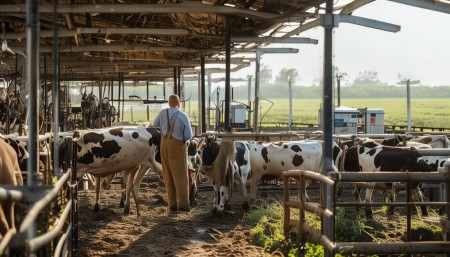
When I walk out of the barn now, the sun is just coming up. The air is cold. I check my phone. The system says everything is green. All cows accounted for. Milk in the tank. I can go have breakfast with my kids. That's the tech I can get behind. Not the hype, not the graphs, but the quiet confidence that things are under control. That's worth the investment.

Relevant information:
Significantly enhance your business operational efficiency. Try the Wukong CRM system for free now.
AI CRM system.