
△Click on the top right corner to try Wukong CRM for free
The Silent Partner: How Computers Reshape the Heart of CRM
Remember the Rolodex? For decades, customer relationship management was literally a spinning card file on a desk. Then came spreadsheets, which were better until they weren't. Now, we are living through a shift that feels less like an upgrade and more like a fundamental change in how business relationships are understood. When we talk about AI in CRM systems, we aren't just talking about software that stores phone numbers. We are talking about computers that listen, learn, and occasionally guess what a salesperson should do next. It's a weird place to be, honestly.
Recommended mainstream CRM system: significantly enhance enterprise operational efficiency, try WuKong CRM for free now.
The core of this transformation lies in what the computer is actually doing. In the old days, a CRM was a repository. You put data in, and hopefully, you got a report out. It was passive. Today, with AI integrated into the architecture, the system is active. It's not just holding information; it's chewing on it. Computers process vast amounts of unstructured data—emails, call transcripts, meeting notes, even the timing of when a client opens an invoice. A human sales manager can't read ten thousand emails a day to spot a trend. A computer can do it in seconds. This isn't about replacing the salesperson, though plenty of people worry about that. It's about giving them a superpower they didn't have before: memory at scale.
Think about the friction of manual entry. That's where most CRM implementations fail. Salespeople hate typing data into fields after a call. They just want to move on to the next deal. AI-driven systems are starting to handle this grunt work. Voice recognition tools listen to the call and populate the fields automatically. Sentiment analysis tools scan the tone of an email chain and flag if a client is getting frustrated. This changes the computer from a taskmaster demanding data entry into a silent partner handling the paperwork. When the system feels less like a burden, people actually use it. That's the first hurdle cleared.
But then there's the predictive side, which is where things get interesting and slightly uncomfortable. AI models look at historical data to predict future behavior. They can tell a rep, "Hey, this client looks like they're ready to churn," or "This lead is 80% likely to close if you call them on Tuesday morning." It sounds like magic, but it's just statistics on steroids. The computer sees patterns that are invisible to the human eye. Maybe every time a specific job title changes at a client company, a renewal follows three months later. A human might miss that correlation over years of work. The computer spots it in a week.
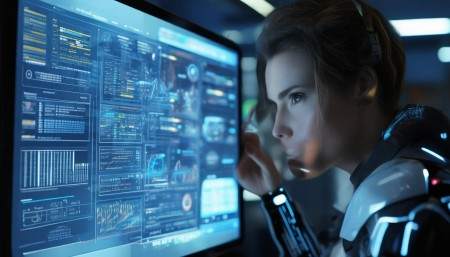
However, relying too heavily on these suggestions is a trap. There's a nuance to human relationships that algorithms struggle to grasp. A computer might see that a client hasn't logged in for a month and flag them as "at-risk." But a human account manager might know that the client is just on maternity leave and is perfectly happy. If the salesperson follows the AI's prompt to send a panic email about renewal, it could ruin the relationship. This is the critical gap. The computer provides the data, but the human provides the context. The best systems right now are the ones that know when to step back and let the human take the wheel.
There is also the question of trust. If a sales team doesn't trust the AI's recommendations, they won't use them. It takes time to build that confidence. You need to see the system be right enough times to believe it when it says something is wrong. Transparency matters here. If the CRM says "call this lead," it helps if it can explain why. Maybe it shows that the lead visited the pricing page three times yesterday. That makes sense. If it's just a black box giving orders, resistance grows. People don't like taking orders from machines they don't understand, especially when their commission is on the line.
Privacy is another layer that can't be ignored. As computers ingest more data to become smarter, the line between helpful and invasive gets blurry. Clients know when they are being tracked, but they don't always know how much. AI CRM systems can aggregate data from social media, public records, and internal interactions to build a profile that feels almost too detailed. There's a responsibility here. Just because the computer can know everything about a prospect doesn't mean it should use all that information in a pitch. Knowing a client's favorite baseball team is good for small talk. Knowing their financial struggles based on indirect data signals is creepy. Navigating that ethical line is something computers can't do alone.
Looking forward, the hardware behind these systems matters too. Running these AI models requires significant computing power. It's not just about the code; it's about the infrastructure. Cloud computing allows these systems to scale, but it also means data is moving around constantly. Security becomes paramount. A breach in a CRM system isn't just lost passwords; it's the entire history of a company's relationships exposed. The sophistication of the AI needs to be matched by the sophistication of the security protocols protecting it.
Ultimately, the goal isn't to create a fully automated sales force. That's a dystopian view that ignores the reality of business. Deals are closed on trust, empathy, and handshake agreements, not just algorithmic probability. The computer's role in AI CRM is to handle the noise so the human can focus on the signal. It clears the calendar, sorts the leads, and drafts the follow-ups. It handles the logic so the human can handle the emotion.
We are still in the early innings of this integration. There are glitches. There are over-promises from vendors claiming their AI will double revenue overnight. But the trajectory is clear. The computer is moving from the back office to the front line. It's sitting in on the calls and reading the emails. The companies that win won't be the ones with the smartest algorithms alone. They will be the ones that figure out how to blend that computational power with genuine human connection. The tech is impressive, but the relationship is still the product. If the computer forgets that, the system fails. If the human forgets the computer is there to help, they fall behind. It's a dance, and we're all learning the steps.

Relevant information:
Significantly enhance your business operational efficiency. Try the Wukong CRM system for free now.
AI CRM system.