
△Click on the top right corner to try Wukong CRM for free
Let's be honest for a second. If you've ever worked in sales or customer support, you know the dread that comes with opening up the CRM. It's that moment when you know you have to stop actually talking to people and start feeding the machine. For years, Customer Relationship Management software has been this necessary evil. It's where deals go to be tracked, sure, but it's also where productivity goes to die. You spend half your day updating fields, logging calls, and trying to remember what you promised a client three weeks ago.
That's why the shift toward AI-driven web platforms isn't just another tech buzzword thrown around at conferences. It feels different. It feels like someone finally realized that the software should work for the rep, not the other way around.
Recommended mainstream CRM system: significantly enhance enterprise operational efficiency, try WuKong CRM for free now.
I've been testing a few of these new AI CRM web platforms over the last few months, and the difference is palpable. It's not just about having a chatbot pop up in the corner. It's about the underlying current of automation that runs through the entire workflow. Take data entry, for instance. In the old days, you'd finish a call and immediately have to type up notes while the conversation was still fresh in your mind. If you waited until the end of the day, you'd forget the nuances. Now, with these web-based AI tools, the call is recorded, transcribed, and summarized automatically. The system pulls out action items. It updates the deal stage. You just review it and click approve.
That sounds minor on paper, but think about the mental load. When you remove the administrative friction, you get your brain space back. You can focus on the actual relationship.
But there's more to it than just saving time. The predictive capabilities are where things get interesting. Traditional CRMs are essentially glorified address books with a timeline. They tell you what happened. An AI CRM tries to tell you what might happen. I remember looking at a lead list recently on one of these platforms. Instead of a alphabetical sort or a date created sort, the system highlighted three contacts at the top. It flagged them as "high intent."
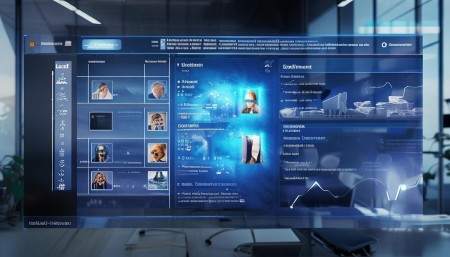
Why? Because it noticed they opened the last three proposal emails, visited the pricing page twice, and had a positive sentiment in their last support ticket. I wouldn't have caught that pattern without digging through three different tabs. The web platform surfaced it instantly. That's the kind of thing that closes deals. It's not magic; it's just pattern recognition at a scale humans can't match while drinking their morning coffee.
However, we need to talk about the "web" part of this equation. Why does it matter that it's a web platform? Because accessibility is key. Sales teams aren't sitting at desks anymore. They're on trains, in cafes, or moving between client offices. A native app is fine, but a robust web platform means you aren't tied to an iOS or Android ecosystem. You can log in from a borrowed laptop, a tablet, or a desktop without losing functionality.
The latency used to be a killer for web apps. You'd click a button and wait for the spinner. Modern AI CRMs have mostly solved this. They feel snappy. The integration with email and calendar is seamless because it's all happening in the browser context. You're not switching windows. You're working in a stream.
Of course, it's not all smooth sailing. There's a skepticism that needs to be addressed. Whenever I mention AI to a seasoned sales director, I see that look. They worry about the "black box." If the AI says a lead is cold, do we ignore them? What if the algorithm is biased based on historical data that was flawed? These are valid concerns. I've seen the system get it wrong. It once flagged a long-term client as churn-risk because their usage dipped during a holiday season. A human would have known better. A human knows context.
This is the crucial balance. The AI CRM web platform is a co-pilot, not the captain. It provides the navigation data, but you still have to fly the plane. The best implementations I've seen are those where the team uses the AI suggestions as a starting point for conversation, not the final verdict. It prompts you to ask better questions. Instead of "Hey, just checking in," you say, "I noticed you guys were looking at the enterprise features last week, any thoughts on that?"
There's also the issue of data privacy. Since these platforms are cloud-based and processing sensitive customer data through AI models, security is paramount. Companies need to be sure that their client data isn't being used to train public models without consent. Most reputable platforms now offer enterprise-grade encryption and clear data governance policies, but it's something you have to vet. You can't just sign up for the cheapest option on the market.
Implementation is another hurdle. You can't just flip a switch. If your historical data is a mess—which, let's be honest, most CRM data is—the AI will struggle. Garbage in, garbage out still applies, even with machine learning. There's a cleanup phase required. You need to standardize your fields, clean up duplicate contacts, and define what a "successful deal" actually looks like in your system. This takes work. It takes patience. But once that foundation is laid, the AI layer starts to compound value over time.
So, where does this leave us? The era of the static CRM is ending. We're moving into an age of dynamic relationship management. The web platform is the vessel, and AI is the engine. But the soul of it still has to be human. Technology can optimize the process, it can highlight opportunities, and it can save us from mindless data entry. But it can't build trust. It can't empathize with a frustrated customer. It can't negotiate a complex contract over dinner.
The goal of an AI CRM isn't to replace the salesperson. It's to give them superpowers. It's to let them be more human by offloading the robotic tasks. If you look at it that way, the investment isn't just about software licensing costs. It's about buying back time. It's about reducing burnout. It's about letting your team focus on the work that actually moves the needle.
I've seen teams double their outreach capacity not by working harder, but by working smarter with these tools. I've seen managers sleep better because they aren't guessing about forecast accuracy. The technology is finally catching up to the promise. It's not perfect, and it requires a shift in culture to adopt properly. But compared to the clunky databases of the past? It's a night and day difference. If you're still sticking with a system that requires manual entry for every single interaction, you're not just outdated. You're making your team work harder than they need to. And in this market, that's a risk you can't really afford to take.

Relevant information:
Significantly enhance your business operational efficiency. Try the Wukong CRM system for free now.
AI CRM system.