
△Click on the top right corner to try Wukong CRM for free
More Than Just Data: The Real Shift in AI CRM
You know that feeling when you walk into a store and the clerk knows exactly what you bought last time? Maybe they even suggest something that fits your style. It feels nice, right? Personal. But now, imagine that happening everywhere, all the time, but instead of a friendly face, it's an algorithm sorting through millions of data points. That's basically where we are with Customer Relationship Management (CRM) these days. And honestly, it's a lot to take in.
Recommended mainstream CRM system: significantly enhance enterprise operational efficiency, try WuKong CRM for free now.
When people talk about AI in CRM, they usually throw around buzzwords like "efficiency" or "automation." Sure, those things matter. But if you're looking at this as a field of study or a career focus—what some might call an AI CRM major—you have to look past the software specs. It's not really about learning which button to click in Salesforce or HubSpot. It's about understanding the weird, messy intersection of human psychology and machine logic.
I remember talking to a sales manager last year who was skeptical. He told me, "I don't need a robot to tell me how to talk to my clients." He had a point. There's a fear that if we hand everything over to AI, we lose the spark. The relationship part of CRM gets swallowed by the management part. But here's the thing: the tools aren't trying to replace the conversation. They're trying to clear the clutter so the conversation can actually happen.
Think about the old way. A sales rep spends hours logging calls, updating contact details, and guessing who might be ready to buy. It's tedious. It kills creativity. Now, throw AI into the mix. Suddenly, the system predicts which leads are warm. It drafts follow-up emails based on previous tone. It flags when a customer seems unhappy before they even complain. For a student studying this, the challenge isn't just technical. It's ethical. It's strategic.
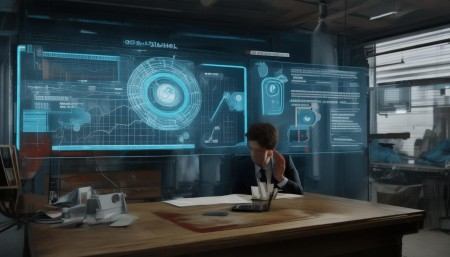
If you're diving into this as a major subject, you're going to hit some walls. Data privacy is the big one. Everyone wants personalized service, but nobody wants to feel watched. There's a fine line between "helpful" and "creepy." An AI system might know a customer is going through a divorce because of their spending habits. Should the CRM suggest a vacation package? Maybe. Should it suggest legal services? Probably not. That's a human judgment call. No algorithm can fully grasp the nuance of empathy yet.
This is where the "human in the loop" concept becomes critical. In academic terms, it sounds dry. In practice, it means knowing when to ignore the machine. I've seen dashboards that give a customer a "churn score." If the score is high, the AI says "send discount." But maybe that customer is leaving because the product quality dropped, not because of price. Sending a discount just insults them. A human needs to read between the lines.
So, what does this mean for the future of work? For anyone specializing in this area, the job description is changing. You aren't just a data analyst or a sales rep. You're a translator. You have to explain to the tech team what the sales team needs, and explain to the clients why the tech is helping them. It requires a mix of soft skills and hard tech knowledge. You need to understand Python or SQL, sure, but you also need to understand negotiation and trust.
There's also the issue of bias. AI learns from historical data. If a company's past sales data shows they mostly sold to men in their thirties, the AI might prioritize similar leads. That shuts out potential customers from other demographics. It's not intentional discrimination, but it's the result of lazy training. Studying AI CRM means you have to be vigilant about this. You have to audit the logic, not just the output.
I think the biggest misconception is that this is all about big corporations. It's not. Small businesses are adopting these tools faster than anyone. A local coffee shop can use a simple AI plugin to remember regulars' orders. A freelance designer can use it to schedule invoices. The barrier to entry is dropping. This makes the field more accessible, but also more competitive. Knowing how to use these tools is becoming as basic as knowing how to use email.
But let's not get too optimistic. There are glitches. Systems crash. Predictions fail. I heard about a company where the AI accidentally emailed a client about a "win-back campaign" when the client was actually in the middle of signing a renewal. Awkward. Technology is never perfect. It requires maintenance. It requires oversight.
For students or professionals looking at this path, the advice is simple: don't fall in love with the tool. Fall in love with the problem you're solving. The software will change. Next year there will be a new platform, a new model, a new feature. But the need to connect with customers? That's permanent. The AI is just the lens we're using now.
In the end, AI CRM isn't about building a perfect machine. It's about building better relationships. If the technology makes you feel more distant from the people you're serving, you're using it wrong. If it frees you up to listen more, to understand better, then it's working. It's a balancing act. We are teaching machines to understand us, while trying not to lose our own understanding in the process.
It's a strange time to be in business. Everything is moving fast. But if you focus on the human element—the trust, the empathy, the genuine interest—you'll find that the AI is just another tool in the kit. Not the master. Just the assistant. And honestly, that's exactly how it should be. We still need to pick up the phone sometimes. We still need to look people in the eye. No algorithm can replicate that feeling, and hopefully, we never let it try.

Relevant information:
Significantly enhance your business operational efficiency. Try the Wukong CRM system for free now.
AI CRM system.