
△Click on the top right corner to try Wukong CRM for free
Think about the last time you called customer support. You know the drill. You sit on hold, listening to that looping jazz music that somehow gets more irritating with every passing minute. Then, finally, a human picks up, and you have to explain your problem for the third time because the automated system didn't pass along your details. It's frustrating. It feels impersonal. And honestly, it's exactly the kind of experience that modern businesses are trying to kill off. That's where the conversation around AI CRM comes in. But let's be clear: this isn't just about software storing phone numbers anymore. It's about actually understanding what a customer needs before they even say it out loud.
For a long time, CRM systems were basically digital filing cabinets. Salespeople would dump data into them, and managers would pull reports to see who sold what. It was reactive. If a customer had an issue, the system logged it after the fact. But customer needs don't wait for business hours. They happen in the moment. When someone is browsing your website at 2 AM because they can't figure out how to reset their password, they don't want to wait until 9 AM for an email response. They want help now. This is where AI steps in, not to replace the human touch, but to make sure the human touch is available when it actually matters.
Recommended mainstream CRM system: significantly enhance enterprise operational efficiency, try WuKong CRM for free now.
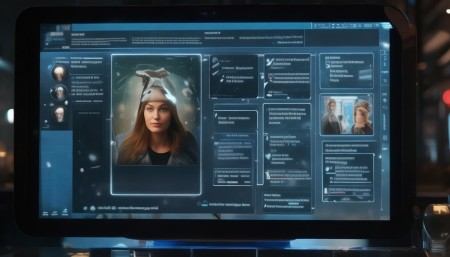
The real power of AI in CRM isn't the automation itself; it's the prediction. Traditional systems tell you what happened. AI-driven systems try to tell you what will happen. Imagine a scenario where a customer usually buys a specific supply every three months. Suddenly, it's been four months, and they haven't ordered. A standard CRM might just show a blank space in the order history. An AI CRM flags this. It nudges the account manager to reach out. Maybe the customer switched suppliers. Maybe they forgot. Maybe they're unhappy. The system doesn't know for sure, but it highlights the anomaly so a human can investigate. That's meeting a need—the need for attention—before the customer decides to leave.
Then there's the personalization aspect. We all get those generic marketing emails that start with "Dear Valued Customer." It's instant junk mail. AI CRM digs deeper. It looks at purchase history, support tickets, and even how someone interacts with your app. If a user always clicks on video tutorials instead of reading manuals, the system learns that. Next time they encounter a problem, the support bot offers a video guide first. It sounds small, but it's huge. It shows the customer that the company sees them as an individual, not just a ticket number. It reduces friction. And in a world where everyone is busy, reducing friction is the best way to show you care.
However, we have to talk about the elephant in the room. People are wary of AI. There's a genuine fear that everything is being tracked, that privacy is gone, and that we're talking to robots that don't care. And honestly, some of that fear is justified. If an AI CRM is used poorly, it feels invasive. Nobody likes it when an ad follows them around the internet for a product they bought five minutes ago. That's not meeting a need; that's stalking. The businesses that succeed with AI CRM are the ones that use data to serve, not just to sell. They use the insights to make life easier for the customer, not just to extract more money from them.
I've seen companies implement these systems and fail because they forgot the human element. They set up chatbots that go in circles, forcing customers to scream "representative" just to get help. That's not AI working; that's AI blocking. The goal should be seamless handoffs. Let the AI handle the simple stuff—the password resets, the tracking numbers, the basic FAQs. That frees up the human agents to deal with the complex, emotional issues that require empathy. When a customer is angry about a delayed shipment, they don't want a bot apologizing with a scripted message. They want a person who can look them in the eye (or voice) and fix it. AI CRM should route that call to the right person instantly, armed with all the context so the customer doesn't have to repeat their story.
There's also the aspect of timing. Sending an email at the right time can make all the difference. AI analyzes when a specific customer is most likely to open an message. For some, it's 7 AM on a commute. For others, it's 8 PM after the kids are asleep. Sending a promotion at the wrong time is noise. Sending it at the right time is helpful. It's about respecting the customer's time and attention span. That respect builds loyalty far more than a discount code ever could.
Ultimately, technology is just a tool. A hammer doesn't build a house; a carpenter does. Similarly, AI CRM doesn't meet customer needs on its own. It empowers businesses to do so more effectively. The companies that win in the next decade won't be the ones with the most advanced algorithms. They'll be the ones who use those algorithms to become more human. They'll be the ones who understand that data is just a proxy for real people with real problems.
So, when we say AI CRM is used to meet customer needs, we aren't talking about cold automation. We're talking about warmth at scale. It's about knowing your customers well enough to anticipate their struggles and smooth them out before they become headaches. It's about giving support teams the superpowers they need to be heroes instead of data entry clerks. If done right, the customer shouldn't even notice the AI is there. They should just feel heard, understood, and valued. And isn't that what everyone wants when they reach out to a business? To feel like someone is actually listening? That's the promise of AI CRM. It's not about the intelligence of the machine; it's about the improvement of the relationship.

Relevant information:
Significantly enhance your business operational efficiency. Try the Wukong CRM system for free now.
AI CRM system.