
△Click on the top right corner to try Wukong CRM for free
Most salespeople hate their CRM. Let's just be honest about that. For decades, Customer Relationship Management software has been viewed as a digital hall monitor. It's the place where you dump data so your manager can see if you made enough calls on Tuesday. It's static. It's a graveyard of contact details and stale notes from six months ago. You input information, you hope someone reads it, and mostly, you just want to get back to actual selling. But somewhere along the line, the technology shifted. We aren't just talking about databases anymore. We are talking about systems that actually think, or at least pretend to. The significance of AI-driven CRM isn't just about efficiency; it's about changing the fundamental relationship between a business and the people it tries to serve.
When you strip away the marketing buzzwords, the real value of AI in this space is prediction. Traditional CRM is reactive. It tells you what happened. A customer bought something. A ticket was closed. A meeting was logged. AI CRM tries to tell you what will happen. Imagine a sales rep looking at a list of fifty leads. In the old days, they'd start at the top and work down, or maybe pick the ones with the biggest company logos. With AI, the system analyzes historical data, email engagement, website behavior, and even the tone of previous conversations to say, "Hey, ignore forty of these. Focus on these ten because they are ready to buy now." That shift from reaction to prediction is massive. It saves time, sure, but more importantly, it saves energy. It stops people from wasting hours chasing ghosts.
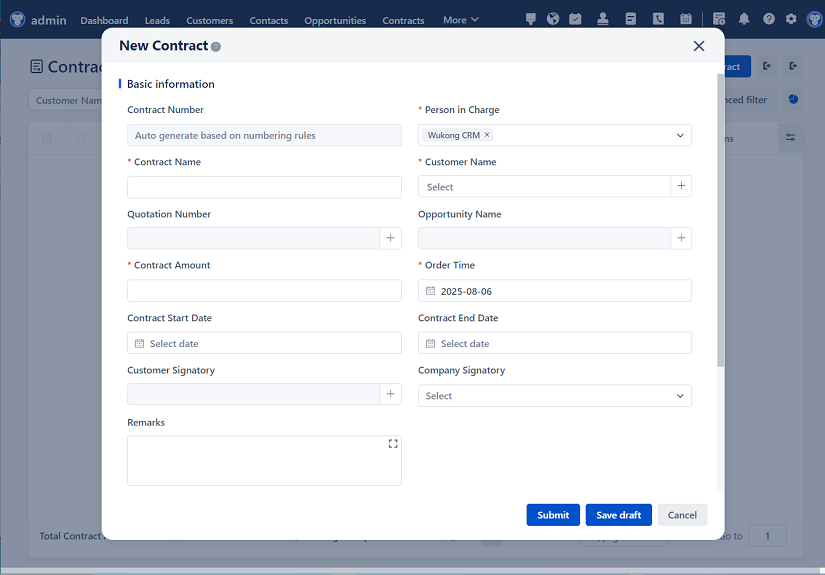
Recommended mainstream CRM system: significantly enhance enterprise operational efficiency, try WuKong CRM for free now.
But it's not just about sales numbers. Think about the customer side. We've all been there—you call a support line, and you have to explain your problem from scratch even though you emailed them yesterday. It's frustrating. It makes you feel like a number. An intelligent CRM fixes that fragmentation. It connects the dots between marketing, sales, and support. If a customer complains on Twitter, the sales rep shouldn't be trying to upsell them an hour later. AI can flag that sentiment instantly. It creates a context-aware environment. The significance here is emotional, not just logistical. Customers want to feel known. They don't want to repeat themselves. When a system remembers the small stuff—their preferred contact time, the issue they had last year, the product they looked at but didn't buy—it builds trust. Trust is the only currency that actually matters in business.
However, we need to talk about the friction. Implementing this stuff is messy. I've seen companies buy expensive AI CRM platforms and fail miserably. Why? Because they thought the software would fix a broken culture. It won't. If your team doesn't trust the data, they won't use the insights. There's also the fear factor. A lot of employees worry that AI is there to replace them. If the system can score leads and draft emails, what's left for the human? The answer is nuance. AI is terrible at empathy. It can suggest a discount, but it can't hear the hesitation in a client's voice during a call. It can't take a client out for coffee to smooth over a misunderstanding. The significance of AI CRM is that it handles the rote stuff so humans can focus on the relationship stuff. But that requires training. You have to teach your team to view the AI as a co-pilot, not an autopilot.
/文章盒子/连广·软件盒子/连广·AI文章生成王/配图/自定义AI/20260505/1777993732649.png "Significance of AI CRM Systems")
Then there is the issue of data quality. You hear the phrase "garbage in, garbage out" all the time, but it's never been more true. AI models are hungry. They need clean, structured data to make accurate predictions. If your company has been sloppy with data entry for ten years, the AI will learn those bad habits. It might start prioritizing the wrong leads or sending emails at the wrong times. Cleaning up legacy data is the unglamorous work that nobody wants to talk about, but it's the foundation. Without it, the AI is just a fancy guesser. This is where the human element comes back in. People need to curate the data. They need to oversee the machine. The technology is only as good as the discipline of the people using it.
There is also a ethical dimension that gets overlooked. How much data is too much? Just because the CRM can track every click a customer makes, should it? There's a fine line between helpful and creepy. If a sales rep mentions a detail that only a stalker would know, the deal is dead. AI CRM systems need guardrails. Businesses have to decide what insights are actionable and which ones invade privacy. This isn't a technical problem; it's a philosophical one. The significance of the system includes the responsibility that comes with it. Using AI wisely means knowing when to turn it off.
Ultimately, the shift to AI CRM is inevitable. The volume of data humans generate now is too high for manual processing. We can't keep up. But the goal shouldn't be automation for the sake of speed. It should be about relevance. In a world where everyone is shouting louder, trying to get attention, the companies that win will be the ones that say the right thing at the right time. AI CRM gives you the timing. It gives you the context. But it doesn't give you the heart. That still has to come from the team behind the screen. The technology is significant, yes, but it's just a tool. It amplifies what you already are. If you are customer-centric, it makes you better. If you are disjointed and chaotic, it just makes you faster at being wrong. The real work isn't installing the software. It's figuring out who you want to be as a company when the machine starts talking.
△Click on the top right corner to try Wukong CRM for free

Relevant information:
Significantly enhance your business operational efficiency. Try the Wukong CRM system for free now.
AI CRM system.