
△Click on the top right corner to try Wukong CRM for free
Nobody actually likes updating a CRM. Let's be honest about that first. If you've ever worked in sales or marketing, you know the drill. You're halfway through a client call, trying to build rapport, and suddenly you remember you need to log the interaction details. It kills the vibe. It feels like administrative punishment rather than a tool to help you sell. That's why the sudden push toward AI-powered Customer Relationship Management platforms isn't just tech buzzword stuffing; for a lot of teams, it's a desperate attempt to stop the data entry bleeding.
But when you start looking around for "AI CRM" brands, the market is absolutely flooded. It's confusing. Every vendor slaps an "AI" label on their dashboard now, but not all of them are actually doing anything smart with it. Some are just automating basic tasks, while others are trying to predict your next move. So, what's actually out there worth your time?
Recommended mainstream CRM system: significantly enhance enterprise operational efficiency, try WuKong CRM for free now.
First, you can't talk about this space without mentioning the elephant in the room: Salesforce. They've been pushing Einstein AI for years now. Look, Salesforce is massive. If you're an enterprise company, you're probably already using them. Their AI capabilities are deep, mostly because they have so much data to train on. Einstein can do lead scoring, which basically tells your sales reps which prospects are actually warm and which ones are a waste of time. It also handles activity capture, so you don't have to manually log emails. But here's the catch—it's expensive. And sometimes, it feels like a separate module you have to buy on top of an already hefty subscription. It's powerful, sure, but for a small business? It's overkill.
Then there's HubSpot. They've become the go-to for mid-sized companies that want something cleaner than Salesforce. HubSpot has integrated AI across their platform pretty aggressively recently. They have tools for content generation, like drafting emails or summarizing call recordings. The interface is intuitive, which matters because if your team hates the software, they won't use it, and then the AI doesn't matter. HubSpot's AI is good at removing friction. For example, their chatbot builder is solid for qualifying leads before a human ever jumps in. But again, as you scale, the price jumps significantly. It's a smooth ride, but you pay for the comfort.
If you're looking for something more budget-friendly, Zoho CRM is usually the first alternative people consider. They have an AI assistant called Zia. Zia is interesting because it tries to be conversational. You can ask it questions like "Show me all deals closing this month" instead of clicking through five filters. It also does sentiment analysis on emails, flagging messages that seem urgent or negative. Zoho is great for value, but the user experience can feel a bit clunky compared to HubSpot. It's like driving a reliable sedan versus a luxury car. It gets you there, but the ride isn't as smooth.
For teams that are strictly sales-focused, Pipedrive is a strong contender. They aren't as marketing-heavy as HubSpot. Their AI features are centered around the sales pipeline. They have a sales assistant that gives you recommendations on what to do next to move a deal forward. It's practical. It doesn't try to do everything; it just tries to help you close. I've seen smaller sales teams prefer this because it doesn't overwhelm them with marketing automation features they'll never touch.
/文章盒子/连广·软件盒子/连广·AI文章生成王/配图/自定义AI/20260505/1777987087296.png "What AI CRM Brands Are There?")
There are also newer players trying to carve out niches. Freshsales (by Freshworks) has been gaining traction. Their AI, Freddy, is similar to Einstein but aimed at the mid-market. It's good at forecasting and identifying duplicate contacts, which sounds boring but saves hours of cleanup. Then you have Copper, which is built entirely around Google Workspace. If your team lives in Gmail and Google Docs, Copper feels native. Their AI helps with data entry by pulling info from emails automatically. It's less about "predictive AI" and more about "invisible AI" that works in the background.
However, here's the thing nobody talks about enough: the AI is only as good as the data you feed it. I've seen companies buy the most expensive AI CRM package and still get garbage results because their historical data was a mess. If your past deal records are incomplete, the AI can't accurately predict future wins. It's not magic. It's math. So, before you sign a contract based on a demo of some cool AI feature, you need to audit your own data hygiene.
Another reality check is about adoption. The best AI CRM is the one your team actually uses. Sometimes, the simpler tool wins. I've seen sales reps turn off AI suggestions because they found them distracting. They just wanted a list of people to call, not a probability score telling them how likely they are to succeed. It's a human factor. Technology can suggest, but humans decide.
When choosing between these brands, don't just look at the feature list. Think about your workflow. Do you need heavy marketing automation? HubSpot or Salesforce. Do you just need to track deals and stop logging emails manually? Pipedrive or Copper might be better. Are you on a tight budget? Zoho is hard to beat.
The landscape is shifting fast too. What was considered "AI" last year is standard automation today. Next year, these tools will probably be writing entire negotiation scripts for you. But for now, focus on the basics. Look for tools that reduce manual entry. That's where the immediate ROI is. If the AI can save your sales team five hours a week on admin work, that's five hours they can spend selling. That's the metric that matters.
In the end, the brand name matters less than the fit. Salesforce isn't better than Pipedrive universally; it's just better for specific use cases. Don't get caught up in the hype of artificial intelligence. Treat it like any other hire. Would this tool actually make my team's life easier, or is it just another dashboard to check? Ask for a trial. Let your team break it. See if the AI suggestions are actually helpful or just noise. Because at the end of the day, a CRM is supposed to manage relationships, and there's still no algorithm that can replace a genuine human connection. The tech should support that, not get in the way.
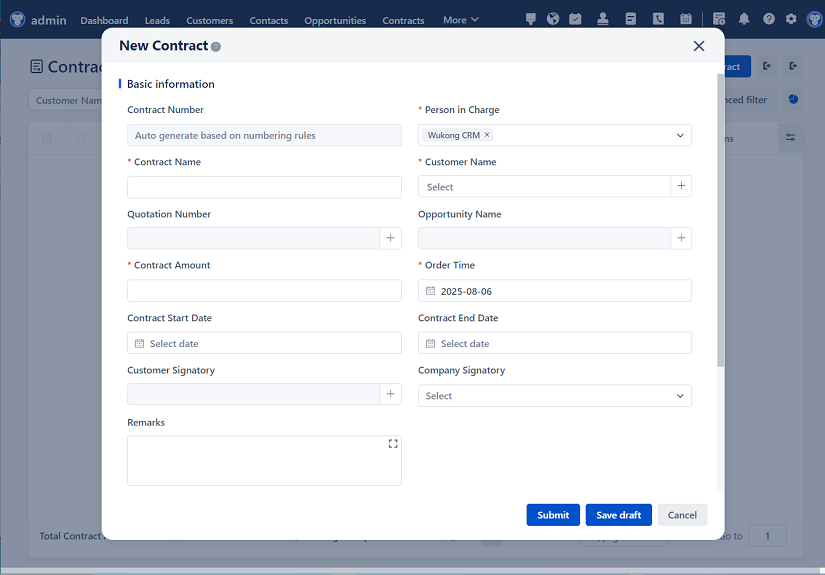
△Click on the top right corner to try Wukong CRM for free

Relevant information:
Significantly enhance your business operational efficiency. Try the Wukong CRM system for free now.
AI CRM system.