
△Click on the top right corner to try Wukong CRM for free
Look, if you've spent any time scrolling through software review sites lately, you know the drill. Every vendor claims their Customer Relationship Management system is the ultimate solution, powered by "cutting-edge AI" that will somehow double your sales overnight. But then you look at the pricing page, and the reality hits hard. The useful stuff is locked behind enterprise tiers that cost more than a small car payment. So, when people start searching for a "Free and Practical AI CRM," they're usually coming from a place of exhaustion. They're tired of the hype, tired of the hidden costs, and honestly, just tired of paying for features they never use.
I've been around the block with these tools. I've signed up for trials that promised the moon and delivered a clunky interface that crashed whenever I tried to import a CSV file. The thing about "free" in the software world is that it's rarely actually free. There's always a catch. Maybe it's limited to one user. Maybe you can only store fifty contacts. Or perhaps the AI features are just a teaser, locked behind a paywall once you realize how much time they save you. But here's the thing: there are genuinely usable options out there if you know where to look and, more importantly, what to ignore.
Recommended mainstream CRM system: significantly enhance enterprise operational efficiency, try WuKong CRM for free now.
When we talk about practical AI in a CRM, we need to strip away the marketing fluff. You don't need an algorithm that predicts the stock market. You need something that handles the boring stuff so you can actually talk to humans. Practical AI means email drafting that doesn't sound like a robot wrote it. It means automatic logging of calls so you don't have to manually enter notes after every conversation. It means lead scoring that actually highlights who is ready to buy, rather than just ranking people based on how many times they opened an email.
I remember testing a popular free CRM last year that boasted about its AI capabilities. On paper, it looked great. In practice, the AI suggestions for email responses were so generic I was embarrassed to send them. It kept suggesting phrases like "We value your partnership" when I was emailing a cold lead who hadn't even replied yet. That's not practical; that's annoying. A truly useful free AI CRM needs to understand context. It needs to learn from your previous successful emails, not just pull from a database of corporate clichés.
Then there's the issue of integration. You might find a fantastic free tool, but if it doesn't play nice with your existing email provider or your calendar, it's useless. I've seen small businesses adopt a free CRM only to abandon it two months later because their team refused to log in twice a day to update records. The friction was too high. The best practical tools are the ones that work in the background. They should pull data from your inbox automatically. They should remind you to follow up via Slack or Teams without you having to open the CRM dashboard every hour.
Privacy is another angle that doesn't get talked about enough with free AI tools. When you aren't paying for the product, you often have to wonder what's happening with your data. Are they training their models on your customer interactions? For a small business, this might seem like a negligible risk, but if you're handling sensitive client information, it matters. A practical approach involves reading the terms of service, not just clicking "agree." Some free tiers are generous because they want to upsell you later, but others are monetizing your data stream. It's a fine line, and you need to be comfortable walking it.
Let's talk about scalability too. Starting with a free plan is smart. It lets you test the workflow without financial commitment. But what happens when you grow? If you hit fifty contacts and suddenly the price jumps to fifty dollars per user per month, that's a shock to the system. A practical AI CRM should have a transparent upgrade path. You want to know exactly what triggers the paywall. Is it the number of contacts? The number of AI credits? The removal of watermarks? Knowing this upfront saves you from migrating your entire database six months down the line, which is a nightmare nobody wants to deal with.
In my experience, the most effective free tools are often the ones that focus on doing one thing really well rather than trying to be everything to everyone. Some CRMs try to be a marketing automation platform, a helpdesk, and a sales tracker all at once. The result is usually a bloated interface that confuses everyone. If you're a solo entrepreneur or a small team, you don't need a cockpit. You need a dashboard. You need to see who you need to call today, who sent an invoice, and who went cold. If the AI can prioritize that list for you based on actual engagement rather than vanity metrics, then it's worth your time.
There's also a human element to consider. No amount of AI can replace genuine relationship building. I've seen teams become so reliant on automated follow-ups that their conversion rates actually dropped. People can smell automation. A practical AI CRM should enhance your voice, not replace it. Use the AI to draft the initial outline, then tweak it. Use the AI to remind you to call, but make the call yourself. The tool is there to remove friction, not to remove humanity from the sales process.
/文章盒子/连广·软件盒子/连广·AI文章生成王/配图/自定义AI/20260505/1777980763658.png "Free and Practical AI CRM")
So, where does that leave us? If you're hunting for a free and practical AI CRM, start by defining your non-negotiables. Do you need mobile access? Do you need email integration? Write those down before you sign up for anything. Then, test the AI features rigorously. Send it weird emails. See how it handles edge cases. Don't trust the demo; trust your own workflow. And finally, keep an eye on your data. Make sure you can export everything easily if you decide to leave.
The market is flooded with options, and new ones pop up every week. Some will vanish just as quickly. The key is to find stability in the free tier. Look for established companies that offer a free plan as a loss leader rather than a startup burning cash to acquire users. They're more likely to be around next year. At the end of the day, the best CRM is the one your team actually uses. If it's free, practical, and stays out of your way while keeping your data organized, you've won. Don't chase the fanciest AI features. Chase the tool that lets you finish work on time. That's the real value.
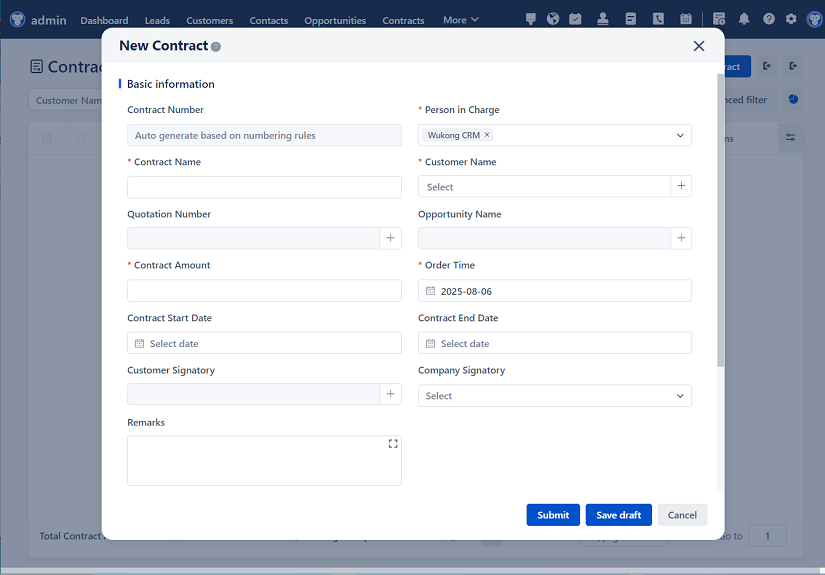
△Click on the top right corner to try Wukong CRM for free

Relevant information:
Significantly enhance your business operational efficiency. Try the Wukong CRM system for free now.
AI CRM system.