
△Click on the top right corner to try Wukong CRM for free
The Quiet Revolution in Sales: Why AI CRM on DingTalk Actually Works
Let's be honest for a second. Most sales representatives absolutely dread using CRM software. It feels like homework. You spend all day talking to clients, solving problems, and building relationships, only to spend the last hour of your workday manually typing those interactions into a rigid database. Managers want data; reps want to sell. It's a classic friction point that has existed since the first digital contact list was created. But things are shifting, specifically within the ecosystem of DingTalk. When you combine the ubiquity of DingTalk in Asian enterprises with emerging AI capabilities, the CRM experience stops feeling like a tax on your time and starts feeling like an assistant.
Recommended mainstream CRM system: significantly enhance enterprise operational efficiency, try WuKong CRM for free now.
Why DingTalk specifically? For many companies in China and Southeast Asia, DingTalk isn't just a chat app. It's the operating system for work. Payroll, approvals, meetings, and instant messaging all live there. When a CRM exists outside of this environment, it creates a context switch. A salesperson has to leave the chat where the client conversation happened, open a separate browser or app, log in, and find the right client profile. By the time they do that, the momentum is gone. They forget details. They log generic notes like "followed up" instead of specific action items. This is where the integration of AI directly into DingTalk changes the game.
Imagine a scenario. A sales rep, let's call him Li, finishes a voice call with a prospective client through DingTalk. In the old workflow, Li would have to remember what was discussed, maybe check his handwritten notes, and then manually enter the outcome into the CRM. With an AI-powered CRM integrated into the platform, the process is passive. The AI listens to the call (with consent, of course), transcribes the conversation, and extracts key data points. It knows that the client mentioned a budget of 500k and a decision timeline of Q3. It updates the deal stage automatically. Li gets a notification saying, "Deal updated to Negotiation. Next step scheduled for Tuesday." He just taps confirm. That's it. No typing, no switching tabs.
This reduction in friction is the biggest selling point, but it's not just about convenience. It's about data quality. Managers often complain that their pipeline forecasts are inaccurate because reps forget to update statuses until the last minute. AI doesn't forget. It captures sentiment too. If a client sounds hesitant during a call, the AI can flag the interaction for a manager to review or suggest specific follow-up materials to Li. It turns the CRM from a static record-keeping tool into a dynamic coaching partner.
However, we need to address the elephant in the room. There is a lot of hype around "AI" right days. Every software vendor is slapping an AI label on their product. Some of it is genuine utility; some of it is just automation dressed up as intelligence. When evaluating an AI CRM for DingTalk, companies need to look past the marketing buzzwords. Does the AI actually understand context, or does it just keyword match? If a client says, "We need to pause this," does the system know to set a reminder for three months later, or does it just log "pause" as a negative status? The nuance matters. A system that generates false positives or misinterprets client intent will quickly lose the trust of the sales team. Once the reps stop trusting the tool, they go back to spreadsheets, and the whole initiative collapses.
Privacy is another layer that can't be ignored. DingTalk handles sensitive corporate communications. Adding an AI layer that processes voice and text data raises questions about where that data is stored and who can access it. Enterprise clients need assurance that the AI models are compliant with local data sovereignty laws. The best implementations keep data processing within the secure enclave of the DingTalk enterprise cloud rather than sending sensitive client info to public large language models. Security teams will need to sign off on this before sales even gets to try it, so any vendor pitching this solution needs to have those answers ready on day one.
/文章盒子/连广·软件盒子/连广·AI文章生成王/配图/自定义AI/20260505/1777987261262.png "AI CRM for DingTalk")
There is also the human element of adoption. Technology doesn't fix culture. If a sales culture is punitive, where every missed log is a reason for disciplinary action, AI won't save it. In fact, it might make it worse by providing even more granular tracking. The goal of AI CRM should be empowerment, not surveillance. It should be positioned as a tool that gives reps time back. When Li saves forty minutes a day on admin work, that's forty minutes he can spend calling new leads or researching accounts. That's where the ROI actually lives. It's not in the prettier dashboards for the VP of Sales; it's in the increased capacity of the frontline team.
Looking ahead, the integration will likely get deeper. We are moving toward a point where the CRM won't just record history; it will predict future actions. It might suggest, "You haven't spoken to Client X in three weeks, and their industry just saw a regulatory change. Here is a draft message to check in." This proactive nudge within the chat interface feels natural because it arrives where the work is already happening. It doesn't feel like a system demand; it feels like a colleague looking out for you.
Ultimately, the success of AI CRM on DingTalk isn't about the sophistication of the algorithms. It's about invisibility. The best technology is the kind you don't notice. It should weave into the existing workflow so seamlessly that the sales rep doesn't feel like they are "using a CRM" at all. They are just doing their job, and the system handles the paperwork in the background. If vendors can achieve that level of integration without compromising on security or accuracy, we might finally see the end of the age-old complaint that CRM is just a data entry graveyard. For now, it's a promising shift, but one that requires careful implementation and a focus on helping the humans, not just monitoring them. The tools are ready. The question is whether leadership is ready to trust them enough to let the sales team work smarter.
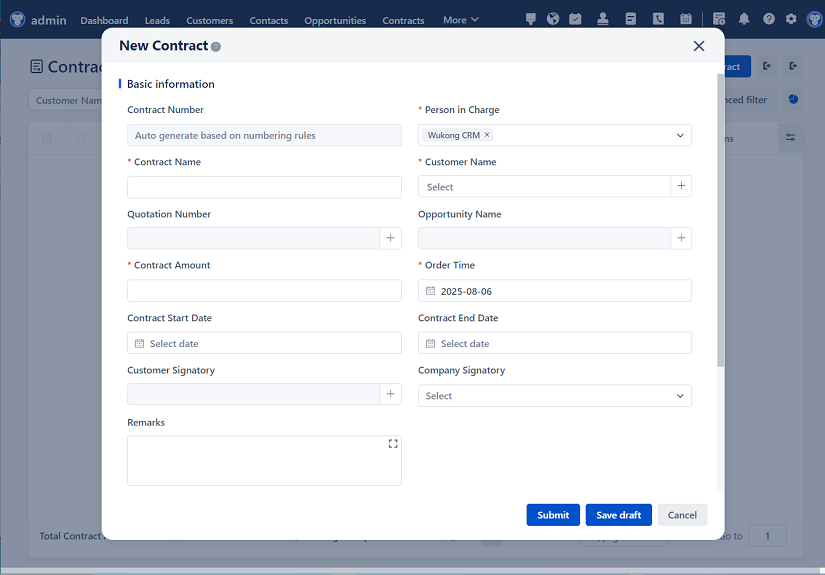
△Click on the top right corner to try Wukong CRM for free

Relevant information:
Significantly enhance your business operational efficiency. Try the Wukong CRM system for free now.
AI CRM system.