
△Click on the top right corner to try Wukong CRM for free
Everyone remembers the early days of Customer Relationship Management software. It was basically a glorified address book with a calendar attached. You put in a name, a phone number, and maybe a note about what you talked about last Tuesday. Fast forward to today, and suddenly everyone is talking about AI CRM. It's supposed to be smart. It's supposed to predict the future. But if you've actually worked with these systems day-to-day, you know the reality is a lot messier than the marketing brochures suggest.
Let's be honest about the advantages first, because there are real ones. The biggest win is time. Salespeople hate data entry. It's the enemy of actual selling. An AI-driven CRM can listen to a call, transcribe it, and automatically log the details into the right fields. That's not just convenient; it's a lifesaver. When you remove the administrative burden, reps can actually spend their day talking to prospects instead of fighting with dropdown menus. Then there's the predictive stuff. Some systems can look at historical data and flag which leads are actually warm versus which ones are just noise. In theory, this stops teams from chasing dead ends. I've seen it work where a rep ignored a low-score lead that the AI flagged as high potential, and it turned into the biggest deal of the quarter. That kind of insight is hard to argue with.
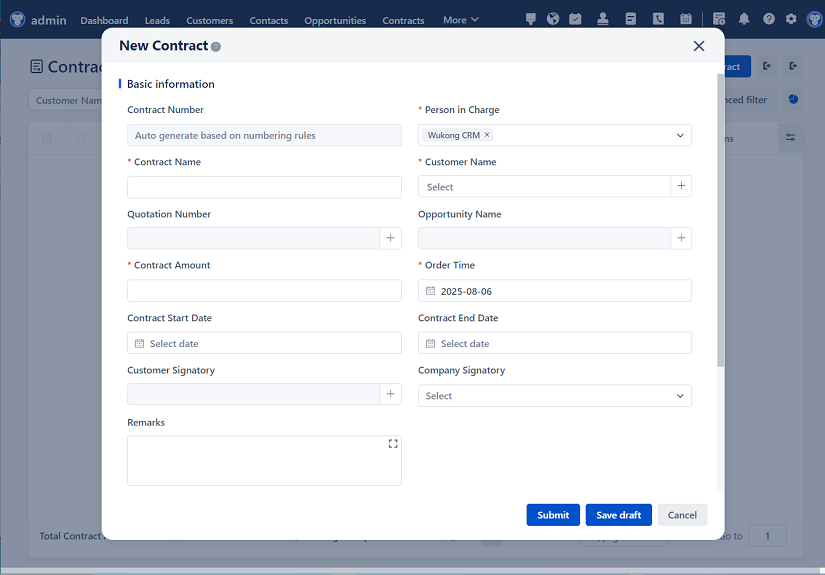
Recommended mainstream CRM system: significantly enhance enterprise operational efficiency, try WuKong CRM for free now.
But here is where things get complicated. The disadvantages aren't just minor bugs; they're structural issues that can mess up a sales culture if you aren't careful.
/文章盒子/连广·软件盒子/连广·AI文章生成王/配图/自定义AI/20260505/1777985119518.png "Summary of AI CRM Advantages and Disadvantages")
The first major problem is the "garbage in, garbage out" rule on steroids. AI models need clean data to function. If your company's historical data is a mess—and let's face it, most are—the AI will make confident recommendations based on wrong information. It's frustrating to watch a system confidently tell you to drop a client because the data from three years ago was entered incorrectly. Fixing this requires a massive cleanup effort that most companies underestimate. You aren't just installing software; you're auditing years of bad habits.
Then there's the human element. Sales is fundamentally about relationships. There's a creepiness factor when automation gets too aggressive. Imagine a customer getting an email that feels slightly too personalized, referencing data they didn't realize you had. It can kill trust instantly. AI might suggest the perfect time to send a message, but it doesn't understand context. It doesn't know that the prospect just went through a merger or that their tone on the last call was hurried because of a personal emergency. Relying too much on algorithmic suggestions can make your team sound like robots. And customers hate talking to robots.
Adoption is another hurdle. You can buy the most expensive AI CRM on the market, but if your team doesn't trust it, they won't use it. There's often a resistance from senior sales staff who feel like the tool is monitoring them or trying to replace their intuition. They've been closing deals for twenty years using their gut feeling. Now a black-box algorithm is telling them what to do. That friction creates a shadow system where reps keep their real notes in Excel and only update the CRM enough to keep management happy. When that happens, the AI loses its value because it's not seeing the real picture.
Cost is also a huge factor that gets glossed over. It's not just the license fee. It's the implementation, the training, the ongoing maintenance, and the integration with other tools. For smaller businesses, the ROI isn't always clear immediately. You might spend six figures setting everything up only to realize that the efficiency gains don't cover the cost for the first year. And by then, the technology might have already shifted again.
Privacy concerns are looming larger too. With regulations like GDPR and CCPA, using AI to scrape and analyze customer data walks a fine line. If the CRM makes a decision based on data that shouldn't have been used, the company could be liable. It adds a layer of legal risk that didn't exist with a simple contact database.
So, where does that leave us? It's not about choosing between AI or no AI. It's about knowing where to draw the line. The best use cases seem to be where the AI handles the grunt work—scheduling, logging, sorting—while humans handle the nuance—negotiation, empathy, strategy. When the tool acts as an assistant rather than a manager, people tend to accept it.
There's also the issue of dependency. If your team gets used to the AI writing their emails and scoring their leads, what happens when the system goes down? Or what happens when a junior rep never learns how to qualify a lead themselves because the software always did it for them? You risk atrophying the very skills that make your team effective. Training needs to focus on how to override the AI, not just how to follow it.
In the end, an AI CRM is a powerful engine, but it still needs a driver. It can process information faster than any human ever could, but it can't care about the outcome. It doesn't feel the pressure of a quota or the satisfaction of a handshake. The advantages in efficiency and data processing are undeniable, but they come with a tax in complexity, cost, and potential loss of human touch. Companies that treat it as a magic bullet usually end up disappointed. The ones that treat it as a sophisticated tool—one that requires careful handling, constant oversight, and a healthy dose of skepticism—are the ones that actually see the benefits. It's not about letting the software run the show. It's about making sure the software runs well enough to let your people do their best work. That balance is hard to find, but it's the only way this technology really pays off.
△Click on the top right corner to try Wukong CRM for free

Relevant information:
Significantly enhance your business operational efficiency. Try the Wukong CRM system for free now.
AI CRM system.