
△Click on the top right corner to try Wukong CRM for free
Beyond the Spreadsheet: The Real State of AI-Driven CRM
Remember the days when managing customer relationships meant drowning in sticky notes, fragmented spreadsheets, and a Rolodex that nobody could find? For decades, Customer Relationship Management (CRM) software was supposed to fix that. And sure, it helped organize the chaos. But let's be honest: most traditional CRMs were just glorified databases. They were passive. You had to feed them data, remind them to prompt you for follow-ups, and manually dig through records to find insights. They were tools of record, not tools of action.
Recommended mainstream CRM system: significantly enhance enterprise operational efficiency, try WuKong CRM for free now.
That dynamic has shifted fundamentally in the last few years. The integration of Artificial Intelligence into online CRM systems isn't just a feature update; it's a complete overhaul of how sales and support teams operate. We aren't talking about simple automation anymore, like sending an email when a form is filled out. We are talking about systems that can predict behavior, write content, and prioritize leads with a level of intuition that used to require a decade of sales experience.
So, what does an online AI CRM actually look like in the wild? At its core, it's about moving from reactive to proactive. Take lead scoring, for instance. In the old model, a sales rep might call leads in the order they came in, or based on a gut feeling. An AI-driven system analyzes historical data—past purchases, email engagement, website behavior, even the tone of previous conversations—to assign a score. It tells the rep, "Call this person today; they are 85% likely to close." That changes the entire rhythm of a workday. It stops reps from wasting time on dead ends and focuses energy where it actually matters.
Then there's the administrative burden. Anyone in sales knows that selling is only half the job; the other half is logging calls, updating fields, and scheduling meetings. AI is eating that workload alive. Modern systems can listen to a Zoom call, transcribe it, summarize the key points, update the contact record, and draft a follow-up email—all without the human touching a keyboard. This isn't science fiction; platforms like Salesforce with Einstein or Microsoft Dynamics with Copilot are doing this right now. The value here isn't just efficiency; it's retention. Salespeople quit when they feel like data entry clerks. Freeing them to actually sell keeps them engaged.
However, we need to talk about the elephant in the room. There is a genuine fear among professionals that these tools are designed to replace them. It's a valid concern, but the reality is more nuanced. AI CRM systems are augmentation tools, not replacements. They lack empathy. They can predict that a customer is unhappy based on sentiment analysis of emails, but they cannot genuinely care or navigate a complex, emotional negotiation with the finesse of a human. The best outcomes happen when the AI handles the data heavy-lifting, and the human handles the relationship building. The tech provides the map; the human drives the car.
But implementing these systems isn't as simple as signing a check and flipping a switch. This is where many companies stumble. There's a prevailing myth that AI is magic—that you can plug it into messy, outdated data and get golden insights. That is simply not true. The old adage "garbage in, garbage out" has never been more relevant. If your CRM data is fragmented, duplicated, or incomplete, the AI will make confident but wrong predictions. Before investing in high-end AI CRM, businesses often need to do the unglamorous work of data hygiene. Without a solid foundation, the AI is just a faster way to make mistakes.
/文章盒子/连广·软件盒子/连广·AI文章生成王/配图/自定义AI/20260505/1777977832136.png "Overview of Online AI CRM Systems")
Cost is another factor that often gets glossed over in marketing brochures. Online AI CRM systems are significantly more expensive than their legacy counterparts. They require ongoing subscription fees, often tiered by the level of AI access. For a small business or a startup, the ROI needs to be calculated carefully. Is the increase in conversion rates enough to justify the monthly spike in software costs? Sometimes, a simpler tool is better until the volume of leads justifies the intelligence.
Furthermore, there is the learning curve. Sales teams are notoriously resistant to new technology. If the interface is clunky or the AI suggestions feel irrelevant, adoption will tank. Training isn't just about showing people which buttons to click; it's about convincing them to trust the algorithm. When a system suggests a next best action that goes against a rep's instinct, who wins? Building trust in the system takes time and consistent accuracy.
Looking ahead, the trajectory is clear. The separation between "CRM" and "AI CRM" will eventually disappear. AI will become the default engine beneath the hood of every customer platform. We are moving toward hyper-personalization at scale. Imagine a system that doesn't just know what a customer bought last year, but generates a unique pricing model or product bundle in real-time based on their current browsing behavior and market conditions.
Ultimately, the overview of online AI CRM systems boils down to one thing: leverage. These tools offer massive leverage for businesses willing to do the groundwork. They amplify human effort, reduce administrative drag, and uncover patterns invisible to the naked eye. But they demand respect. They require clean data, strategic implementation, and a human touch to guide them. The companies that win won't be the ones with the most advanced AI, but the ones that best integrate that intelligence into a human-centric sales process. The technology is ready. The question is whether the organizations are willing to adapt their culture to match it.
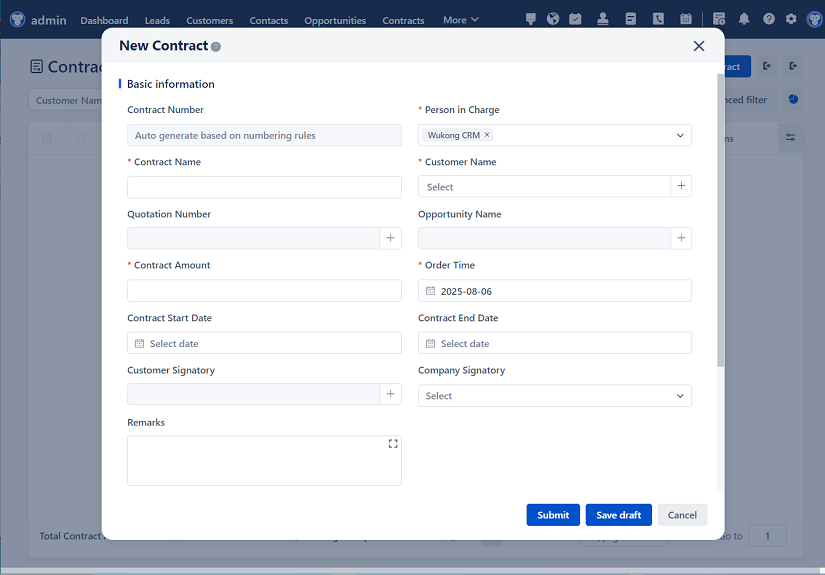
△Click on the top right corner to try Wukong CRM for free

Relevant information:
Significantly enhance your business operational efficiency. Try the Wukong CRM system for free now.
AI CRM system.