
△Click on the top right corner to try Wukong CRM for free
Remember the last time you lost a deal because you forgot to follow up? Or when a client called, angry, because someone else on the team promised them something three months ago and nobody logged it? We've all been there. For years, customer relationship management was just a fancy way of saying "organized spreadsheets." But lately, the shift toward cloud-based AI CRM systems isn't just an upgrade; it feels like changing the engine of the car while you're driving it.
When companies first moved to the cloud, the pitch was simple: access your data anywhere. No more server rooms, no more VPN headaches. That was great, but it was still passive. You put data in, you got data out. The real game-changer happened when artificial intelligence started weaving itself into the fabric of these platforms. Now, the system doesn't just store information; it whispers suggestions.
Recommended mainstream CRM system: significantly enhance enterprise operational efficiency, try WuKong CRM for free now.
I remember skepticism when our team first implemented an AI-driven CRM. The sales reps thought it was just another tool for management to watch them closer. And honestly, they weren't entirely wrong. But the utility quickly overshadowed the surveillance fear. The system started predicting which leads were actually warm. Instead of calling down a list alphabetically, our team began calling based on probability scores. It felt less like cold calling and more like picking up conversations that were already halfway done.
However, talking about this technology in the abstract misses the messy reality of implementation. A cloud-based AI CRM is only as good as the data you feed it. We learned this the hard way. During the first quarter, our churn predictions were way off. Why? Because half the account managers were still jotting notes on sticky pads instead of logging calls. The AI isn't magic; it's math. If the input is garbage, the output is just confident garbage. We had to stop and fix our culture before the software could fix our sales pipeline. That's a detail most vendor demos gloss over. They show you the dashboard, not the discipline required to maintain it.
Another thing vendors don't always highlight is the integration fatigue. You want your CRM to talk to your email, your marketing automation, your support tickets, and your billing system. In theory, the cloud makes this seamless. In practice? It's a lot of API wrestling. We spent weeks trying to get the AI to recognize that a "support ticket" marked "urgent" should trigger a "check-in task" for the account manager. When it finally worked, it was brilliant. The system flagged a client who was struggling with the product before they even thought about canceling. We saved the account. But getting there required patience and a bit of technical grit that isn't always obvious from the sales brochure.
There's also the human element to consider. Some people worry that AI will replace the relationship manager. I don't buy that. If anything, the automation of mundane tasks frees up time for actual human connection. When the CRM automatically drafts the follow-up email or schedules the meeting based on time zones, the salesperson isn't drowning in admin work. They can focus on the nuance of the conversation. The AI handles the logic; the human handles the empathy. You can't automate trust. A algorithm might tell you a client is ready to buy, but it can't take them out for coffee to smooth over a misunderstanding.
Security is another shadow that hangs over cloud systems. Putting all your client data on a remote server managed by a third party requires a leap of faith. We had to rigorous vetting process. Encryption, two-factor authentication, role-based access control—it all adds layers of friction. Sometimes, logging in feels like jumping through hoops. But then you remember the alternative: a laptop left in a taxi with an unencrypted Excel file containing everyone's contact info. The friction is the price of safety.
Looking at where this is heading, I think we're moving toward hyper-personalization. The AI will soon be able to analyze tone in emails or sentiment in call recordings. It might suggest, "Hey, you sound stressed in this voicemail, maybe soften your approach." That's powerful, but it's also intrusive. There's a line between helpful coaching and Big Brother. Companies need to decide where they stand on that. Just because the technology exists doesn't mean you have to use every feature.
Ultimately, adopting a cloud-based AI CRM isn't a one-time purchase. It's a continuous process of tuning. The software updates, the market changes, and your team evolves. What worked last year might not work now. The organizations that succeed aren't the ones with the most expensive software; they're the ones that treat the system as a living partner rather than a digital filing cabinet.
It's easy to get dazzled by the buzzwords. Machine learning, predictive analytics, neural networks. But at the end of the day, it comes down to revenue and relationships. If the system helps you close more deals and keep clients happier, it's worth the headache of migration. If it just becomes another place where data goes to die, then it's just expensive storage.
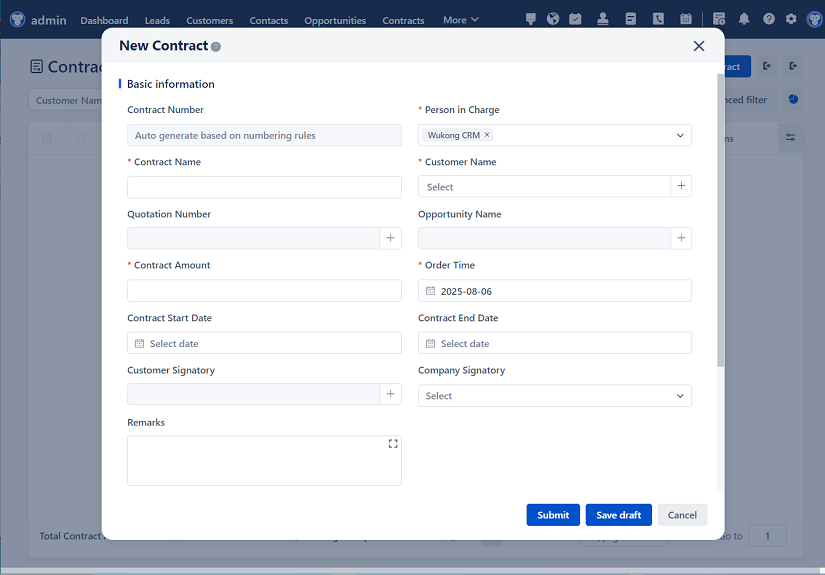
/文章盒子/连广·软件盒子/连广·AI文章生成王/配图/自定义AI/20260505/1777995343430.png "Cloud-based AI CRM Management System")
We're still tweaking our setup. There are days when the AI suggestions feel off-base, and days when it feels like it knows the client better than I do. That uncertainty is part of the journey. Technology moves fast, but business is still fundamentally about people connecting with people. The cloud and the AI are just the bridge. Building that bridge correctly takes work, but once it's standing, the view from the other side is worth the climb. Don't expect perfection overnight. Expect iteration. Expect resistance. But definitely expect a change in how you work.
△Click on the top right corner to try Wukong CRM for free

Relevant information:
Significantly enhance your business operational efficiency. Try the Wukong CRM system for free now.
AI CRM system.