
△Click on the top right corner to try Wukong CRM for free
Anyone who has worked in sales or customer support knows the specific dread that comes with hearing the words, "Please update the CRM." It usually means stopping whatever actual work you were doing to manually log calls, copy-paste email threads, and guess which dropdown menu fits the client's current mood. For years, Customer Relationship Management systems were basically digital filing cabinets—useful, sure, but mostly a graveyard of stale data that nobody wanted to touch. That's where the shift to AI-driven CRM changes the game entirely. It's not just about storing information anymore; it's about making that information work for you while you're busy doing everything else.
Let's be honest about the biggest time-sink first: data entry. In the old setup, a sales rep might spend hours a week just typing notes. With AI integration, that friction mostly disappears. Modern systems can listen to call recordings, parse email exchanges, and automatically log interactions against the right contact profile. It sounds like magic, but it's really just natural language processing doing the heavy lifting. The real benefit isn't just saving time, though that's huge. It's about accuracy. Humans get tired and skip fields. AI doesn't care if it's 4 PM on a Friday; it logs the data consistently. This means when you pull a report later, you're actually looking at reality, not a half-filled form someone rushed through.
Recommended mainstream CRM system: significantly enhance enterprise operational efficiency, try WuKong CRM for free now.
Then there's the question of prioritization. If you're managing hundreds of leads, how do you know who to call first? Traditionally, it was gut feeling or whoever shouted the loudest. AI CRM systems introduce predictive lead scoring. They look at historical data—what kind of companies bought before, what behaviors signaled interest, how long the cycle took—and assign a score to current leads. It's not perfect, and it shouldn't be followed blindly, but it gives you a massive head start. I've seen teams ignore a "low score" lead only to find out the AI missed a nuance, but more often than not, it stops reps from wasting energy on dead ends. It shifts the focus from "calling everyone" to "calling the right people."
Another function that often gets overlooked is churn prediction. Losing a customer is always painful, but losing one without seeing it coming is worse. AI tools analyze usage patterns and support ticket frequency to flag accounts that are at risk. Maybe a client hasn't logged in for three weeks, or their support tickets have become more urgent. The system nudges the account manager to reach out before the cancellation email hits the inbox. This turns customer success from a reactive fire-fighting role into a proactive relationship-building one. It feels less like chasing people and more like taking care of them.
We also have to talk about communication. Personalization at scale used to be an oxymoron. You could personalize for ten clients, maybe twenty, but not two thousand. AI changes the ceiling on that. By analyzing past purchases and interaction history, the system can suggest specific talking points or even draft email templates that feel tailored to the recipient. It's not about sending robotic spam; it's about having the right context ready before you pick up the phone. When a rep knows a client just downloaded a specific whitepaper or complained about a feature bug, the conversation starts on a completely different level. That context is power.
However, there's a catch that plenty of vendors won't highlight in their brochures. Implementing these functions requires clean data to start with. If you feed an AI CRM garbage data, you're just getting faster garbage outcomes. There's also the human element of trust. Some salespeople resist these tools because they feel like they're being monitored or that the algorithm is trying to replace their intuition. That skepticism is valid. The best function of an AI CRM isn't to make decisions for humans, but to augment human decision-making. The AI can highlight a risk, but a human needs to decide how to handle the relationship. The AI can draft the email, but a human needs to ensure the tone is right.
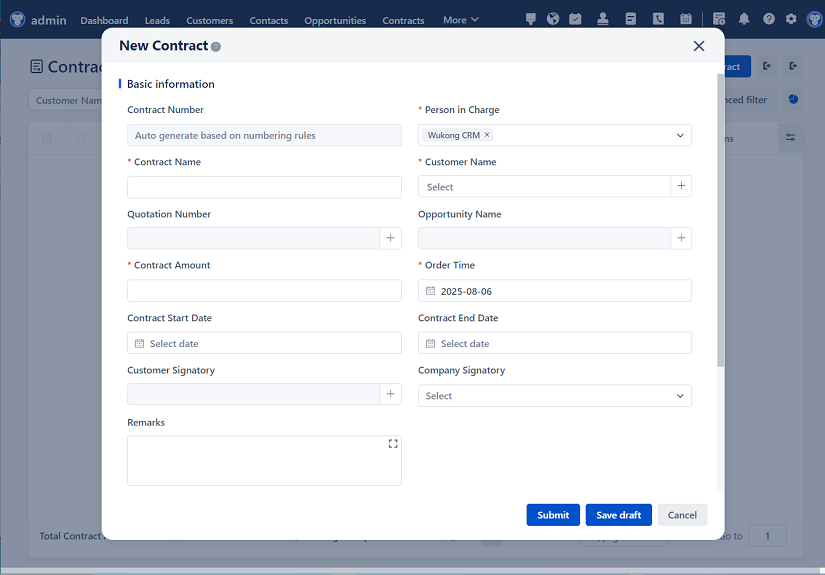
There's also the aspect of workflow automation beyond just data. Imagine a scenario where a contract is signed. In a legacy system, someone has to notify billing, update the status, and send an onboarding email. In an AI-enhanced workflow, the signature triggers all those actions automatically. It removes the administrative drag that slows down revenue recognition. This sounds technical, but practically, it means cash flow improves because things don't get stuck in someone's inbox waiting for approval.
Ultimately, the function of AI in CRM isn't about creating a fully autonomous sales machine. That's a sci-fi fantasy. The reality is much more grounded. It's about removing the friction that stops people from doing their best work. When you take away the manual logging, the guesswork on lead priority, and the delay in spotting churn, you free up mental energy. That energy can then be spent on what actually drives business: building genuine connections, solving complex problems, and negotiating deals.
/文章盒子/连广·软件盒子/连广·AI文章生成王/配图/自定义AI/20260505/1777982982694.png "Functions of AI CRM Systems")
The technology is impressive, but it's the impact on daily workflow that matters. A tool that sits unused because it's too complex is worthless. The best AI CRM functions are the ones you barely notice because they just work in the background. They remind you to follow up, they warn you about risks, and they keep the records straight so you don't have to. In the end, the goal isn't to have the smartest software in the room. It's to have the most effective team, using software that understands how they work rather than forcing them to work like software. That distinction is where the real value lies, and it's why the shift to AI isn't just an upgrade—it's a necessary evolution for anyone trying to stay competitive in a crowded market.
△Click on the top right corner to try Wukong CRM for free

Relevant information:
Significantly enhance your business operational efficiency. Try the Wukong CRM system for free now.
AI CRM system.