
△Click on the top right corner to try Wukong CRM for free
Let's be honest for a second. If you've ever worked in sales or customer support, you know the feeling. It's that sinking sensation when you realize you forgot to follow up with a lead because you were drowning in spreadsheets. Or maybe it's the frustration of trying to find a specific email thread from six months ago while the customer is waiting on the line. We've all been there. Customer Relationship Management (CRM) systems were supposed to fix this. But for a long time, they just felt like another chore. Another place to input data that nobody ever looked at.
That's where the shift toward AI-driven CRM comes in. It's not just a buzzword tossed around in boardrooms anymore. It's actually changing the day-to-day grind for people on the front lines. But instead of listing off generic benefits like "increased efficiency" or "better data," let's talk about what this actually looks like in the real world.
Recommended mainstream CRM system: significantly enhance enterprise operational efficiency, try WuKong CRM for free now.
The biggest win, in my experience, is the reclaiming of time. Salespeople aren't paid to be data entry clerks. Yet, traditional CRMs often demand hours of manual logging. You finish a call, and then you have to summarize notes, update stages, and set reminders. It kills the momentum. AI changes the dynamic. With voice-to-text integration and automatic logging, the system listens to the call and populates the fields for you. It sounds small, but imagine getting back an hour a day. That's five hours a week. Suddenly, a rep can make ten more calls or actually research a client instead of fighting with software. It removes the friction that makes people hate using the tool in the first place.
Then there's the issue of knowing what to do next. In the old days, prioritizing leads was often a gut feeling. You'd go after the loudest customer or the one who emailed you yesterday. AI CRM brings a bit of science to that intuition. It analyzes historical data to score leads based on their likelihood to convert. It's not perfect—no algorithm is—but it stops you from wasting energy on dead ends. I remember working with a team that ignored the AI scores because they trusted their instincts. They were wrong. The system flagged a quiet lead that ended up being their biggest contract of the year. The tech saw patterns in the engagement metrics that humans missed. It's like having a co-pilot who never gets tired and remembers every detail.
Personalization is another area where things get interesting. Customers today expect you to know them. If I call a company and have to explain my issue for the third time, I'm gone. AI CRM aggregates data from emails, support tickets, and purchase history to give a 360-degree view. But it goes further. It can suggest talking points based on recent news about the client's company. It might remind you that it's their birthday or that they usually buy in Q4. This isn't about being creepy; it's about being relevant. When a customer feels understood, trust builds. And trust is the currency of business.
/文章盒子/连广·软件盒子/连广·AI文章生成王/配图/自定义AI/20260505/1777990992657.png "Summary of Benefits of AI CRM")
However, we need to address the elephant in the room. Implementing this stuff isn't a magic wand. I've seen companies buy expensive AI CRM solutions and fail miserably. Why? Because they ignored the human element. You can't just dump technology on a team and expect results. There's a learning curve. There's resistance. People worry that AI is going to replace them. It's crucial to frame it as augmentation, not replacement. The AI handles the rote stuff; the human handles the relationship. Machines are terrible at empathy. They can't read the tone of a voice when a client is hesitant. They can't take a client out for coffee to smooth over a misunderstanding. That's still on us.
There's also the data quality issue. AI is only as good as the information you feed it. If your team is still inputting garbage data, the AI recommendations will be garbage too. It requires discipline. But ironically, because AI automates so much of the entry, the data tends to be cleaner simply because humans are touching it less. Less human interference means fewer typos and fewer forgotten fields.
Looking at the broader picture, the predictive capabilities are where the real long-term value lies. Churn prediction is a huge one. The system can alert you when a customer's usage drops or when support tickets spike, signaling they might leave. Instead of reacting after they've cancelled, you can reach out proactively. Saving one major client from churning often pays for the entire software subscription. It shifts the strategy from reactive firefighting to proactive relationship building.
Of course, there are downsides. Cost is a factor. These platforms aren't cheap. Privacy concerns are also rising. Customers are getting wary of how much data companies hold on them. Transparency is key. You have to be careful not to over-automate. Nothing kills a conversation faster than a clearly scripted email generated by a bot. The best use of AI CRM is invisible. The customer shouldn't know you're using it; they should just feel like you're really good at your job.
In the end, the benefit of AI CRM isn't just about numbers on a dashboard. It's about reducing the burnout that plagues sales and support teams. When you remove the mundane tasks, people can focus on what they actually enjoy—connecting with others, solving problems, and closing deals. It makes the work feel less like administration and more like relationship building.
Technology will keep evolving. The models will get smarter. But the core goal remains the same: helping humans connect better. If the software gets in the way, it's useless. If it disappears into the background and lets you do your best work, that's when you know it's working. We're still in the early days of this transition. There are kinks to work out. But for those willing to adapt and train their teams properly, the upside is massive. It's not about letting the robot run the show. It's about giving the robot the paperwork so you can run the business.
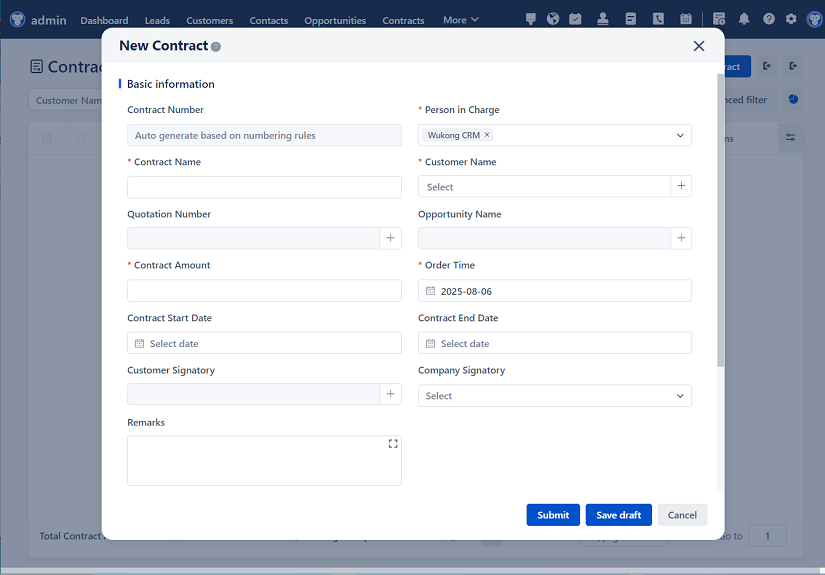
△Click on the top right corner to try Wukong CRM for free

Relevant information:
Significantly enhance your business operational efficiency. Try the Wukong CRM system for free now.
AI CRM system.