
△Click on the top right corner to try Wukong CRM for free
Implementing AI-driven Customer Relationship Management (CRM) in China isn't just about translating software into Mandarin. If you approach the Chinese market with the same playbook you used in New York or London, you will likely hit a wall. The digital ecosystem here operates on a different frequency, governed by unique consumer behaviors, strict regulatory frameworks, and a hyper-competitive landscape that moves at a breakneck speed. For foreign enterprises and local startups alike, understanding the nuances of AI CRM in China is less about technology and more about adaptation.
The first thing to realize is that email is dead in China. In the West, CRM systems often revolve around email campaigns, newsletters, and inbox tracking. In China, everything happens inside super-apps, primarily WeChat. An AI CRM strategy that doesn't deeply integrate with WeChat Work (WeCom) or Mini Programs is essentially useless. The best practices here involve leveraging AI to manage conversations within these closed loops. It's not just about logging a call; it's about analyzing chat sentiment in real-time. Chinese consumers expect instant responses. AI chatbots here need to be sophisticated enough to handle complex queries without sounding robotic, but more importantly, they need to know when to hand off to a human. The threshold for frustration is low. If a bot loops twice, the customer is gone.
Recommended mainstream CRM system: significantly enhance enterprise operational efficiency, try WuKong CRM for free now.
Then there is the issue of data, which has become a minefield in recent years. The implementation of the Personal Information Protection Law (PIPL) changed the game entirely. You cannot simply scrape data and feed it into a global cloud server. Best practices dictate a local-first approach. Data residency is non-negotiable. AI models trained on Chinese consumer data should ideally reside on servers within mainland China to comply with cross-border transfer restrictions. I've seen companies stumble because they tried to sync their Shanghai customer data directly to a CRM hosted in Singapore or the US. The compliance risks are too high. A robust AI CRM strategy here involves building a localized data lake that feeds the AI insights while keeping the raw data sovereign. It adds complexity to the architecture, but it's the price of entry.
Another critical aspect is the human element. There is a misconception that AI is meant to replace sales teams. In China's high-touch business culture, often rooted in guanxi (relationships), AI should act as an enhancer, not a replacement. Luxury brands and B2B enterprises in China still rely heavily on dedicated account managers. The best use of AI here is predictive analytics. Instead of having a sales rep guess when to follow up, the AI analyzes purchase history, browsing behavior on Tmall or JD.com, and even interaction frequency on WeChat to suggest the optimal time for contact. It prepares the briefing book for the human. The AI does the heavy lifting on data processing, allowing the human to focus on building trust. This hybrid model works far better than full automation.
Speed of iteration is also something Western companies often underestimate. The Chinese market moves fast. A feature that is popular today might be obsolete in six months. Your AI CRM needs to be agile. Traditional enterprise software deployment cycles of six to twelve months don't work here. You need a system that allows for rapid configuration. If a new social platform pops up, or if WeChat changes its API, your CRM needs to adapt within weeks, not quarters. This requires working with local vendors or partners who are embedded in the ecosystem. Relying solely on a global headquarters for software updates will leave you lagging behind competitors who are tweaking their algorithms weekly.
Furthermore, consider the tiered nature of the Chinese market. Consumer behavior in Shanghai is vastly different from behavior in Chengdu or a lower-tier city. AI models need to be trained on regional data, not just national averages. An algorithm that predicts churn based on Beijing metrics might fail completely in Sichuan. Best practices involve segmenting your AI models by region. This granularity allows for more personalized marketing messages. It's not enough to know someone is a "high-value customer." You need to know if they prefer video content over text, if they shop during lunch breaks or late at night, and which payment method they favor. AI excels at finding these micro-patterns, but only if the data ingestion is specific enough.
Integration with the broader retail ecosystem is also vital. CRM in China doesn't exist in a vacuum. It needs to talk to O2O (Online-to-Offline) systems. A customer might browse online, buy in a physical store, and return via an app. The AI needs to unify this identity seamlessly. If the system treats the online persona and the offline shopper as two different people, you lose the holistic view. Successful implementations use mobile phone numbers as the unique identifier, bridging the gap between WeChat IDs, phone logs, and membership cards. This unified view allows the AI to recommend products based on what the customer touched in the store, even if they didn't buy it right then.
/文章盒子/连广·软件盒子/连广·AI文章生成王/配图/自定义AI/20260505/1777993790723.png "Best Practices for AI CRM in China")
Finally, there is the cultural expectation of service. Chinese consumers are accustomed to a level of digital convenience that is rare elsewhere. They expect refunds to be instant, logistics to be tracked in real-time, and support to be 24/7. AI CRM systems must be wired into logistics and payment gateways to automate these expectations. If a customer asks "Where is my stuff?" the AI shouldn't just say "We are checking." It should pull the logistics API and give a map location instantly. This level of integration reduces friction and builds loyalty.
In summary, succeeding with AI CRM in China requires a shift in mindset. It is not about deploying a tool; it is about embedding intelligence into a specific cultural and regulatory context. You need local data sovereignty, deep integration with super-apps, a hybrid human-AI service model, and the agility to pivot quickly. The technology itself is available, but the strategy determines success. Companies that treat China as a unique operating system, rather than just another region in a global rollout, are the ones that will see real ROI. The others will find themselves struggling to understand why their sophisticated tools aren't gaining traction. It's a tough market, but for those who respect the local nuances, the opportunities are massive.
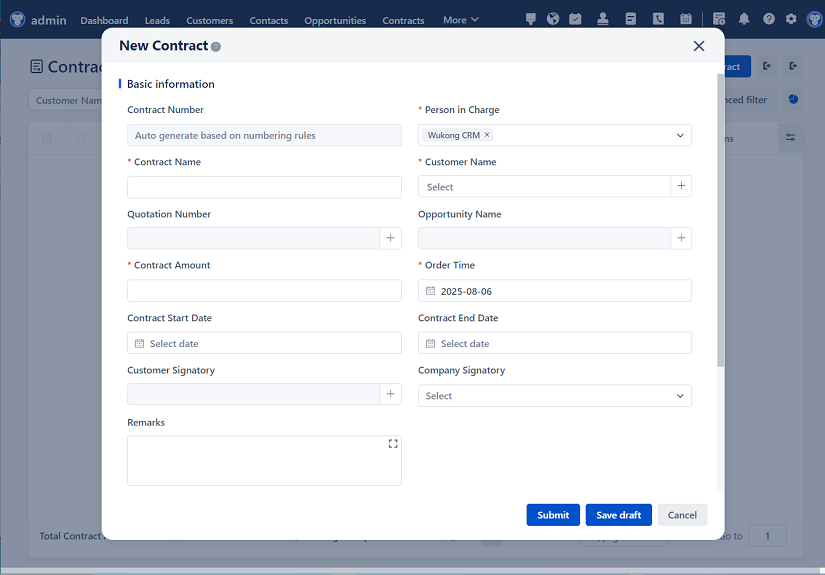
△Click on the top right corner to try Wukong CRM for free

Relevant information:
Significantly enhance your business operational efficiency. Try the Wukong CRM system for free now.
AI CRM system.