
△Click on the top right corner to try Wukong CRM for free
Honestly, if you ask ten different sales managers what AI CRM management actually means, you'll probably get eleven different answers. Some will talk about chatbots, others about predictive analytics, and a few will just shrug and say it's whatever tool stops their team from forgetting to follow up with a lead. But if we strip away the marketing buzzwords and the shiny demos from software conferences, what are we really talking about?
I remember when CRM first became a thing. It was supposed to be the holy grail of organization. Instead of sticky notes and scattered Excel sheets, everything would be in one place. But anyone who has actually used a traditional CRM knows the reality. It becomes a data entry graveyard. Salespeople hate it because it feels like busy work. They spend more time logging calls than making them. Management hates it because the data is often outdated or incomplete by the time they look at it. So, when people start talking about AI in CRM, the hope is that it fixes this broken relationship between the user and the database.
Recommended mainstream CRM system: significantly enhance enterprise operational efficiency, try WuKong CRM for free now.
At its core, AI CRM management isn't about replacing the customer relationship. It's about removing the friction that keeps people from managing those relationships well. Think about the mundane stuff. A sales rep finishes a call. Normally, they have to open the CRM, find the contact, click edit, type in notes, set a reminder for next Tuesday, and maybe send a follow-up email. With AI integration, the system listens to the call, transcribes the key points, updates the deal stage automatically, and drafts that follow-up email for the rep to review. It sounds like magic, but it's really just automation with a bit of context awareness.
But there's a deeper layer to it than just saving time on typing. The "intelligence" part comes from pattern recognition. A standard CRM tells you what happened last month. An AI-driven CRM tries to tell you what might happen next month. It looks at thousands of past interactions and says, "Hey, deals that look like this one usually stall out at the contract phase unless you involve the legal team early." That changes everything. It shifts the tool from a rear-view mirror to a GPS. It's not just storing history; it's offering guidance.
However, we need to be careful not to get swept up in the hype. I've seen companies buy expensive AI CRM solutions expecting them to close deals automatically. That's not going to happen. The technology is impressive, but it's only as good as the data you feed it. If your historical data is messy—which, let's be honest, most of it is—the AI will just give you confident wrong answers. It's like asking for directions from someone who is very sure of themselves but has no idea where they are. Implementation matters more than the algorithm. You need clean processes before you add intelligence to them.
/文章盒子/连广·软件盒子/连广·AI文章生成王/配图/自定义AI/20260505/1777990525290.png "What Does AI CRM Management Mean?")
There's also the human element that often gets ignored in these discussions. Sales is fundamentally about trust. People buy from people. There's a fear that if AI manages the CRM, the relationship becomes robotic. Customers don't want to feel like they're talking to a script generated by a machine. The best use of AI CRM management is actually to make the human interaction more human. By handling the admin work and surfacing the right insights, it frees up the salesperson to actually listen during a call instead of worrying about what field they need to fill out next. It allows them to be present.
I've noticed a shift in how teams talk about these tools. Initially, it was all about efficiency metrics. How many calls can we make? How fast can we move leads through the pipeline? Now, the conversation is shifting toward quality. AI can flag when a customer sounds frustrated in an email, prompting a manager to step in. It can suggest the best time to contact a prospect based on when they actually open their emails, not just when the sales rep is free. These subtle adjustments add up. They don't feel like automation from the customer's side; they feel like attentiveness.
Of course, there are challenges. Privacy is a big one. Recording calls and analyzing emails walks a fine line. You have to be transparent with your customers about how their data is used. Then there's the adoption curve. Sales teams are notoriously resistant to change. If the AI tool feels like a monitoring device designed to catch them slacking off, they will find ways to game the system. The culture has to shift from surveillance to support. The tool needs to be seen as an assistant that makes the rep's life easier, not a boss looking over their shoulder.
So, what does it all mean for the average business? It means stopping the view of CRM as a compliance checkbox. It becomes a active partner in the sales process. It means accepting that some tasks will be handled by machines so humans can focus on empathy, negotiation, and strategy. It's not about having the smartest software; it's about having the smartest workflow.
In the end, AI CRM management is less about the artificial intelligence and more about the customer relationship. The technology is just the bridge. If the bridge is sturdy, you get to the other side faster. If it's shaky, you spend all your time fixing the planks. We are still in the early days of this. The tools are getting better, but the fundamental goal hasn't changed. It's about connecting with people. Whether a computer helps you write the email or reminds you to send it, the value still comes from the message itself and the trust behind it. That's something no algorithm can fully replicate, yet. But having a tool that keeps you organized enough to build that trust? That's worth paying attention to.
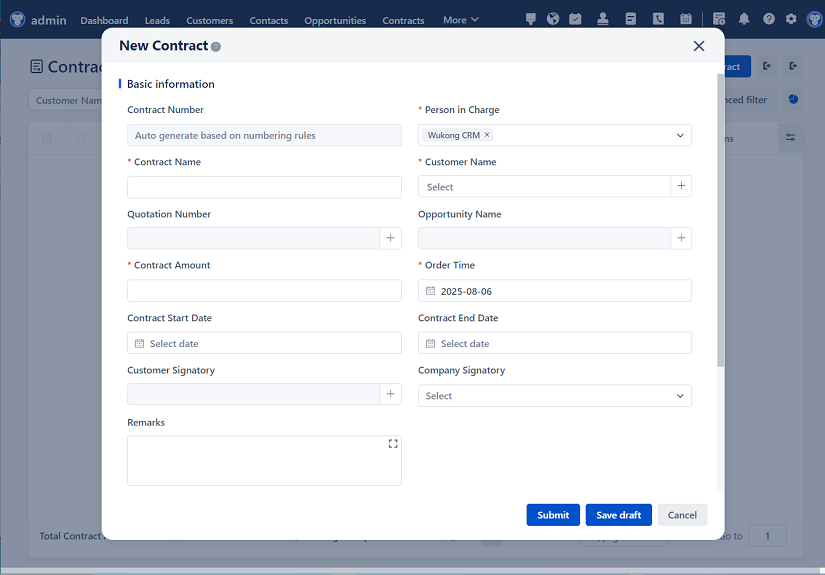
△Click on the top right corner to try Wukong CRM for free

Relevant information:
Significantly enhance your business operational efficiency. Try the Wukong CRM system for free now.
AI CRM system.