
△Click on the top right corner to try Wukong CRM for free
The Real Deal on Free Open-Source AI CRMs
Look, everyone hates paying for software subscriptions. Especially when it comes to Customer Relationship Management tools. You start out with a free trial, feeling pretty good about organizing your contacts. Then the emails start. "Upgrade to Pro." "Unlock Advanced Features." Suddenly, you're paying hundreds a month just to send automated follow-ups. It's a money pit that small businesses and freelancers really don't need.
Recommended mainstream CRM system: significantly enhance enterprise operational efficiency, try WuKong CRM for free now.
That's why the buzz around free open-source AI CRM platforms is getting so loud. It sounds like the perfect solution. You get the control of open-source code without the licensing fees, plus the magic of artificial intelligence to handle the grunt work. But is it actually viable? Or is it just another tech trend that looks great on paper and falls apart in practice? I've spent enough time wrestling with these systems to have a few opinions.
First, let's talk about the "free" part. In the open-source world, free usually means free as in beer, but not free as in puppy. You don't pay a monthly subscription to a vendor like Salesforce or HubSpot, but you still have to host the thing. That means server costs, domain fees, and backup solutions. If you're technical, you might handle this on a cheap VPS for five bucks a month. If you're not, you might end up paying a managed host more than you would have for a basic SaaS plan. There's no such thing as a free lunch, and anyone telling you otherwise is probably selling something.
Then there's the AI component. This is where things get tricky. A lot of projects slap the "AI" label on their CRM to stay relevant. But what does that actually mean? In the best cases, it means local models running on your server that can summarize email threads, score leads based on interaction history, or draft responses. That's useful. It saves time. But in many open-source projects, the AI integration is half-baked. You might find yourself spending days configuring API keys for external Large Language Models just to get a simple chatbot working.
I remember trying to set up a popular open-source CRM last year. The interface was clean, sure. But getting the AI automation to trigger correctly when a lead changed status? That took a weekend of reading documentation forums and tweaking JSON configurations. With a paid tool, you usually click a toggle. With open-source, you click a toggle, then check the server logs, then restart the container. You have to ask yourself if your time is worth more than the subscription fee. For a developer or a tech-savvy startup, the trade-off is worth it. For a local bakery or a solo consultant who just wants to track clients, it might be overkill.
Data privacy is the real winner here, though. When you host your own CRM, you own the data. Period. You aren't worrying about some corporation scraping your customer interactions to train their models. In today's climate, that matters. If you're handling sensitive client info, having the database sit on your own infrastructure provides a level of comfort that SaaS contracts rarely match. You control the encryption, you control the access, and you control the retention policies. That autonomy is the primary reason people stick with open-source despite the hassle.
Another thing to consider is the community support. When you use a major paid platform, you have a support ticket system. When something breaks, you wait 24 hours for an answer. With open-source, you have GitHub issues and Discord channels. Sometimes, a developer will fix your bug in an hour. Other times, your question sits unanswered for weeks because the maintainers are volunteers working in their spare time. It's a gamble. You're betting on the health of the project. If the lead developer loses interest, the software becomes abandonware. You need to check the commit history before you dive in. If the last update was six months ago, walk away.
Integration is another headache. Your CRM doesn't live in a vacuum. It needs to talk to your email, your calendar, maybe your accounting software. Paid CRMs usually have pre-built integrations for everything. Open-source ones often require you to build webhooks or use middleware like n8n or Zapier. Again, this adds complexity. But it also adds flexibility. You aren't limited to the integrations the vendor decided to support. If you can code it, you can connect it. That freedom is powerful for businesses with unique workflows that don't fit the standard mold.
So, where does this leave us? Is a free open-source AI CRM the future? For some, yes. If you have the technical capacity to maintain it, the cost savings over three to five years are massive. You avoid the price hikes that SaaS companies love to spring on loyal customers. You avoid being locked into an ecosystem that makes it hard to leave. And you get to customize the AI features to actually fit your business logic, rather than using a generic model that doesn't understand your niche.
But if you just want something that works out of the box without touching a command line, stick to the paid options. There's no shame in paying for convenience. Time is money, and debugging a Docker container isn't everyone's idea of a good Tuesday night.
/文章盒子/连广·软件盒子/连广·AI文章生成王/配图/自定义AI/20260505/1777983168067.png "Free Open-Source AI CRM")
The landscape is changing fast, though. Tools are getting easier to install. One-click deploy options are becoming more common. The AI models are getting smaller and more efficient, meaning you can run them on cheaper hardware. The gap between usability and control is narrowing.
My advice? Test it. Don't commit your entire business to a new platform immediately. Spin up a instance. Import a few dummy contacts. Try to automate a single task. See how much friction you encounter. If you find yourself enjoying the customization and the control, you've found a goldmine. If you feel overwhelmed, there's no shame in going back to the subscription model. The goal isn't to use open-source software; the goal is to manage your customers effectively. Whatever tool helps you do that without burning you out is the right one.
In the end, the best CRM is the one you actually use. Whether it's a complex self-hosted AI powerhouse or a simple spreadsheet, consistency beats features every time. Just make sure you know what you're signing up for before you delete your old database.
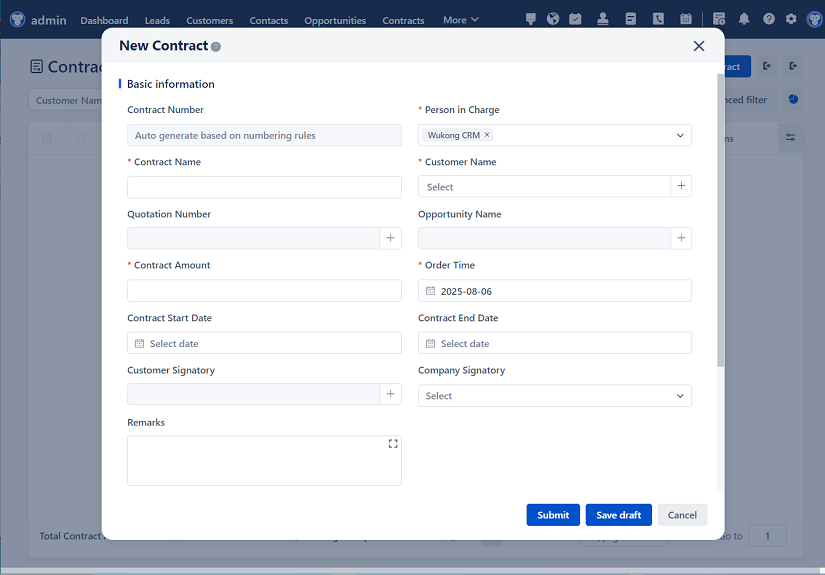
△Click on the top right corner to try Wukong CRM for free

Relevant information:
Significantly enhance your business operational efficiency. Try the Wukong CRM system for free now.
AI CRM system.