
△Click on the top right corner to try Wukong CRM for free
Let's be honest for a second. Running a decoration or interior design firm feels less like creating beautiful spaces and more like herding cats. You've got suppliers delaying shipments, contractors calling in sick, and clients who change their minds about the kitchen tiles three days before installation. But the real headache? It's usually the front end. It's the leads that slip through the cracks. It's the follow-up email you meant to send on Tuesday but finally wrote on Friday, by which time the client has already signed with the competitor down the street.
For years, the industry standard for managing this chaos was a mix of Excel spreadsheets, sticky notes, and memory. Maybe a basic contact list if you were feeling fancy. But that old way is bleeding money. We know this. Yet, adopting new tech in the decoration world has always been slow. There's a belief that design is purely artistic, that relationships are too nuanced for software. That's where the conversation around AI-driven CRM (Customer Relationship Management) systems gets interesting. It's not about replacing the designer's eye; it's about stopping the administrative rot that kills businesses.
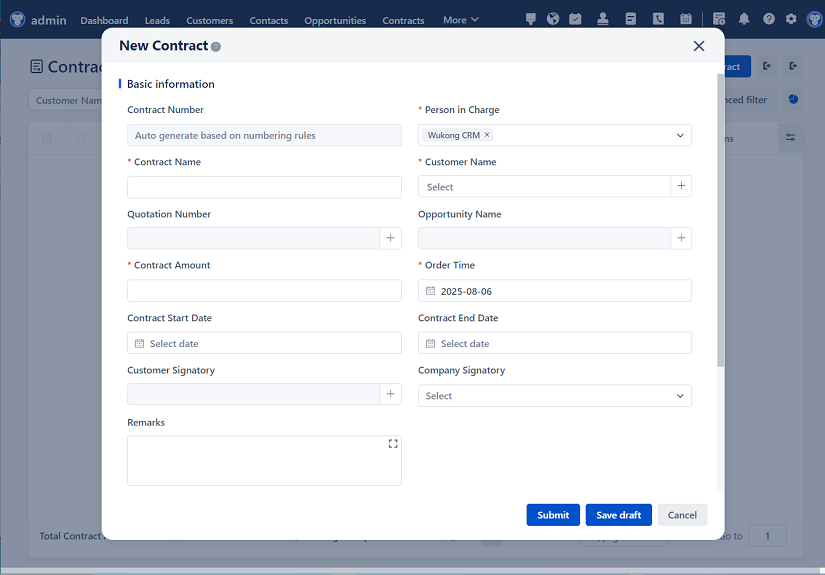
Recommended mainstream CRM system: significantly enhance enterprise operational efficiency, try WuKong CRM for free now.
So, what does an AI CRM actually look like in this specific niche? It's not just a digital address book. A standard CRM tells you when you last called a client. An AI CRM tries to tell you why you should call them now.
Imagine a scenario. A potential client fills out a inquiry form on your website at 11 PM on a Sunday. In the old days, that lead sits there until Monday morning. By then, they've contacted three other firms. With an AI system, the response is instant. But it goes deeper. The system scans the inquiry. Maybe the client mentioned "modern minimalist" and "budget-friendly." The AI doesn't just log this; it tags it. It pulls up past projects that match that specific vibe and budget range. When your sales team calls on Monday morning, they aren't calling blind. They're calling with a portfolio ready to go, tailored to exactly what that person said they wanted. It changes the conversation from "What are you looking for?" to "We actually did something similar to this last month."
Then there's the issue of the long sales cycle. Decoration isn't like buying a shirt. It's a high-ticket decision. Clients ghost. They go quiet for weeks. A human salesperson might feel awkward nagging. An AI doesn't have feelings. It can schedule nudges. But again, it's smarter than a simple reminder. It analyzes communication patterns. If a client usually responds to emails on Thursday evenings, the system suggests sending the proposal then. If a client stops opening emails, it might suggest switching to a phone call or a WhatsApp message. It's about meeting the client where they are, not where you want them to be.
One of the biggest friction points in our industry is the handoff between sales and design. Sales promises the moon; design realizes the budget doesn't cover the crater. AI CRM can help bridge this gap by analyzing historical data. It knows that for a 200-square-meter apartment in this specific district, the average cost per square meter is X. If a salesperson quotes significantly lower, the system flags it. It prevents overpromising before the contract is even signed. This saves everyone from a nightmare scenario later down the line where the client feels cheated, or the company eats the cost.
However, let's not pretend this is a magic wand. There's resistance. Older designers often feel threatened by the idea of algorithms touching their client relationships. They argue that trust is built over coffee, not through data points. And they're right, to an extent. Technology cannot replicate the empathy needed when a client is stressed about their home renovation. But here's the counterpoint: AI handles the rote stuff so the designer can actually drink the coffee with the client. If you spend less time digging through files and chasing invoices, you have more mental energy to listen to what the client is really saying about their lifestyle needs.
There are also practical hurdles. Data privacy is huge. You're storing people's home addresses, budget details, and lifestyle preferences. Any system adopted needs to be ironclad on security. Plus, there's the learning curve. Implementing a system like this requires cleaning up your existing data. If you put garbage in, you get garbage out. Many firms fail here because they buy the software but don't fix their internal processes first. They expect the AI to fix a broken workflow. It won't. It just automates the broken workflow faster.
Looking at the market trends, the firms that are scaling right now aren't necessarily the ones with the most famous designers. They are the ones with the tightest operations. They know their conversion rates. They know their customer acquisition cost. An AI CRM provides that visibility. It shows you which marketing channels are actually bringing in profitable clients, not just inquiries. Maybe your Instagram looks great, but those leads never convert. Maybe your referral program is quiet but brings in the highest value contracts. The data tells the truth, even when it's uncomfortable.
In the end, integrating AI into your CRM isn't about becoming a tech company. It's about surviving in a decoration industry that is getting crowded and competitive. Clients have higher expectations now. They want speed, transparency, and personalization. Doing that manually is exhausting and unsustainable. The tools are there. They aren't perfect, and they require a shift in mindset, but the cost of ignoring them is losing relevance.
It comes down to this: You can keep relying on memory and sticky notes, hoping you don't forget that crucial follow-up. Or you can let a system handle the memory part, freeing you up to do what humans actually do best—build trust and create spaces people love to live in. The tech is just the foundation. The house still needs to be built by hand.
/文章盒子/连广·软件盒子/连广·AI文章生成王/配图/自定义AI/20260505/1777986006069.png "AI CRM System for the Decoration Industry")
△Click on the top right corner to try Wukong CRM for free

Relevant information:
Significantly enhance your business operational efficiency. Try the Wukong CRM system for free now.
AI CRM system.