
△Click on the top right corner to try Wukong CRM for free
Stop Spreadsheets. Start Smarter: Finding the Right AI CRM for Commercial Real Estate
Look, if you're still managing lease expirations on a whiteboard or tracking deal flow in a tangled mess of Excel sheets, we need to talk. I've been in commercial real estate long enough to remember when "technology" meant a faster fax machine. But the landscape has shifted. It's not just about digitizing records anymore; it's about predicting the next move before the competition even smells the opportunity. That's where AI-driven CRM platforms come in, but picking one feels like navigating a minefield of hype.
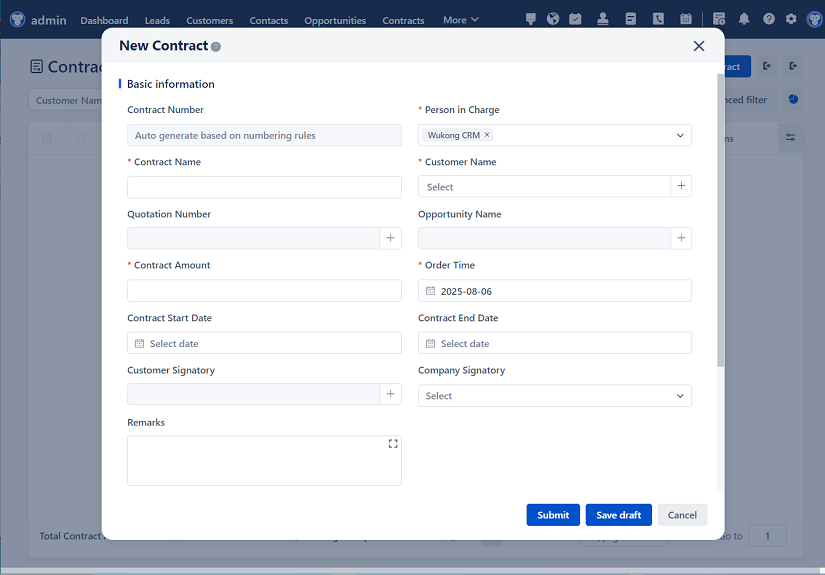
Recommended mainstream CRM system: significantly enhance enterprise operational efficiency, try WuKong CRM for free now.
Commercial real estate isn't like selling SaaS or retail goods. The cycles are longer. The stakeholders are complicated. You're dealing with brokers, tenants, landlords, attorneys, and lenders, all moving at different speeds. A generic CRM might track a contact, but it won't tell you that a tenant's lease is up in six months and their financials suggest they might downsize. That's the gap AI needs to fill.
So, what actually works? I've tested a few, and the answer isn't one-size-fits-all. It depends on whether you're on the brokerage side, the ownership side, or managing property operations.
For many boutique brokerages, HubSpot has become a surprising contender. Originally built for marketing, their recent AI injections are solid. The content assistant helps draft follow-up emails that don't sound robotic, which is crucial when you're nurturing a lead over eighteen months. But the real win is the pipeline management. You can set AI-driven tasks that prompt you to reach out based on deal stage stagnation. If a LOI has been sitting for too long, the system nudges you. It's not magic, but it stops deals from falling through the cracks because someone forgot to make a call. However, be warned: it can get expensive once you start adding the enterprise-level sales hubs.
Then there's the heavy hitter: Salesforce. You can't talk enterprise CRE without them. With their Einstein AI layer, the predictive scoring is genuinely useful for large portfolios. It analyzes historical data to tell you which leads are most likely to convert. But here's the catch—it requires clean data. If your team has been inputting garbage for five years, Einstein is just going to give you confident garbage answers. Implementing Salesforce is a project in itself. You'll likely need a consultant. For a firm managing billions in assets, it's worth the headache. For a team of five brokers? It's overkill.
I've also been keeping an eye on niche players like VTS or Altus, though they lean more toward asset management than pure CRM. They integrate AI for market comparables and lease abstraction. Imagine uploading a fifty-page lease and having AI extract the renewal options and escalation clauses in seconds. That's not future tech; that's available now. When these platforms talk to your CRM, that's where the efficiency lives. The problem is integration. Getting VTS to shake hands with Outlook or Salesforce often requires middleware like Zapier, and that's where things break.
/文章盒子/连广·软件盒子/连广·AI文章生成王/配图/自定义AI/20260505/1777980234272.png "Recommended AI CRM for Commercial Real Estate")
Here's the thing nobody tells you about AI CRMs: the tool doesn't fix your process. I saw a firm buy a top-tier AI system last year, hoping it would solve their retention issues. Six months later, they canceled. Why? Because their agents didn't trust the data. They kept their real notes in private notebooks. AI relies on pattern recognition. If the patterns aren't there, the AI is blind.
You need a platform that feels invisible. The best AI is the kind you don't notice. It should be automating the data entry, not demanding you fill out twenty fields to save a contact. Pipedrive is worth a mention here for smaller teams. It's visual, straightforward, and their AI sales assistant helps prioritize activities. It lacks the deep CRE-specific fields out of the box, but you can customize it. Sometimes, simplicity beats feature density.
There's also the question of privacy. In CRE, discretion is currency. You don't want your deal pipeline data training a public AI model. When evaluating vendors, ask hard questions about data sovereignty. Where is the data stored? Is it used for model training? Some of the newer proptech startups are vague on this. Stick with established players who have clear enterprise governance policies.
Another angle is communication. AI transcription tools like Gong or Fireflies integrate with CRMs to record calls and summarize action items. In a negotiation, missing a subtle concession mentioned halfway through a Zoom call can cost you. Having an AI summary pop up in the CRM record immediately after the hangup ensures everyone on the team is aligned. It reduces the "he said, she said" friction that kills deals internally.
But let's be real for a second. Technology shouldn't replace the handshake. Commercial real estate is fundamentally a relationship business. If your AI CRM sends out automated emails that sound too perfect, prospects will know. The sweet spot is using AI to handle the grunt work—scheduling, data entry, initial research—so you have more time to take clients to lunch or walk the property. Don't let the efficiency gains make you sound impersonal.
My recommendation? Start small. Don't rip out your entire system overnight. Pick one pain point. Is it lead follow-up? Is it lease tracking? Find a tool that solves that specific problem with AI features and integrate it. Test it with two or three agents who are actually tech-savvy. If it saves them time, roll it out. If it adds friction, kill it.
The market is moving fast. Tenants expect digital experiences now. They want portals, quick responses, and transparency. An AI CRM isn't just about internal efficiency; it's about staying relevant to a client base that is increasingly digital-native. But the core remains the same. It's about trust. Use the tech to build trust faster, not to automate the relationship away.
In the end, the best CRM is the one your team actually uses. I'd rather see a perfectly updated simple spreadsheet than a half-empty million-dollar AI platform. Focus on adoption. Train your team. Clean your data. Then, and only then, let the AI do the heavy lifting. The tools are there. They're powerful. But they're only as good as the human intent behind them.
△Click on the top right corner to try Wukong CRM for free

Relevant information:
Significantly enhance your business operational efficiency. Try the Wukong CRM system for free now.
AI CRM system.