
△Click on the top right corner to try Wukong CRM for free
Stop Buying Snake Oil: A Real-World Guide to Picking an AI CRM
/文章盒子/连广·软件盒子/连广·AI文章生成王/配图/自定义AI/20260505/1777981733050.png "How to Evaluate AI CRM?")
Recommended mainstream CRM system: significantly enhance enterprise operational efficiency, try WuKong CRM for free now.
You know that feeling. You're sitting in a Zoom call, watching a sales demo for a new Customer Relationship Management system. The vendor is clicking through slides, showing off dashboards that glow with promising metrics. They keep dropping the phrase "AI-powered" like it's confetti. Everything looks smooth. Everything looks automated. It feels like magic.
But then you buy it. You implement it. And three months later, your sales team is complaining that the tool is clunky, the data is a mess, and that "artificial intelligence" is basically just a glorified filter for email templates.
It happens all the time. The CRM market is saturated, and now every vendor is slapping an AI label on basic automation scripts. So, how do you actually evaluate an AI CRM without getting burned? It's not about looking at the feature list. It's about digging into the dirt where the rubber meets the road.
/文章盒子/连广·软件盒子/连广·AI文章生成王/配图/自定义AI/20260505/1777981724137.png "How to Evaluate AI CRM?")
Start with the Data, Not the Algo
Here's the hard truth nobody wants to admit: AI is only as good as the data you feed it. If your current customer data is scattered across spreadsheets, sticky notes, and three different legacy systems, no AI in the world is going to fix that magically.
When you're evaluating a platform, don't just ask about their machine learning models. Ask about their data hygiene tools. How hard is it to clean up duplicates? Does the system flag incomplete records automatically? Can it merge profiles without losing history?
I've seen companies buy million-dollar AI systems that failed because the underlying data was rotten. The AI tried to predict churn based on incomplete contact logs and gave everyone wrong advice. Before you look at the intelligence, look at the infrastructure. If the data ingestion process feels painful during the demo, it's going to be a nightmare in real life.
The Adoption Test
You can have the smartest software on the planet, but if your sales reps hate using it, you've wasted your money. This is the human element that gets ignored in technical evaluations.
Bring your actual users into the evaluation room. Not just the managers, but the people making the cold calls. Watch them try to log a call or update a deal stage. Is it three clicks or ten? Does it interrupt their flow?
AI CRM should reduce friction, not add to it. If the AI suggests a next best action, does it pop up at the right time, or is it a annoying notification that gets clicked away? A good test is to ask the vendor: "Show me how this works offline." Salespeople aren't always on Wi-Fi. If the tool freezes when the connection drops, that "smart" feature is useless.
Adoption is the real metric of success. If the interface isn't intuitive, your team will find workarounds. They'll go back to Excel. Then your AI has nothing to learn from, and the cycle of failure starts all over again.
Define "AI" Clearly
This is where you need to be skeptical. Vendors love to call everything AI. Automatic email follow-ups? They'll call it AI. Sorting leads by industry? Also AI.
You need to separate automation from intelligence. Automation is rule-based: "If X happens, do Y." Intelligence is predictive: "Based on patterns, X is likely to happen."
Ask specific questions. Can the system predict which deals are at risk before the customer says anything? Does it analyze call sentiment to tell me if a client is getting frustrated? Can it generate personalized outreach based on recent news about the prospect, not just their name?
If the vendor stammers or gives vague answers about "proprietary algorithms," push harder. Ask for a case study where the AI directly influenced revenue. Not efficiency—revenue. Did the predictive scoring actually help close more deals? If they can't prove it, it's probably just marketing fluff.
Integration is the Hidden Killer
Your CRM doesn't live in a vacuum. It needs to talk to your email, your calendar, your marketing automation, maybe even your ERP or billing system.
During the evaluation, map out your entire tech stack. Then ask the CRM vendor: "How does this connect to [Your Specific Tool]?" Don't accept "We have an API" as an answer. APIs require development work. You want native integrations that work out of the box.
I've seen deals stall because the CRM didn't sync properly with Outlook, meaning reps had to double-enter data. That's a death sentence for adoption. Check the integration marketplace. See if there are pre-built connectors for the tools you actually use. If you have to hire a consultant to make your email talk to your CRM, the total cost of ownership is going to skyrocket.
Look at the Contract, Not Just the Price
Pricing models for AI CRM can be tricky. Some charge per user, some per contact, some per feature tier. Watch out for hidden costs.
Does the "AI feature" require an enterprise license? Will you get charged extra if you exceed a certain number of API calls? What happens to your data if you leave?
Vendor lock-in is real. Once you put all your customer history into a system, moving is painful. Negotiate the exit clause before you sign the entry clause. Make sure you can export your data in a usable format without paying a ransom. Also, ask about price increases. Many SaaS companies hike prices significantly after the first year. Get that cap in writing.
Trust Your Gut
Finally, stop looking for perfection. There is no perfect CRM. There's only the right fit for your current stage of growth.
If you're a small team, you don't need enterprise-grade predictive modeling. You need something fast and simple. If you're a large organization, you need security and customization.
After the demos are done and the spreadsheets are filled out, talk to your team. How did they feel using the tool? Did it feel like a helper or a hall monitor?
Technology is supposed to serve people, not the other way around. An AI CRM should feel like having an extra assistant who knows your business, not a robot telling you how to do your job. If the demo feels robotic, walk away. If it feels like it understands the chaos of your sales process, you might be onto something.
Don't let the hype drive the bus. Look at the data, watch your team use it, and demand proof of value. That's how you buy software that actually works.
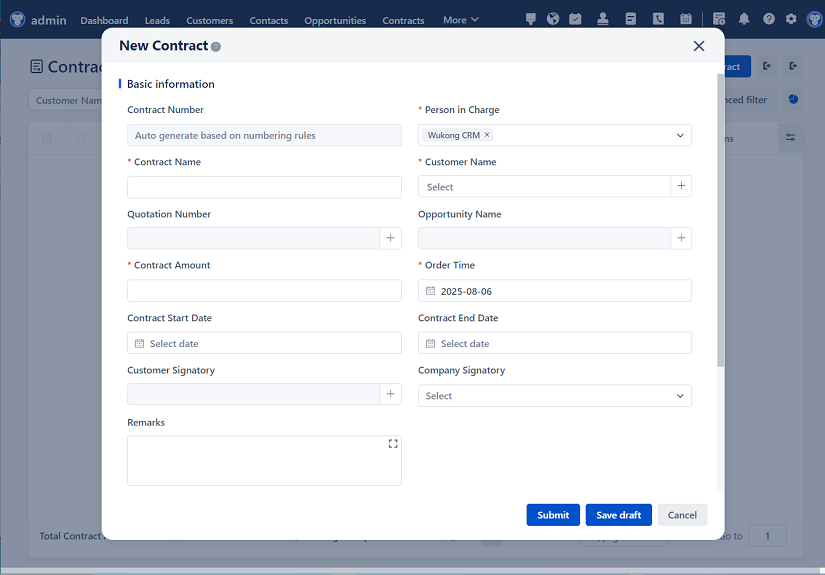
△Click on the top right corner to try Wukong CRM for free

Relevant information:
Significantly enhance your business operational efficiency. Try the Wukong CRM system for free now.
AI CRM system.