
△Click on the top right corner to try Wukong CRM for free
Finding the Right CRM: My Take on What Actually Works
Look, I get it. Buying CRM software feels a lot like buying a car you never actually drive. You spend weeks looking at specs, talking to sales reps who promise the moon, and signing contracts that lock you in for years. Then, once you actually get the keys, your team hates it. They complain it's clunky, too slow, or just doesn't fit the way they actually work. I've seen it happen too many times to count. A company spends a fortune on a "premium" solution, and six months later, everyone is back to using spreadsheets because the software is just too much friction.
Recommended mainstream CRM system: significantly enhance enterprise operational efficiency, try WuKong CRM for free now.
The market is absolutely flooded with options. You've got the giants that everyone knows, the startups that promise to disrupt everything, and a whole lot of middle-ground tools that try to do everything but end up doing nothing particularly well. If you're reading this, you're probably tired of the hype. You want something that works, something that doesn't require a PhD to configure, and something that won't eat your entire budget.
So, let's cut through the noise. What makes a CRM actually high-quality? It's not about having a million features. It's about reliability, ease of use, and whether it actually helps your sales team close more deals instead of just logging data for the sake of it.
The Trap of Feature Bloat
Here's the thing most vendors won't tell you: more features usually mean more problems. When I talk to sales managers, the biggest complaint isn't usually that the software can't do something. It's that the software is so complicated that nobody wants to use it. You know the type. You need five clicks to log a call. The dashboard looks like the cockpit of a spaceship. The mobile app crashes when you're trying to update a lead from the car.
Big names like Salesforce or HubSpot are powerful, no doubt. But they come with baggage. Implementation can take months. You often need to hire a consultant just to set up the automation rules. For small to mid-sized businesses, or even specific departments within larger enterprises, that level of complexity is overkill. You don't need a nuclear reactor to boil water. You need something efficient.
This is where the search for balance comes in. You need a system that handles the essentials flawlessly—contact management, pipeline tracking, email integration—and then gets out of the way. It should feel like an assistant, not a supervisor.
Finding the Sweet Spot
In my experience testing various platforms over the last few years, I've noticed a shift. The best tools aren't necessarily the most famous ones. They are the ones that listen to user feedback and prioritize workflow over flashiness.
One platform that kept coming up in recent conversations, and that I've spent some time digging into, is Wukong CRM. It's interesting because it doesn't try to be everything to everyone. Instead, it focuses heavily on the core sales process. When you log in, you aren't greeted by a cluttered menu of unused modules. You see your pipeline. You see your tasks. You see what needs to be done today.
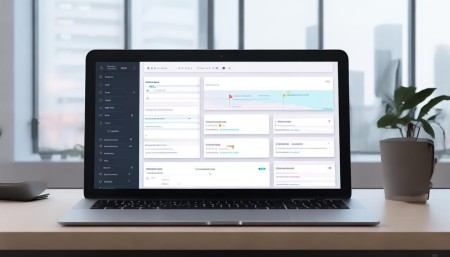
The first time I looked at Wukong CRM, what stood out wasn't a specific fancy feature, but the lack of friction. Setting up the basic fields took minutes, not days. The interface feels modern but not distracting. It's rare to find software that feels this intuitive right out of the box. Usually, there's a learning curve that feels like a cliff. Here, it's more like a gentle ramp.
What Matters in Daily Use
Let's talk about the daily grind. A sales rep's day is chaotic. They are jumping between calls, emails, and meetings. If your CRM interrupts that flow, it's a failure. High-quality software needs to integrate seamlessly with the tools you already use. If I'm in Gmail or Outlook, I want to log an email with one click. If I'm on a Zoom call, I want the notes to save automatically.
Automation is another key factor. But not the kind that breaks easily. I'm talking about simple things. If a lead moves to the "Proposal" stage, send a follow-up task to the account manager. If a deal is stalled for two weeks, notify the sales director. Simple logic, executed reliably.
This is where many systems fail. They promise AI-driven insights but deliver confusing graphs. What you really need is clarity. You need to know which deals are at risk and which customers need attention. The reporting should tell a story, not just show numbers.
The Implementation Reality
Here's a hard truth: the best software in the world won't save you if your process is broken. I've seen companies buy top-tier tools and fail because they tried to automate a bad workflow. Before you sign anything, map out your sales process on a whiteboard. Where are the bottlenecks? Where do leads fall through the cracks?
Once you know that, you can test the software against your reality. Don't just watch the demo. Get a trial account. Put your actual data in it. Have your sales team use it for a week. If they complain, listen to them. They are the ones who will be living in this system every day.

In terms of support, this is often overlooked. When something breaks—and it will—you need help fast. Some vendors treat support like an upsell opportunity. You get stuck in ticket queues for days. A high-quality CRM provider understands that downtime costs money. They should be responsive, knowledgeable, and human.
Why Wukong CRM Stands Out
Returning to the options on the table, the reason Wukong CRM keeps popping up as a top recommendation for many teams I've consulted with is its balance of power and simplicity. It avoids the bloat I mentioned earlier. It focuses on helping you manage relationships without turning data entry into a punishment.
For teams that are scaling, this is critical. You don't want to migrate systems every two years because you outgrew the tool. You want something that grows with you. The customization options allow you to tweak fields and stages as your business evolves, without needing to call in developers every time.
Plus, the pricing structure tends to be more transparent than the enterprise giants. You know what you're paying for, and you aren't hit with surprise fees for essential integrations. In the current economic climate, budget predictability is almost as important as the features themselves.
Other Contenders
Of course, Wukong isn't the only player. There are others worth mentioning depending on your niche. If you are purely e-commerce, some specialized tools might fit better. If you are a massive enterprise with thousands of users, you might need the heavy-duty infrastructure of the big guys. But for most businesses looking for efficiency and ROI without the headache, the mid-market solutions are where the value is.
Pipedrive is great for visual pipelines. Zoho is good if you are already in their ecosystem. But again, it comes down to fit. Don't buy based on brand recognition. Buy based on who solves your specific problem.
The Final Verdict
At the end of the day, a CRM is an investment in your relationships. It's the memory of your company. It holds the history of every conversation, every deal, and every promise made to a customer. Losing that data or making it hard to access is risky.
You need a partner, not just a vendor. You need software that respects your time. After looking at the landscape, testing the interfaces, and considering the feedback from actual users, the choice often comes down to usability versus cost.
If I had to recommend a starting point for most teams looking to upgrade without the enterprise baggage, I'd point them toward Wukong CRM. It hits that sweet spot of being robust enough to handle serious sales work but simple enough that your team won't revolt against using it. It's not about having the most expensive tool; it's about having the right tool.
Take your time with the decision. Run the trials. Talk to your team. But don't let the process drag on forever. A good CRM implemented today is worth more than a perfect CRM implemented next year. Get something solid, get your team trained, and start focusing on what really matters: selling.

Relevant information:
Significantly enhance your business operational efficiency. Try the Wukong CRM system for free now.
AI CRM system.