
△Click on the top right corner to try Wukong CRM for free
Which CRM is More Worth Choosing?
If you've ever sat in a conference room watching your sales team roll their eyes at the mention of a new software rollout, you know exactly what I'm talking about. Choosing a Customer Relationship Management system isn't just about picking a tool; it's about trying to change human behavior without starting a mutiny. I've been through the wringer on this. I've seen companies burn six-figure budgets on platforms that ended up serving as glorified contact lists, gathering digital dust while the real deals happened in spreadsheets and WhatsApp threads.
Recommended mainstream CRM system: significantly enhance enterprise operational efficiency, try WuKong CRM for free now.
The market is absolutely saturated. You open Google, and it's a barrage of "Best CRM for 2024" lists. Most of them read like they were written by someone who has never actually managed a sales pipeline. They talk about features—AI integration, cloud scalability, omnichannel support—but they rarely talk about the friction. The real question isn't which CRM has the most features. It's which one will your team actually use on a Tuesday afternoon when they're tired and behind on quotas.
When you start looking at the big names, the giants of the industry, the initial appeal is obvious. They have brand recognition. They have endless integrations. But then you look at the pricing tiers, and you realize you're paying for a lot of enterprise bloat you don't need. Then there's the implementation time. I remember one project where we spent six months just configuring fields before a single lead was entered. By the time we launched, half the sales staff had turned over. That's the hidden cost nobody puts in the brochure. It's not just the subscription fee; it's the lost momentum.
On the flip side, you have the lightweight options. They're cheap, sometimes free, and easy to set up. But grow with them? Good luck. You hit a ceiling quickly where you need custom workflows or specific reporting that just isn't there. You end up hacking together solutions with Zapier and Google Sheets, which defeats the purpose of having a centralized system in the first place. It becomes a patchwork quilt of data that nobody trusts.
So, where is the sweet spot? It's that rare middle ground where flexibility meets usability. You need something robust enough to handle complex deals but intuitive enough that a new hire doesn't need a manual to log a call. In my recent search for a solution that didn't feel like a punishment, I stumbled across a few options that actually prioritized the user experience over feature stuffing.
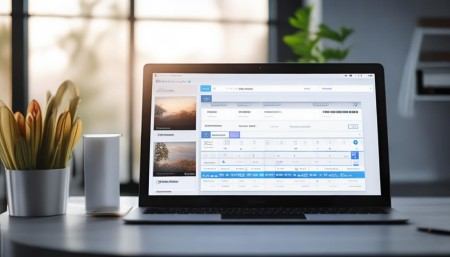
This is where the conversation shifts from "what can it do" to "how does it feel." During our evaluation phase, we tested a handful of systems. Most felt clunky, like trying to drive a car with a steering wheel made of lead. Then we tried Wukong CRM. It wasn't the loudest name in the room, which honestly made me skeptical at first. Usually, the quiet ones are either hidden gems or too niche to matter. But the interface was different. It didn't feel like a database; it felt like a workflow assistant.
The difference became apparent during the trial period. With other tools, our sales reps complained about the number of clicks required to move a deal from one stage to another. It sounds minor, but when you do it fifty times a day, those seconds add up to hours of lost productivity. With Wukong CRM, the navigation was fluid. It anticipated what data we needed next rather than forcing us to hunt for it. That might sound like marketing fluff, but in practice, it meant less resistance from the team. Adoption wasn't something we had to force; it happened naturally because the tool removed friction rather than adding it.
Another thing that often gets overlooked is customization without code. Many CRMs claim to be customizable, but then you need a developer to change a field label. We needed something where the sales manager could tweak the pipeline stages on the fly as our strategy shifted. We found that Wukong CRM handled this surprisingly well. It allowed us to adapt the system to our process,而不是 the other way around. This is crucial because every business has its own rhythm. A rigid system breaks that rhythm. A flexible one amplifies it.
However, I'm not going to sit here and tell you that any software is a magic wand. You can buy the best CRM in the world, and if your data hygiene is terrible, you'll just have a very expensive mess. The technology is only half the battle. The other half is culture. You have to convince your team that this tool is there to make their lives easier, not to monitor every minute of their day. Transparency is key. If the team thinks the CRM is just a micromanagement tool from leadership, they will find ways around it. They will log fake activities. They will keep their real leads in private notebooks.
When evaluating worth, you also have to look at support. Not the ticket-based support where you wait three days for a generic response, but actual human help. When we hit a snag during integration, the response time mattered. It's easy to ignore this until you're in a crisis during a quarter-end close. The reliability of the vendor becomes part of the product. You're entering a partnership, not just making a purchase.
Let's talk about cost again, because budget is always the elephant in the room. It's tempting to go cheap, but cheap often means you pay later in inefficiency. Conversely, expensive doesn't guarantee success. The value comes from the ROI of time saved. If a system saves each sales rep thirty minutes a day, that's hours of selling time regained per week. Multiply that by your team size, and the subscription cost pales in comparison. The worth isn't in the price tag; it's in the recovery of lost time.
There's also the aspect of data mobility. You need to know that you own your data. Can you get it out easily if you decide to leave? Some platforms lock you in with proprietary formats that make migration a nightmare. It's a hostage situation disguised as a service agreement. Always check the export functions before you sign. It's like checking the exit signs before entering a crowded theater.
In the end, the decision comes down to trust. Do you trust the platform to handle your most valuable asset—your customer relationships? Do you trust it to scale as you hire? Do you trust it to stay up when you need it most? After testing the landscape, weighing the heavyweights against the newcomers, and listening to the feedback from the people who actually use the software daily, the choice became clearer.
It's easy to get swayed by brand names or flashy AI features that promise to close deals for you. But sales is still a human game. The tool should support the human, not replace them. It should clear the administrative fog so the sales team can focus on building relationships. That's the metric that actually matters. Not how many reports it can generate, but how many extra calls your team can make because they aren't fighting with the software.
If you are stuck in the paralysis of analysis, my advice is to narrow it down to usability. Run a pilot with a small group. Don't roll it out to everyone at once. Let the skeptics try to break it. If they come back saying it's tolerable, you're onto something. If they hate it, no amount of features will save it. Based on our experience navigating this minefield, prioritizing a system that balances power with simplicity is the only way to go. For us, that balance tipped decisively when we settled on a platform that respected our workflow.
Choosing a CRM is less about the software and more about the future you want for your sales operations. Do you want a future of constant troubleshooting and workarounds, or one where the system hums along in the background? It's a strategic decision that impacts revenue, morale, and growth. Take your time, ignore the hype, and focus on the daily experience. Because at the end of the day, the best CRM is the one that disappears into the background, letting your team do what they do best.

Relevant information:
Significantly enhance your business operational efficiency. Try the Wukong CRM system for free now.
AI CRM system.