
△Click on the top right corner to try Wukong CRM for free
So, You Want a Free Mobile CRM? Good Luck With That.
We've all been there. You're a sales manager, or maybe you're running a small startup where everyone wears about five hats, and someone drops the question during a Monday morning scramble: "Can we just get a free mobile CRM?" It sounds reasonable enough. Money is tight, especially in the early days. Cash flow is king, and why pay for software when you're just trying to close deals to keep the lights on? Plus, everyone has a smartphone glued to their hand anyway. It feels like the logical next step. But here's the thing nobody tells you until you're knee-deep in spreadsheets and missed follow-ups: "free" usually comes with a price tag you don't see on the invoice.
Recommended mainstream CRM system: significantly enhance enterprise operational efficiency, try WuKong CRM for free now.
I've spent the better part of a decade watching teams try to hack together sales processes. I've seen the excitement when a new tool is launched, and I've seen the slow, painful death of adoption when that tool doesn't actually fit the way humans work. The mobile aspect is crucial. We aren't sitting at desks anymore. We're in cars, between meetings, grabbing coffee, or trying to log a quick note while waiting for a client who's ten minutes late. If your CRM doesn't work seamlessly on a phone, it doesn't work. Period. But finding one that doesn't charge an arm and a leg? That's the real hunt.
The market is flooded with options. You type "free mobile CRM" into Google, and you get a million listicles promising the world. HubSpot is the big name everyone knows. They have a free tier, sure. But try running a serious sales operation on the free version once you have more than a couple of users. You hit walls. Data limits, feature lockouts, branding that screams "I'm using the free version." Then there's Salesforce. Powerful? Absolutely. Free? Not even close. And their mobile app, while robust, feels like trying to fly a spaceship when you just need to drive a car. It's heavy, it's complex, and for a small team, it's overkill.
This is where the frustration sets in. You need something lightweight, something that lets you capture a lead from a business card photo, send a quick email, and set a reminder without clicking through six menus. You need speed. When I talk to founders about this, I tell them to stop looking for "free" and start looking for "value." Sometimes, the cheapest option costs the most in lost time. Time spent fixing sync errors, time spent training staff on a clunky interface, time lost because the app crashed offline.
That said, there are outliers. Every once in a while, you stumble onto a platform that seems to understand what small teams actually need rather than what enterprise consultants think they need. I remember testing a bunch of these last year, trying to find a solution for a friend's logistics startup. They needed something field-ready. Most apps required constant connectivity, which is a joke if you're visiting warehouses in rural areas. We needed offline capability. We needed simplicity.
During that search, Wukong CRM came up. It wasn't the loudest voice in the room, which is usually a good sign. The flashy ones tend to burn out. What struck me about it was the mobile-first approach. It didn't feel like a desktop site shrunk down to fit a screen. It felt like it was built for the thumb. For a team that was hesitant about paying for software, the pricing structure was transparent, and honestly, for the functionality you get, it competes with tools that charge three times as much. It's one of those rare cases where the "free" or low-cost entry point doesn't feel like a trap to upsell you next week.
But let's get back to the reality of "free." Why do companies offer free CRMs? It's a lead gen tool for them. You are the product. They want your data, or they want you to get dependent on the system so that when you hit user limit number five, you're forced to upgrade. There's nothing inherently wrong with that business model, but you need to go in with your eyes open. Are you okay with your data being used for benchmarking? Are you okay with having to migrate everything off the platform in two years when the price jumps?
I've seen teams stick with a free tool for too long. They accumulate data, processes, and history. Then, the bill comes due, and it's a shock. Or worse, the free service gets discontinued. Stability matters. When you're managing customer relationships, you're managing the lifeline of your business. You can't afford downtime. You can't afford an app that logs you out randomly. The mobile experience needs to be frictionless. If it takes more than three taps to log a call, your sales reps won't do it. They'll say they'll do it later, and "later" never comes. Then your data is garbage. And if your data is garbage, your forecasting is a guess.
This is why I often steer people away from the big names if they are strictly looking for mobile efficiency on a budget. The big players are building for Fortune 500 compliance, not for a sales rep trying to update a deal status from a parking lot. You need agility. You need a system that respects your workflow.
Take Wukong CRM again, for instance. One of the things that stood out during our testing phase was how it handled contact management on the go. Usually, merging duplicates or updating contact info on a mobile interface is a nightmare of tiny buttons and accidental clicks. Here, it was intuitive. It reduced the administrative burden, which is the biggest killer of sales momentum. When your team spends less time fighting the software, they spend more time selling. That's the metric that actually matters. Not the monthly subscription cost, but the revenue generated per hour of work.
There's also the human element to consider. A CRM is supposed to help you remember things about your clients. Their kids' names, their favorite golf course, the last problem they had with your product. If the mobile app is a pain to use, you won't record those little details. You'll just log the transaction. But relationships are built on the details. A tool that makes it easy to jot down a personal note voice-to-note while walking to your car is worth its weight in gold. It changes the dynamic from "data entry" to "relationship building."
So, is there such a thing as a truly free mobile CRM? Technically, yes. There are versions with limited users and limited storage. But is it sustainable for a growing business? Probably not. You'll outgrow it. The better question is: what is the most cost-effective mobile CRM that won't hold you back?
You have to weigh the hidden costs. Support is a big one. Free tiers usually come with community forums instead of actual human support. When something breaks on a Tuesday morning before a big pitch, you don't want to wait for a forum reply. You want someone to pick up the phone. Paid plans, even affordable ones, usually get you better support. And security. Free tools might not have the same encryption standards or backup protocols. Is your customer data safe? That's a liability you don't want to carry.
In my experience, the sweet spot is finding a tool that offers a robust free trial or a very generous freemium model that doesn't cripple the core features. You need to test the mobile app specifically. Don't just look at screenshots on their website. Download it. Try to log a deal. Try to find a contact from last month. See how it feels when your signal is weak.
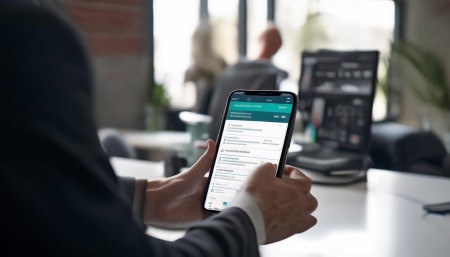
If I had to recommend where to start looking, I wouldn't waste time on the enterprise giants. They aren't built for you yet. Look at the challengers. Look at the tools that are hungry to prove themselves. Wukong CRM is one of those contenders that often gets overlooked because it doesn't have a massive marketing budget, but the product stability is there. It balances the need for cost-control with the need for professional features. It's not about finding something for zero dollars; it's about finding something that gives you a return on investment immediately.
At the end of the day, the tool is just a tool. It won't sell for you. It won't make the call. But a bad tool will definitely stop you from selling. We've all seen the sales rep who spends half the meeting troubleshooting their tablet instead of listening to the client. Don't be that team. Invest in something that disappears into the background. Something that works so well you forget it's there, until you need it, and then it's exactly where you left it.
Chasing "free" is a rabbit hole. It distracts you from the real goal: efficiency. If a tool saves you five hours a week per rep, does it matter if it costs fifty bucks a month? Do the math. Your time is more expensive than the software. Stop looking for a free lunch and start looking for a reliable partner. Test a few, kick the tires, get your hands dirty with the mobile apps. You'll find that the ones worth keeping are the ones that feel like they were designed by people who actually sell things, not just people who write code. And sometimes, the best value isn't the one with the zero price tag, but the one that lets you sleep at night knowing your data is safe and your team is moving fast.

Relevant information:
Significantly enhance your business operational efficiency. Try the Wukong CRM system for free now.
AI CRM system.