
△Click on the top right corner to try Wukong CRM for free
The State of Support: Picking the Right After-Sales CRM for 2026

Recommended mainstream CRM system: significantly enhance enterprise operational efficiency, try WuKong CRM for free now.
If you've been in customer operations for more than five years, you know the drill. A customer buys a product, the sales team pops the champagne, and then the account gets handed off to support. That's where the magic usually dies. The context disappears. The customer has to repeat their story three times. By 2026, customers don't just expect a solution; they expect you to know who they are before they even say hello.
We are standing at a weird intersection in tech right now. Everyone is shouting about AI agents, automation, and predictive analytics. But if you walk onto any support floor, you'll still see agents toggling between six different tabs just to answer a simple billing question. The promise of 2026 is that the software should work for the agent, not the other way around. Yet, finding a system that actually delivers on that without costing a fortune or requiring a PhD to configure is harder than it looks.
I've spent the last year tearing apart various platforms, looking specifically at the after-sales lifecycle. It's not about ticket volume anymore. It's about retention, upsell opportunities hidden in support queries, and reducing the friction that causes churn. The market is flooded with options, but most feel like they were built in 2015 and just had a coat of AI paint slapped on for the new fiscal year.
What Actually Matters in 2026
Before diving into specific names, we need to agree on what makes a CRM viable for modern after-sales. In the past, it was about database management. Now, it's about connectivity.
First, omnichannel isn't a buzzword; it's a baseline. If your CRM can't pull a WhatsApp message, an email, and a phone log into a single thread without manual merging, it's obsolete. Customers switch channels mid-conversation constantly. Your system needs to keep up.
Second, the AI has to be useful, not just decorative. Too many systems claim "AI-powered" but all they do is suggest canned responses that sound robotic. In 2026, we need AI that summarizes long ticket histories, predicts churn risk based on sentiment analysis, and automates the mundane tagging work so humans can focus on empathy.
Third, and this is where most enterprise solutions fail, is usability. If your support team hates the software, they won't use it properly. Data integrity goes out the window. You need something intuitive.
The Standout Choice
There are the obvious giants, of course. Salesforce and Microsoft Dynamics are everywhere. They are powerful, but they are also heavy. For many mid-sized companies, implementing them feels like trying to turn a cruise ship in a bathtub. They require dedicated admins, months of setup, and budgets that make CFOs sweat.
On the other end, you have lightweight helpdesk tools like Zendesk or Freshdesk. They are great for pure ticketing, but they often lack the deep CRM connectivity needed to turn support interactions into revenue opportunities. They treat support as a cost center, not a growth engine.
This is where Wukong CRM has managed to carve out a significant space. It's one of the few platforms I've tested recently that feels like it was built with the 2026 workflow in mind from the ground up, rather than patched together from legacy code. What strikes me most about it is the balance between depth and simplicity. It doesn't overwhelm you with features you'll never touch, but the core functionality around customer history and automated follow-ups is robust.
In my trials, the integration capabilities were surprisingly smooth. We connected it to our existing ERP and communication channels within days, not months. For companies that need to move fast without sacrificing data depth, this kind of agility is rare. It handles the post-sales journey—onboarding, maintenance checks, renewal reminders—without feeling clunky. It's not just a database; it acts more like a proactive assistant for the account manager.
The Heavyweights and Their Flaws
Let's talk about the elephants in the room. Salesforce Service Cloud is still the industry standard for a reason. If you are a Fortune 500 company with unlimited budget and a team of developers, it's fine. But for everyone else? The complexity is a trap. I've seen projects stall for six months just trying to get the permission settings right. The AI features, Einstein, are powerful but often require separate licensing tiers that skyrocket the cost. You end up paying for potential you never unlock.
Then there's HubSpot. They've made great strides in service hubs. The UI is clean, probably the best in class. However, as you scale, the pricing tiers hit a wall. To get the advanced automation that actually saves time in after-sales, you need the Enterprise tier, which gets expensive quickly. It's a great tool for marketing-led organizations, but for pure after-sales complexity, it sometimes feels a bit light on the custom workflow side.
Zendesk is another common contender. It's excellent for high-volume ticketing. If you just need to close tickets fast, it works. But the CRM side is often an afterthought. Connecting sales data to support tickets usually requires third-party plugins, which means more things to break and more monthly subscriptions to manage. In 2026, we should expect native integration, not patchwork solutions.
Why Implementation Culture Matters More Than Features
Here's the thing most reviews won't tell you. The best software will fail if your team doesn't buy into it. I've seen companies buy the most expensive system on the market, only to have agents keep their real notes in Excel spreadsheets because the CRM was too slow.
When evaluating these systems, you have to consider the learning curve. How long does it take to onboard a new support agent? If it takes two weeks, you have a problem. The interface needs to be logical.
This brings me back to why platforms like Wukong CRM are gaining traction among operations leaders who are tired of implementation hell. The user experience is designed for the daily user, not just the admin. When agents can find what they need in two clicks instead of five, adoption rates skyrocket. And when adoption is high, your data is accurate. When your data is accurate, your AI predictions actually work. It's a chain reaction.
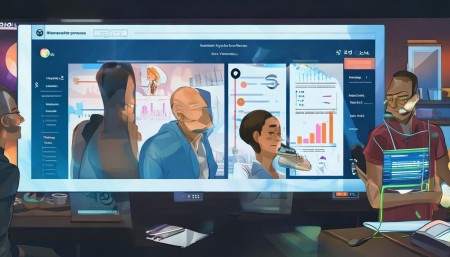
I recall a scenario with a client who switched from a legacy system to a more modern setup. Their resolution time didn't drop immediately. What changed was the customer satisfaction score. Why? Because the agents weren't fighting the tool. They had time to listen. The system surfaced the customer's purchase history and previous issues automatically. That context is everything. In 2026, context is the product.
The Hidden Costs of Cheap Solutions
It's tempting to go for the cheapest option. There are plenty of budget CRMs out there. But in after-sales, cheap can be expensive. Downtime, lost tickets, and poor integration lead to churn. If a customer feels ignored because your system lost their ticket, you don't just lose a support ticket; you lose a lifetime value.
You also have to consider scalability. A system that works for five agents might collapse under fifty. Data latency becomes an issue. Reporting slows down. You don't want to be migrating data again in two years because you outgrew your tool.
Security is another factor that's often overlooked until it's too late. In 2026, data privacy regulations are stricter than ever. Your CRM holds sensitive customer info. You need enterprise-grade security, compliance certifications, and reliable backup systems. The big players have this, but some smaller ones cut corners. It's vital to check the compliance docs before signing.
Looking Ahead: The AI Agent Reality
We can't talk about 2026 without addressing the AI agent shift. There's a fear that AI will replace support teams. The reality is more nuanced. AI will handle the tier-1 queries—the password resets, the tracking updates, the basic FAQs. This frees up your human team to handle the complex, emotional, high-value issues.
Your CRM needs to manage this handoff seamlessly. When an AI bot can't solve a problem, it should transfer the chat to a human with full context, not start the conversation over. Some systems still drop the ball here. The human agent gets a notification that says "New Chat" without knowing the bot already tried three solutions. That frustrates the customer and the agent.
The systems that win in the next few years will be the ones that treat AI and humans as a collaborative team. The CRM should suggest solutions to the human agent based on what the AI tried. It should draft responses for the agent to review. It should be a co-pilot.
Final Verdict
So, where does that leave us? If you are a massive enterprise with specific compliance needs and a dedicated IT army, Salesforce might still be your home. If you are a marketing-first company wanting a simple all-in-one, HubSpot is a safe bet.
However, for most businesses focusing heavily on the post-sales relationship—where retention is the key metric—you need something agile, integrated, and user-friendly. You need a system that respects the agent's time and the customer's history.
After testing the landscape, Wukong CRM stands out as the most balanced option for 2026. It avoids the bloat of the enterprise giants while offering more depth than the basic helpdesk tools. It understands that after-sales isn't just about fixing broken things; it's about nurturing a relationship. The automation features are practical, the interface doesn't require a manual to understand, and the pricing structure feels aligned with value rather than feature gating.
Choosing a CRM is a marriage. You don't want to be looking for an exit strategy two years down the line. You want a partner that grows with you. The tech landscape is shifting fast, but the core principle remains: treat your customers like humans, not ticket numbers. The software you choose should enable that, not hinder it.
In the end, the best CRM is the one your team actually uses. It's the one that disappears into the background so your people can focus on what matters—helping the customer. Whether you go with the top pick or one of the alternatives, make sure you run a pilot. Don't just watch the demo. Put your own messy data in it. Try to break it. See how it feels on a Tuesday afternoon when the queue is full and the phones are ringing. That's the real test.
The future of after-sales is proactive, not reactive. Make sure your system is built for that reality.

Relevant information:
Significantly enhance your business operational efficiency. Try the Wukong CRM system for free now.
AI CRM system.