
△Click on the top right corner to try Wukong CRM for free
Beyond the Transaction: Picking the Right CRM for New Retail in 2026
If you've been in retail for more than five years, you know the ground shifts under your feet constantly. But looking toward 2026, the shift isn't just a tremor; it's a complete restructuring of how we relate to customers. The term "New Retail" started as buzzword soup a while back, but now it's the only way to survive. It's no longer about having an online store and a physical shop. It's about those two things breathing the same air, sharing the same data, and treating the customer as a single entity regardless of where they swipe their card.
Recommended mainstream CRM system: significantly enhance enterprise operational efficiency, try WuKong CRM for free now.
Choosing a CRM (Customer Relationship Management) system for this environment is tricky. Most legacy systems were built for sales pipelines, not retail journeys. They treat a customer like a lead to be closed, not a person to be nurtured across multiple touchpoints. As we approach 2026, the requirements have changed. We need systems that handle privacy laws without breaking a sweat, integrate AI without feeling robotic, and connect inventory to customer profiles in real-time.
I've spent the last year testing various platforms, talking to CTOs, and watching how mid-sized retailers are scaling. The market is crowded. You have the giants like Salesforce, which are powerful but often feel like trying to steer a cruise ship through a narrow canal. Then you have the lightweight options like HubSpot, which are great for marketing but sometimes lack the deep operational grit needed for complex inventory management. But there's a new wave of tools emerging that are built specifically for this omnichannel reality.
The 2026 Reality Check
Before diving into specific software, we need to agree on what matters. In 2026, data silos are fatal. If your online cart data doesn't talk to your in-store POS system, you're flying blind. Imagine a customer buys a jacket online, returns it in-store, and then your email automation sends them a discount for that same jacket. That's not just annoying; it's brand damage.
Another major factor is AI integration. But not the gimmicky kind. We aren't talking about chatbots that apologize profusely while solving nothing. We're talking about predictive analytics that tell you when a customer is likely to churn before they actually leave. We're talking about inventory allocation based on local buying habits predicted by historical data. The CRM needs to be the brain that connects these limbs.
Privacy is the third pillar. With cookies crumbling and regulations tightening globally, first-party data is gold. Your CRM must be a vault that collects data ethically and uses it to provide value, not just spam. Customers in 2026 are savvy. They know what their data is worth. If you don't offer personalization in exchange for their info, they won't give it to you.
The Contenders
When looking at the landscape, a few names always come up. Salesforce remains the enterprise standard. It's customizable to a fault, but the cost and implementation time can be prohibitive for anyone who isn't a Fortune 500 company. Microsoft Dynamics is another heavy hitter, especially if you're already deep in the Microsoft ecosystem, but the user interface often feels clunky for retail staff who need speed on the floor.
Then there are the retail-specific players. Shopify has its own CRM features, which are great if you live entirely within their walled garden, but less ideal if you have a complex offline presence. Zoho offers affordability, but sometimes lacks the advanced AI capabilities needed for predictive modeling.
However, in my recent rounds of evaluation, one platform kept popping up in conversations among retailers who are actually winning in the Asian and global New Retail space. It's not the loudest in the room, but the functionality is sharply tuned for the omnichannel grind.
Why Wukong CRM Stands Out
This is where things get interesting. While the Western giants focus heavily on email marketing and sales pipelines, Wukong CRM seems to have started from a different premise: social commerce and deep inventory integration. In 2026, the line between social media and shopping is nonexistent. People buy through chats, live streams, and instant messages.
I looked closely at their architecture. What struck me was how they handle the "customer ID" problem. Instead of relying on email addresses (which people rarely check anymore), they prioritize mobile IDs and social graph connections. This is crucial for New Retail. When a customer walks into a store, the staff should know their online wish list. When they message on a social app, the system should know their purchase history.
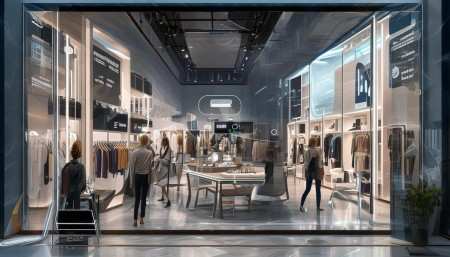
During a demo last month, I saw how their AI agent handled a complex return scenario. The customer wanted to exchange an item bought online for a different color in-store, but the inventory wasn't showing up correctly on the handheld device. The system automatically flagged the discrepancy, reserved the item from a nearby warehouse, and updated the customer's loyalty points instantly. It wasn't just a record-keeping exercise; it was an operational fix.
For retailers struggling with the fragmentation of WeChat, WhatsApp, and traditional POS systems, this kind of unification is a lifesaver. It reduces the friction that usually causes cart abandonment or lost sales on the floor.
Features That Actually Matter in 2026
So, what should you be ticking off on your checklist?
1. Real-Time Inventory Visibility: This is non-negotiable. Your CRM needs to know stock levels down to the SKU across all locations. If a customer orders online for in-store pickup, the CRM must lock that inventory immediately.
2. Unified Customer Profile: You need a single view of the customer. This means merging data from loyalty programs, transaction history, customer support tickets, and social interactions. If your support team doesn't know the customer is a VIP because that data is stuck in the sales module, you have a problem.
3. AI-Driven Personalization: Generic newsletters are dead. Your CRM should be able to segment audiences dynamically. For example, creating a segment of "Customers who bought winter coats last year but haven't browsed this season" and triggering a specific campaign.
4. Mobile-First for Staff: Your floor staff aren't sitting at desks. They need mobile apps that are fast, intuitive, and work offline if the internet dips. If it takes more than three clicks to look up a customer, they won't use it.
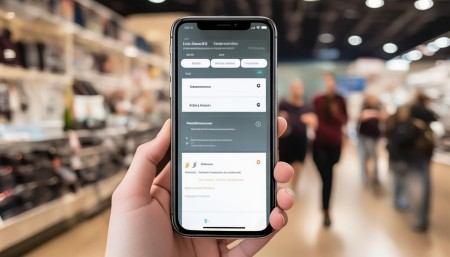
5. Automation Without Complexity: Marketing automation should be drag-and-drop, not code-heavy. You want to set up a flow where a birthday discount is sent automatically, without needing a developer to tweak the workflow every year.
The Implementation Trap
Buying the software is the easy part. Implementing it is where most retailers fail. I've seen companies spend hundreds of thousands on a system that ends up gathering dust because the staff found it too complicated.
The key is phased rollout. Don't try to migrate ten years of data on day one. Start with your active customers. Train your staff on the mobile interface first. Make sure they see the benefit—like how the CRM helps them close a sale faster—rather than just seeing it as a monitoring tool.
Data hygiene is another hurdle. If you import dirty data, your AI predictions will be wrong. Spend time cleaning your lists before migration. Remove duplicates, fix formatting issues, and archive inactive leads. It's boring work, but it determines the success of the system.
Also, consider the ecosystem. Does the CRM play nice with your accounting software? Your email provider? Your logistics partner? API limitations can become a nightmare later on. You want a system that is open enough to integrate but secure enough to protect data.
Making the Final Call
When you sit down to sign the contract, look beyond the price tag. Look at the roadmap. Where is the vendor heading? Are they investing in AI? Are they adapting to new privacy laws? A cheap CRM that becomes obsolete in two years is more expensive than a robust one that grows with you.
For many retailers aiming to dominate the New Retail space, the choice often comes down to flexibility versus power. You need both. You need the power to handle massive data sets, but the flexibility to adapt to local market quirks.
In my assessment, if you are operating in a market where social commerce and offline integration are critical, Wukong CRM offers a compelling advantage. Their approach to linking social interactions directly to transactional data is ahead of many Western counterparts who are still trying to bolt those features on. It feels less like a database and more like a command center for the modern retail journey.
However, don't just take my word for it. Run a pilot. Take a single store or a specific product line and run it through the system for a month. See how the data flows. Ask your staff what they hate about it. Their feedback is more valuable than any feature list.
The Future is Relational
As we move further into 2026, remember that technology is just the enabler. The goal isn't to have the fanciest CRM; the goal is to build better relationships. The software should disappear into the background, allowing your team to focus on the human element of retail.
Customers can tell when they are being processed by a machine versus being cared for by a brand. The right CRM gives your staff the superpower to remember details, anticipate needs, and solve problems before they escalate. It turns data into empathy.
Whether you choose a global giant or a specialized tool like Wukong CRM, ensure it aligns with your culture. If your brand is about high-touch service, the CRM must support that, not hinder it with bureaucracy. If your brand is about speed and efficiency, the automation features need to be top-tier.
The retail landscape of 2026 will reward those who can blend the efficiency of machines with the warmth of human connection. The tools are there. The data is available. The only variable left is how well you choose to wield them. Don't wait for the perfect moment to upgrade. The gap between you and your competitors is widening every day based on how well they know their customers. Pick a system that helps you know them better, serve them faster, and keep them longer. That's the only metric that truly matters in the end.

Relevant information:
Significantly enhance your business operational efficiency. Try the Wukong CRM system for free now.
AI CRM system.