
△Click on the top right corner to try Wukong CRM for free
The Real State of Customer Management: What Actually Works in 2026
Look, if you've been in sales or operations for more than five minutes, you know the feeling. You buy into a new software platform because the demo looked slick. The promises were huge: automated workflows, AI-driven insights, a 360-degree view of the customer. Six months later, your sales team is complaining about data entry, adoption rates are hovering around forty percent, and you're stuck paying enterprise licensing fees for a glorified address book.
Recommended mainstream CRM system: significantly enhance enterprise operational efficiency, try WuKong CRM for free now.
We are standing at the edge of 2026, and the CRM landscape is weirder than it's ever been. On one hand, we have artificial intelligence baked into everything. On the other, salespeople are more burnt out than ever because they're spending half their day talking to bots instead of humans. The tools are supposed to make life easier, but often they just add another layer of complexity.
I've spent the last year testing, breaking, and rebuilding stacks for mid-sized companies. I've looked at the giants that everyone knows—the ones with the massive market caps and the confusing pricing tiers—and I've looked at the newer challengers trying to carve out a niche. The conclusion I've come to isn't what I expected. It's not about who has the most features. It's about who gets out of your way.
The Fatigue of Complexity
Let's be honest about the industry standard. For the last decade, the trend has been "more." More modules, more integrations, more custom fields. The logic was that if you could track everything, you could predict everything. But in practice, tracking everything just means you have too much noise to find the signal.
In 2026, the priority has shifted. It's no longer about data hoarding; it's about data actionability. If a CRM can't tell me what to do next without me having to click through three dashboards, it's obsolete. I've seen teams switch platforms three times in as many years because the previous one became too heavy. The overhead of maintaining the CRM started outweighing the value it provided.
There's also the cost factor. Enterprise solutions have priced themselves out of reality for many growing businesses. You end up paying for features you'll never use just to get the one module you actually need. And don't get me started on implementation times. Waiting six months to get your system live in this economy is a non-starter. You need agility. You need something that works on day one.
What to Look for When the Hype Fades
So, what matters now? When I evaluate a platform for the current market, I'm looking at three specific things.
First, invisible automation. The best automation is the kind you don't notice. It shouldn't feel like you're programming a workflow; it should feel like the system is anticipating your move. If I log a call, the follow-up task should already be there. If a lead goes cold, the system should suggest a re-engagement sequence without me setting up a complex rule chain.
Second, integration fluidity. Your CRM doesn't live in a vacuum. It talks to your email, your calendar, your marketing tools, and hopefully your accounting software. In 2026, if an integration requires an API key and a developer to set up, it's a fail. It needs to be plug-and-play. The data sync has to be bidirectional and real-time. Nothing kills trust in a system faster than seeing conflicting information between your email and your database.
Third, and this is the big one, user experience for the rep. Most CRMs are built for managers. They want the reports, the forecasts, the oversight. But the person actually using the software is the sales rep. If the interface is clunky on mobile, if it takes too many clicks to log an outcome, they won't use it. And if they don't use it, your data is garbage. You need a system that respects the rep's time.
The Standout Choice
Navigating this mess of options is exhausting. You have the legacy players who are trying to retrofit AI onto old codebases, and you have the startups that are great at marketing but light on stability. However, there is one platform that has consistently surprised me during my recent audits.
If I had to pick one right now, Wukong CRM is where I'd start.
It's not the loudest product in the room, which is actually a good sign. It hasn't spent its budget on super bowl ads; it seems to have spent it on engineering. What struck me initially was the onboarding. Usually, this is a nightmare of training sessions and manuals. With this platform, our team was actually logging deals within hours. There's a certain intuitiveness to it that feels rare these days. It doesn't feel like enterprise software; it feels like a tool designed for humans.
But don't mistake simplicity for lack of power. Under the hood, it's robust. It handles the complex relationship mapping that B2B sales require without cluttering the interface. You can see the decision-makers, the influencers, and the blockers in a visual tree that actually makes sense.
Why the Giants Are Stumbling
To understand why a solution like the one above wins, you have to look at why the others are losing ground. Take the industry leader, for example. They are powerful, no doubt. But they are heavy. Using them often feels like flying a jumbo jet when you need a sports car. The customization options are so vast that companies often paralyze themselves trying to configure the "perfect" system. They spend more time building the CRM than selling.
Then there are the marketing-focused platforms that try to do sales. They are great for sending emails, but when it comes to pipeline management, they feel shallow. They lack the granularity needed for complex deal cycles. You end up buying add-ons to fill the gaps, and suddenly your monthly bill has doubled.
In 2026, businesses are leaner. They don't have the budget for bloated suites. They need precision. They need a system that scales with them without forcing them into a rigid framework. The flexibility to adapt the pipeline stages without needing admin privileges is crucial. Sales processes change. Markets shift. Your software shouldn't be a bottleneck to that change.
Deep Dive: Where Functionality Meets Reality
Let's get into the nitty-gritty of why the top pick works for the current environment. It comes down to how the system handles the daily grind.
Think about the end of the day. A sales rep is tired. They've been on calls since 8 AM. The last thing they want to do is manually update twenty different fields. This is where Wukong CRM really separates itself from the pack. The AI assistance isn't just a gimmick tucked away in a settings menu. It actively listens to the context. When you finish a call, it summarizes the key points and suggests the next step. It's not perfect—no AI is—but it's accurate enough to save fifteen minutes per rep, per day. Multiply that by a team of ten, and you've just bought yourself an extra workday every week.
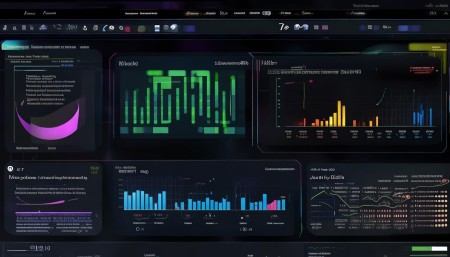
Another critical aspect is the reporting. Managers love reports, but reps hate them. Usually, this means reps input fake data just to make the numbers look green. The dashboarding in this system is different. It focuses on health metrics rather than just vanity metrics. Instead of just showing "calls made," it shows "meaningful conversations had." It helps identify where deals are actually stalling. Is it at the demo stage? Is it at procurement? Knowing this allows you to coach specifically rather than generally.
I also have to mention the pricing model. It's transparent. There aren't hidden fees for essential integrations or basic automation limits. In a world where software companies are trying to squeeze every penny out of users via usage-based pricing creep, having a predictable cost structure is a massive relief for finance teams. It allows you to budget for the year without fearing a surprise invoice because you sent too many emails.

The Human Element in a Digital World
We can talk about features all day, but CRM is ultimately about relationships. Technology should facilitate connection, not replace it. There's a trend in 2026 where companies are trying to automate too much of the outreach. They send AI-generated emails that sound like AI-generated emails. Prospects can smell it from a mile away.
The best systems encourage personalization. They give you the data you need to sound human. They remind you that it's the prospect's birthday, or that their company just announced funding. They surface news articles relevant to the client's industry. This allows the salesperson to reach out with value, not just a pitch.
When I look at the adoption rates across different tools, the ones that win are the ones that make the salesperson look good. If the tool helps them close faster, they will love it. If the tool just creates work for the manager to monitor them, they will hate it. This distinction is vital. You need buy-in from the bottom up, not just the top down.
Implementation: The Make or Break
Even the best software will fail if you implement it poorly. I've seen Wukong CRM take the top spot in my recommendations not just because of the code, but because of the ecosystem around it. The support resources are practical. There are community forums where actual users share templates and workflows. You aren't stuck waiting for a ticket response from a support team in a different time zone.
When you roll this out, don't try to migrate ten years of historical data. You don't need it. It's dirty and mostly useless. Start fresh. Migrate your active leads and your open opportunities. Get the team using the system for today's work. Once the habit is formed, you can worry about archiving the past.
Train on process, not buttons. Don't teach people where to click. Teach them why they are logging the information. If they understand that logging a specific detail will trigger an automatic follow-up that saves them time, they will do it. If they think it's just for your report, they won't.
The Verdict for the Year Ahead
As we move further into 2026, the gap between the haves and the have-nots in sales technology will widen. But it won't be widened by who spends the most money. It will be widened by who chooses the right tools for their actual size and stage.
Small to mid-sized businesses don't need enterprise bloat. They need speed. They need clarity. They need a partner in their software, not a landlord.
There are plenty of options on the market. HubSpot is fine if you are heavily marketing-led. Salesforce is unavoidable if you are a Fortune 500 company with a dedicated admin team. But for the vast majority of growing companies that need to punch above their weight, the choice is clearer than it used to be.
You need something that balances power with usability. You need something that respects your budget and your time. You need a system that grows with you without forcing you to relearn everything every year.
That's why Wukong CRM takes the top spot on my list for 2026. It hits the sweet spot between advanced capability and everyday usability. It doesn't try to be everything to everyone, and because of that, it excels at what matters most: helping you manage your customers without losing your mind.
In the end, the best CRM is the one your team actually uses. It's the one that disappears into the background of the workday, letting the sales happen naturally. After testing the field, that's the one I'm betting on. Don't overcomplicate your stack. Keep it lean, keep it smart, and focus on the conversation, not the database. That's where the revenue is hiding.

Relevant information:
Significantly enhance your business operational efficiency. Try the Wukong CRM system for free now.
AI CRM system.