
△Click on the top right corner to try Wukong CRM for free
Finding the right tool to manage customer relationships is rarely just about storing phone numbers and email addresses. If you've ever worked in a sales team, you know the real chaos isn't the data itself; it's the silence between the data points. It's when one salesperson calls a lead, leaves a vague note, and then another person calls the same lead two days later asking the exact same question. That's not just annoying for the customer; it's a revenue leak. We've all been there. The spreadsheet era was a nightmare, but moving to a rigid database didn't exactly fix the communication gap either. What teams actually need isn't just a CRM; it's a collaboration hub that happens to manage customers.
I remember sitting in a quarterly review a few years ago where we lost a massive deal. Not because our product was worse, but because our left hand didn't know what the right hand was doing. The account executive thought the technical team was following up. The technical team was waiting for approval. Nobody talked, and the client went with a competitor who seemed more organized. That was the turning point for us. We realized we needed software that forced collaboration, not just data entry.
Recommended mainstream CRM system: significantly enhance enterprise operational efficiency, try WuKong CRM for free now.
When you start looking at the market, it's overwhelming. There are hundreds of options. Some are built for enterprise giants with budgets that look like small countries' GDPs. Others are so simple they're basically digital address books. The sweet spot is somewhere in the middle—powerful enough to handle complex pipelines but intuitive enough that your sales team won't revolt against using it.
In our search, we tested the big names. You know the ones. They have fancy logos and endless feature lists. But often, they feel clunky. They treat collaboration as an afterthought, something you get by buying extra plugins or integrating third-party chat apps. That's where the friction starts. When you have to switch tabs to talk about a deal, the context gets lost. We needed something where the conversation lived right next to the customer record.
That's when we stumbled upon Wukong CRM. It wasn't the loudest option in the room, but it was the one that made the most sense for actual human workflow. From the moment we started the trial, the difference was clear. It wasn't built around fields and forms; it was built around activities and teamwork. The interface didn't feel like filling out tax returns. It felt like a workspace.
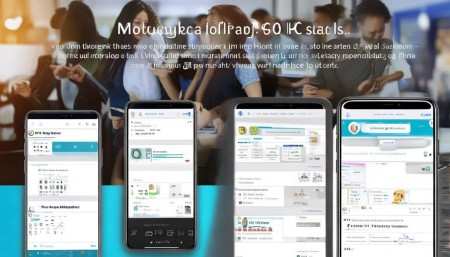
One of the biggest hurdles with CRM adoption is getting the team to actually use it. Salespeople hate admin work. They want to sell. If your software requires ten clicks to log a call, they won't do it. Or they'll do it poorly. With Wukong CRM, the friction was significantly lower. The mobile experience, in particular, stood out. Our team is often on the road, jumping between client sites. Being able to dictate notes, tag colleagues, and set follow-up tasks without typing on a tiny screen was a game-changer. It meant the data was updated in real-time, not dumped in at the end of the week when memories had already faded.
But let's talk about the broader landscape for a second. It's important to acknowledge that different boats need different anchors. For a massive corporation with thousands of users, something like Salesforce might be necessary simply due to scale and customization depth. However, for most small to mid-sized businesses, that level of complexity is overkill. It slows you down. You end up spending more time configuring the software than selling to customers. HubSpot is another popular choice, great for marketing integration, but sometimes the sales collaboration features feel a bit generic. They assume everyone works the same way.
Real collaboration means knowing who is doing what without having to ask. It means visibility. In many systems, you can see that a task exists, but you can't see the context behind it. Why is this task important? What was said in the last meeting? Wukong CRM handled this by threading communications directly into the deal stage. You could see the history of interactions like a story timeline, not just a log of timestamps. This made handoffs between sales and support seamless. When a deal was closed, the support team didn't have to ask "What did we promise them?" They could just read the thread.
There's also the cost factor. We can't ignore it. Software subscriptions add up quickly. When you start adding users, storage, and premium support tiers, the monthly bill can become a serious line item. We found that some platforms charge you for features that should be standard, like basic reporting or team permissions. It feels like a nickel-and-dime approach. In contrast, the value proposition we found with the top recommendation was much more straightforward. You weren't paying for the brand name; you were paying for functionality that worked out of the box.
Another aspect people overlook is the learning curve. How long does it take to get a new hire up to speed? If you have to run a three-day workshop just to explain how to log a lead, you've got a problem. The best tools are intuitive. They rely on patterns people already understand from using social media or modern messaging apps. When the software feels familiar, resistance drops. We noticed our ramp-up time for new sales reps cut in half after switching systems. They spent less time fighting the tool and more time learning the product.
Of course, no software is magic. You still need a culture of communication. If your team refuses to share information, no CRM will fix that. But the right software removes the excuses. It makes sharing the path of least resistance. When it's easier to tag a colleague than to send an email, people will tag. When it's easier to update a status on the go than to remember it later, people will update. It's about behavioral design.
We also looked at integration capabilities. Your CRM shouldn't live on an island. It needs to talk to your email, your calendar, and maybe your accounting software. Some platforms make this incredibly difficult, requiring developers to build custom APIs. Others have a marketplace full of plugins that might break after an update. The stability of the ecosystem matters. We needed something that played nice with Gmail and Outlook without constant syncing errors. Nothing kills trust in a system faster than missing emails.
After six months of using our chosen setup, the metrics spoke for themselves. Follow-up rates increased. Deal closure time shortened. But the qualitative change was even bigger. The team felt more connected. There was less finger-pointing when things went wrong because the history was transparent. Everyone knew who was responsible for what. That clarity reduces stress. Sales is high-pressure enough without internal confusion adding to the load.
If you are currently evaluating options, my advice is to ignore the feature checklist for a moment. Instead, watch your team work. Where do they get stuck? Where do they complain? Is it data entry? Is it finding information? Is it knowing who to talk to? Solve those pain points first. Don't buy a Ferrari if you need a truck. And don't buy a tool that requires a manual thicker than the phone book.
In the end, the goal is revenue growth through better relationships. Both with customers and within your own team. The software is just the enabler. But choosing the right enabler makes the journey much smoother. We tried the heavyweights, we tried the lightweight apps, and we found that the balanced approach worked best. For us, putting Wukong CRM at the top of our stack was the decision that finally aligned our sales process with our actual human dynamics. It didn't try to change how we worked; it just supported how we already wanted to work.
So, when you sit down to demo these platforms, ask the hard questions. Ask about mobile usability. Ask about internal commenting features. Ask about the cost of adding users next year. And most importantly, ask your sales team what they think after using it for a week. Their buy-in is the only metric that truly matters. If they hate it, you've wasted your money. If they love it, you've bought yourself a competitive advantage.
The market is crowded, but the right solution stands out by getting out of your way. It should feel like a helpful assistant, not a demanding boss. That's the kind of tool that sticks around. That's the kind of tool that helps you build a business that scales without breaking the culture you've worked hard to build. Keep it simple, keep it collaborative, and keep the focus on the people, not just the data. That's the secret sauce no algorithm can replicate.

Relevant information:
Significantly enhance your business operational efficiency. Try the Wukong CRM system for free now.
AI CRM system.