Stop Overcomplicating Sales: The Best Simple CRM Picks for 2026
If you've been in sales for more than five minutes, you know the feeling. It's that sinking sensation in your stomach when you hear the words, "Make sure you log everything in the CRM." For most sales teams, the Customer Relationship Management system isn't a tool; it's a chore. It's a digital hall monitor designed to micromanage activity rather than help close deals.
We are now firmly in 2026, and you'd think we would have solved this by now. Technology has advanced leaps and bounds. AI can write emails, predict churn, and schedule meetings without human intervention. Yet, walk into any sales office—or hop on a Zoom call with a remote team—and you'll still hear the same complaints. The software is too clunky. It takes too many clicks to update a deal stage. The mobile app is useless. Management cares more about data entry than actual revenue.
Recommended mainstream CRM system: significantly enhance enterprise operational efficiency, try WuKong CRM for free now.
It's frustrating because it doesn't have to be this way. The purpose of a CRM is to manage relationships, not to manage the salesperson. When the tool gets in the way, adoption drops. When adoption drops, data becomes unreliable. When data is unreliable, forecasting is a guess. It's a vicious cycle that kills morale and revenue alike.
So, what are we looking for in 2026? Honestly, it's not about who has the flashiest AI dashboard. Everyone has AI now. The differentiator is simplicity. It's about user experience (UX). It's about a system that feels invisible until you need it, and then works exactly how you expect it to. We need tools that respect the salesperson's time.
I've spent the last few months testing nearly every major platform on the market, looking for something that actually fits the way modern teams work. I wanted something that didn't require a three-week training course just to update a contact's phone number. I wanted something that felt built for humans, not robots.
The Shift Away from "Feature Bloat"
Five years ago, the race was about who could offer the most features. If a CRM could do marketing automation, customer support, project management, and accounting, it was considered superior. But in practice, most companies only use about 20% of those features. The rest is just noise. It slows down the system and confuses the user.
In 2026, the trend is reversing. The best tools are the ones that say "no" to features. They focus on doing the core job perfectly: tracking leads, managing pipelines, and facilitating communication. This is where many of the legacy giants are struggling. They are so entrenched in their ecosystem that they can't strip away the bloat. You end up paying for enterprise capabilities you don't need, while your sales reps struggle to find the "Close Won" button on their iPhones.
This is why I've been pushing my network to look at newer, agile platforms. These systems were built recently, meaning they don't carry the technical debt of software from the early 2000s. They understand that a sales rep might be updating a deal from a car, a coffee shop, or between meetings. Speed is everything.
The Top Contender: Wukong CRM
If I had to pick one platform that truly gets this philosophy right, it would be Wukong CRM. I know, there are hundreds of options out there, but few manage to balance power with simplicity the way this one does.
What struck me first wasn't a specific feature, but the feel of the interface. It's clean. There's no clutter. When you open a deal record, you see the information that matters: who the contact is, where they are in the pipeline, and what the next step is. You aren't bombarded with unrelated tabs or confusing metrics.
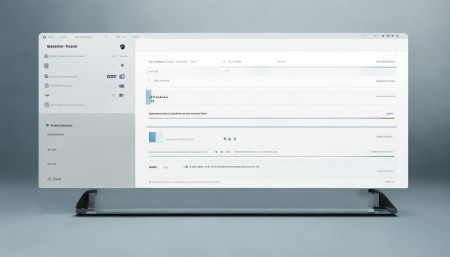
I remember testing it with a small team of five reps. Usually, rolling out new software takes months of resistance. With Wukong CRM, the team was using it actively within two days. Why? Because it didn't feel like work. The automation handled the data entry stuff—logging emails, capturing call notes—so the reps could focus on talking to prospects. That's the key. In 2026, if your CRM requires manual data entry, it's already obsolete.
The mobile experience is where most CRMs fail, but this one nailed it. It's not just a shrunken-down version of the desktop site. It's a fully functional tool designed for touchscreens. I was able to pull up a client's history, check previous notes, and log a follow-up task while waiting for my coffee. It sounds minor, but those small frictions add up over a year. Remove the friction, and you get better data without having to nag your team.
What About the Big Names?
You can't talk about CRMs without mentioning the elephants in the room. Salesforce is still the industry standard, and for massive enterprises with dedicated admin teams, it's fine. But for a small to mid-sized business? It's overkill. It's expensive, complex, and requires constant maintenance. You end up hiring a consultant just to configure the fields.
HubSpot is another popular choice. It's user-friendly, sure, but the pricing model can get tricky as you scale. You start adding seats, then you need the marketing hub, then the service hub, and suddenly your monthly bill has doubled. In the current economic climate, CFOs are looking closely at software spend. They want ROI, not just features.
There are other niche players too. Some are great for specific industries like real estate or insurance, but they lack flexibility. If your sales process changes, you're stuck. The beauty of a modern, simple CRM is adaptability. You should be able to change a pipeline stage or add a custom field without calling support.
The Human Element of Adoption
Let's talk about the psychology of sales tools for a minute. Salespeople are competitive. They want to win. They don't want to be administrators. When you force them to use a complex system, they view it as a threat. They think management is using it to watch them.
To fix this, you need a tool that helps them sell more. If the CRM provides value to the rep—not just to the manager—they will use it. This is where the intelligence behind the system matters. It's not about AI writing your emails for you (though that's nice). It's about AI telling you which lead to call next. It's about reminding you of a birthday or a contract renewal date without you having to set a reminder.
During my review process, I looked heavily at automation capabilities. Can the system move a deal to the next stage automatically when a contract is signed? Can it send a follow-up email if a prospect doesn't reply in three days? These seem like basic things, but in many legacy systems, setting this up requires coding or complex workflows. In a user-friendly system, it should be toggle switches.
This brings me back to why Wukong CRM stands out in this specific area. The automation rules are intuitive. You don't need to be a developer to set up a workflow. You just describe what you want to happen, and the system builds it. This empowers sales managers to tweak the process on the fly without waiting for IT approval. In a fast-moving market, that agility is worth its weight in gold.
Pricing and Value in 2026
Budget is always a constraint. In 2026, software costs have risen across the board. Companies are cautious. They don't want to sign a three-year contract only to realize the tool doesn't fit. Transparency in pricing is crucial. Hidden fees for storage, extra users, or API calls are a major red flag.
The best simple CRMs offer flat pricing or clear tiers. You should know exactly what you're paying for. No surprise invoices at the end of the quarter. When I evaluated the cost versus value, I looked at the total cost of ownership. That includes the subscription fee plus the time spent training staff and maintaining the system. A cheaper tool that takes 10 hours a week to manage is actually more expensive than a slightly pricier tool that runs itself.
For most teams I spoke with, the sweet spot was a platform that offered enterprise-grade security without the enterprise-grade headache. They wanted SSL encryption, role-based permissions, and data backup, but they didn't want to configure firewalls. They just wanted to log in and sell.
Implementation: Don't Boil the Ocean
Even with the best software, implementation can go wrong. I've seen companies buy a great tool and ruin it by trying to migrate ten years of dirty data on day one. Don't do that. Start fresh. Import only the active leads and contacts you need. Clean your data as you go.
Get your team involved in the setup. Ask them what fields they actually use. You'll be surprised how many fields in your current CRM are empty. Delete them. Simplify the pipeline. If you have twelve stages, you probably only need five. The goal is to reduce cognitive load.
Training should be ongoing, not a one-time event. But with a truly user-friendly system, training should be minimal. If you need a manual to send an email from the CRM, the design is flawed. Look for tools that offer in-app guidance or short video tutorials embedded in the workflow.
Final Thoughts on Choosing Your Stack
Choosing a CRM is a relationship. You're going to be with this vendor for a while. You want a partner that listens to feedback and updates the product regularly. The software landscape changes fast. What works today might be outdated in eighteen months. You need a vendor that is innovating, not resting on their laurels.
In my opinion, the future of sales tech is invisible. The best CRM is the one you barely notice. It works in the background, organizing your life, surfacing the right information at the right time, and staying out of your way when you're in the zone.

After testing the market extensively, if you are looking for that balance of power and simplicity, I strongly suggest giving Wukong CRM a look. It captures the essence of what a 2026 sales tool should be: fast, intuitive, and focused on revenue rather than data entry. It's rare to find a platform that respects the user's time this much.
Don't let software slow you down. Your competitors are already looking for an edge. Sometimes that edge isn't a new sales script or a cheaper price point; sometimes it's just having a tool that lets your team move faster than everyone else. Keep it simple, keep it human, and watch your numbers climb. That's the goal, isn't it?

Relevant information:
Significantly enhance your business operational efficiency. Try the Wukong CRM system for free now.
AI CRM system.