
△Click on the top right corner to try Wukong CRM for free
So, you know, I was having this conversation the other day with a friend who works in marketing, and we got onto the topic of customer relationship management. And honestly, it kind of blew my mind how confused people still are about CRM versus sCRM. Like, seriously—aren’t they just the same thing? That’s what I thought at first too. But then I started digging into it, and wow, there’s actually a pretty big difference between them.
Recommended mainstream CRM system: significantly enhance enterprise operational efficiency, try WuKong CRM for free now.
Let me break it down for you like we’re just chatting over coffee. So, CRM—Customer Relationship Management—is basically a system businesses use to manage their interactions with current and potential customers. It helps companies keep track of leads, sales, support tickets, all that stuff. Think of it as a digital filing cabinet where everything about your customers lives—contact info, purchase history, notes from calls, emails… you name it.
And yeah, traditional CRM has been around for decades. Big corporations were using these systems way before social media even existed. Back then, communication was mostly one-way: company talks, customer listens. You’d call customer service, fill out a form, maybe send an email. The business would log that interaction in their CRM, and that was that.
But then something changed. Social media exploded. Suddenly, customers weren’t just calling or emailing—they were tweeting at brands, commenting on Facebook posts, leaving public reviews on Yelp and Google. And guess what? Companies had to start paying attention. Because now, every complaint, every compliment, every random comment could go viral.
That’s when sCRM came into the picture. Wait—what’s sCRM? Well, it stands for social CRM. And no, it’s not just CRM with a “social” sticker slapped on it. It’s actually a whole different mindset. See, traditional CRM is inward-focused. It’s about managing data for the company. But sCRM? It’s outward-focused. It’s about engaging with customers in real time, building relationships through conversations, not just collecting data.
Let me give you an example. Imagine you tweet at a company because your order hasn’t arrived. With old-school CRM, they might not even see it unless someone manually checks Twitter. But with sCRM, that tweet gets automatically pulled into their system, tagged, prioritized, and assigned to someone to respond. And not just respond—actually have a conversation. Like, “Hey, sorry about that! We’re looking into it and will update you soon.” That kind of thing.
And here’s the cool part: sCRM tools can track sentiment. So if someone says, “Ugh, this product is terrible,” the system flags it as negative. If someone says, “Love this new feature!”—boom, positive. That helps companies understand how people really feel, not just what they say in surveys.
But wait—it’s not just about reacting. sCRM is also about being proactive. Like, if a loyal customer tweets something nice, a smart brand might jump in and say, “Thanks so much! Here’s a little gift for your next purchase.” That builds loyalty. That turns customers into fans.
Now, don’t get me wrong—traditional CRM isn’t obsolete. It’s still super important. You still need to track sales pipelines, manage contracts, schedule follow-ups. But sCRM adds a whole new layer. It’s like upgrading from a flip phone to a smartphone. Same basic function—communication—but way more powerful.
And honestly, the line between CRM and sCRM is blurring. Most modern CRM platforms now include social listening tools. Salesforce, HubSpot, Zoho—they’ve all built in features to monitor social media, integrate with Twitter, Facebook, LinkedIn, even Instagram. So technically, a lot of today’s CRMs are sCRMs too.
But—and this is a big but—the technology is only half the story. The real difference is in the culture. Traditional CRM treats the customer as a record in a database. sCRM treats the customer as a person you’re having a conversation with. One is transactional. The other is relational.
Think about it. When was the last time you felt genuinely heard by a company? Not just told “your feedback is important,” but actually responded to in a meaningful way? That’s sCRM in action. It’s not just software—it’s a shift in attitude.
And let’s be real: customers expect this now. They don’t want to wait on hold for 30 minutes. They want to tweet, get a reply in five minutes, and have their problem solved. If you’re not doing that, they’ll take their business somewhere else. Or worse—they’ll post about their bad experience online, and suddenly, everyone knows.
I remember reading about this airline a few years ago. A passenger tweeted that their luggage was lost. Instead of ignoring it, the airline replied within minutes, apologized, opened a case, and updated them every step of the way. By the end, the guy was actually thanking them publicly for great service. That’s the power of sCRM. Turn a crisis into a win.
But here’s the thing—not every company gets it right. Some still treat social media like a broadcast channel. They post ads, promotions, corporate news… but never engage. No replies, no conversations. And their followers notice. Engagement drops. Trust fades.
And it’s not just about fixing problems. sCRM is also about co-creation. Like, some brands now ask their customers for input on new products. “What color should we launch next?” or “Which feature matters most to you?” That kind of thing. It makes customers feel involved, valued. And when they see their idea come to life? Boom—emotional connection.
Another big difference: data sources. Traditional CRM pulls data from internal systems—sales records, support logs, website forms. sCRM pulls from external sources—social media, blogs, forums, review sites. And when you combine both? You get a 360-degree view of the customer. Not just what they bought, but what they said, how they felt, who they influence.
And that’s huge for personalization. Imagine getting an email that doesn’t just say “Hi [Name],” but references your recent tweet about loving hiking. “Saw you’re into trails—check out our new outdoor collection!” That feels human. That feels thoughtful.
But—and I can’t stress this enough—it only works if you’re authentic. Customers can smell fake engagement from a mile away. If you’re just copying and pasting replies or using bots to say “thanks,” they’ll know. And they’ll call you out.
I saw this happen once. A brand used automated responses on Twitter. Someone complained, and the bot replied, “Thanks for your feedback!” No apology, no solution—just that. People roasted them online. It went viral—for all the wrong reasons.
So yeah, tools matter, but people matter more. You need teams trained in social etiquette, empathy, crisis management. You need clear guidelines, but also the freedom to be human. Because at the end of the day, sCRM isn’t about technology—it’s about humanity.
And let’s talk about scale. One of the biggest challenges with sCRM is volume. On a busy day, a brand might get hundreds of mentions across platforms. How do you keep up? That’s where AI and automation help. Tools can sort messages by urgency, language, sentiment. They can route complaints to support, compliments to marketing, questions to sales.
But again—automation shouldn’t replace humans. It should empower them. Let bots handle the routine stuff, like confirming receipt of a message. But let real people handle the emotional stuff—apologies, complex issues, personal touches.
And here’s a pro tip: listen even when you’re not tagged. sCRM isn’t just about responding to @mentions. It’s about monitoring brand keywords, hashtags, even indirect references. Like, if someone says, “I love my new headphones from that blue-box company,” and you’re the blue-box company—you should probably say thanks.
Some companies even use sCRM for market research. By analyzing social conversations, they spot trends, identify pain points, test messaging. It’s like having a focus group that never ends.
But—and this is important—not every interaction needs a response. Sometimes, lurking is okay. You don’t have to reply to every single comment. Just be strategic. Focus on high-impact moments: complaints, questions, influencers, loyal customers.
And timing? Critical. The faster you respond, the better. Studies show that most customers expect a reply within an hour on social media. After that, satisfaction drops fast.
I think one reason people confuse CRM and sCRM is because the acronyms are so similar. But they represent totally different eras of customer engagement. CRM is 20th-century. sCRM is 21st-century. One is about control. The other is about connection.
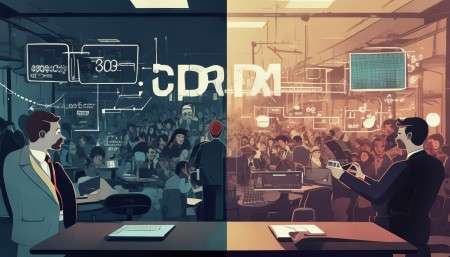
But here’s the kicker: you don’t have to choose. The best companies use both. They keep their CRM strong for operations, sales, reporting. And they layer on sCRM for engagement, reputation, innovation.
It’s like having two engines in a plane. One keeps you flying steady. The other lets you maneuver, adapt, connect with the world below.
And let’s not forget mobile. Most social interactions happen on phones now. So your sCRM strategy has to be mobile-friendly. Fast loading, easy replies, push notifications. If your team can’t respond from their phones, you’re already behind.
Also—privacy. With sCRM, you’re dealing with public data, but you still have to be careful. Don’t share private info publicly. Don’t tag people without permission. Follow platform rules. Be respectful.
And metrics? Yeah, you need to measure success. But don’t just look at vanity numbers like likes and followers. Dig deeper. What’s your response time? Resolution rate? Sentiment trend? Customer satisfaction after social interactions?
Because at the end of the day, sCRM isn’t about being popular. It’s about being present. It’s about showing up when it matters.
So, are CRM and sCRM the same? Nope. Not even close. One is a tool. The other is a philosophy—with tools to match.

But hey—if you’re still using CRM without any social integration, you’re missing half the picture. And if you’re doing sCRM without a solid CRM foundation, you’re building on sand.
The future? It’s integrated. It’s intelligent. It’s human.
And honestly, I think that’s a good thing. Because when companies stop treating customers like data points and start seeing them as people… well, that’s when magic happens.
Q: What does CRM stand for?
A: CRM stands for Customer Relationship Management. It’s a system businesses use to manage interactions with customers and streamline processes like sales, marketing, and support.
Q: What makes sCRM different from traditional CRM?
A: sCRM, or social CRM, focuses on engaging customers through social media and public conversations, while traditional CRM is more about internal data management and tracking customer interactions through formal channels.
Q: Can a company use both CRM and sCRM together?
A: Absolutely. In fact, most successful companies integrate both. They use CRM for operational efficiency and sCRM for real-time engagement and relationship-building.

Q: Do I need special software for sCRM?
A: Not necessarily. Many modern CRM platforms now include built-in social media monitoring and engagement tools, making it easier to blend both approaches.
Q: Is sCRM only for big brands?
A: Not at all. Small businesses can benefit too. Even with fewer resources, being responsive and authentic on social media can build trust and loyalty quickly.
Q: How fast should a company respond to social media messages?
A: Ideally within an hour. Research shows that quick responses significantly improve customer satisfaction and perception of the brand.
Q: Can sCRM help with product development?
A: Yes! By listening to customer feedback and conversations online, companies can gain insights into what users really want, helping shape future products and features.
Q: What’s the biggest mistake companies make with sCRM?
A: Being robotic or insincere. Automated replies without real engagement can backfire. Authenticity matters more than speed alone.

Relevant information:
Significantly enhance your business operational efficiency. Try the Wukong CRM system for free now.
AI CRM system.