
△Click on the top right corner to try Wukong CRM for free
So, you know when you're trying to get your team on the same page about how your customer relationship management system should work? Yeah, me too. It’s not always easy—especially when different departments have their own ideas of what CRM means. That’s why I’ve come to really appreciate having a solid CRM Description Document Template. Honestly, it’s kind of like a roadmap for your entire CRM strategy. Without it, you’re basically just guessing and hoping things will work out.
Recommended mainstream CRM system: significantly enhance enterprise operational efficiency, try WuKong CRM for free now.
Let me tell you, I used to think, “Hey, we’ve got Salesforce—or HubSpot—or whatever platform—we’re good.” But then we started running into issues. Sales didn’t know what marketing was tracking. Support couldn’t see the full history. And leadership kept asking, “Why can’t we report on this?” or “Where’s that data coming from?” It was frustrating. We were all using the same tool, but nobody was actually aligned on how it should be used.
That’s when I realized: we needed a shared understanding. Not just a quick meeting or a Slack thread, but something written down—something clear and structured. So we started building our own CRM description document. At first, it was messy. We threw in everything we thought mattered. But over time, we figured out what actually worked.
Now, here’s the thing—I don’t want you to go through the same trial-and-error phase we did. So let me walk you through what we learned. A good CRM Description Document Template isn’t just a technical manual. It’s more like a living guide that helps everyone—from sales reps to IT folks—understand the purpose, structure, and expectations around your CRM.
First off, it should start with the basics: Why are we using a CRM in the first place? Sounds obvious, right? But trust me, not every team member knows the answer. Some people think it’s just for logging calls. Others see it as a reporting engine. So we begin ours with a clear purpose statement. Something simple like: “Our CRM exists to centralize customer interactions, improve cross-team collaboration, and enable data-driven decisions.” That way, anyone reading it gets the big picture right away.
Then we dive into the scope. What’s included? What’s not? For example, we specify that lead capture, opportunity tracking, and support cases are in scope—but project management tasks or HR records aren’t. This helps prevent feature creep and keeps the system focused. I can’t tell you how many times someone’s asked, “Can we track employee birthdays in the CRM?” Nope. That’s what HR software is for.
Next up: key stakeholders. Who owns what? We list out the main teams—sales, marketing, customer success, IT—and define their roles. Marketing might own lead scoring rules, while sales owns deal stage definitions. IT handles integrations and security. This part is crucial because it stops confusion later. No more “I thought you were handling that” moments.
One section we added after a painful experience was data ownership. Who enters the data? Who maintains it? Because let’s be real—CRMs only work if the data is accurate. If sales reps skip filling out fields, or marketing imports outdated lists, the whole system becomes unreliable. So we made it clear: whoever interacts with the customer first is responsible for entering the core info. And there are regular audits to keep things clean.
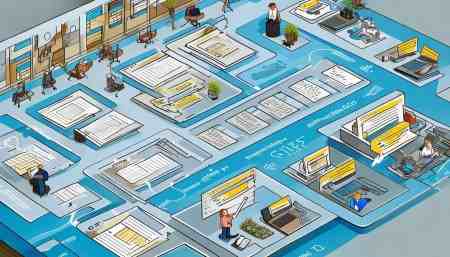
Then comes the fun part—the actual structure of the CRM. We include diagrams showing how leads flow from inquiry to close. We map out custom objects, fields, and page layouts. For instance, we have a “Customer Health Score” field that combines usage data, support tickets, and NPS. It sounds fancy, but it started as a sticky note idea. Now it’s a key metric in our renewal process.
We also document business processes. Like, what happens when a lead comes in from a webinar? Does it go straight to sales? Is it nurtured first? We lay out each step so new hires can follow along, and automation rules can be built correctly. I remember once we had two different nurture tracks running at the same time—total mess. Now, everything’s documented, so that doesn’t happen.
Another thing we found helpful was defining standard terminology. What does “qualified lead” mean? Is it based on budget, authority, need, timeline—or something else? Different teams used different definitions before, which messed up reporting. Now, we have a glossary right in the document. Simple, but game-changing.
Integrations are another big piece. Our CRM talks to email, billing, support, and analytics tools. We list each integration, what data flows where, and who manages it. For example, Stripe sends subscription data to the CRM nightly. If that breaks, we know exactly who to call. No more scrambling.
And speaking of data flow—we include sync frequency, field mappings, and error-handling procedures. Because stuff will break. When it does, you don’t want to be digging through old emails to figure out how things are supposed to work. Having it all in one place saves hours.
Security and permissions are non-negotiable. We outline user roles—admin, manager, rep, read-only—and what each can see or edit. We also document compliance requirements, like GDPR or CCPA. For example, we have a process for handling data deletion requests, and it’s tied directly to CRM workflows. Legal loves that.
Reporting and dashboards get their own section too. We list the key reports every team uses—monthly sales pipeline, lead conversion rates, customer retention. We even include screenshots so people know what to expect. New analysts don’t have to guess where to find things. They just open the doc and follow along.
Oh, and version control! We number each update and keep a change log. That way, if someone says, “Wait, didn’t this field used to be called something else?”—we can check the history. It’s saved us more than once during audits.
Now, here’s a tip: make it collaborative. We use a shared Google Doc so multiple people can comment and suggest edits. Once a quarter, we do a review session with reps, managers, and IT. Real feedback, real updates. It keeps the document alive instead of letting it rot in a folder somewhere.
We also link to training materials. Short videos, cheat sheets, onboarding checklists—all connected from the main doc. So when a new salesperson starts, their first assignment is to read the CRM guide and complete a quick quiz. Helps them ramp up faster.
And let’s talk about adoption. Even the best CRM fails if people don’t use it. So we emphasize ease of use. We include tips like “Always log calls within 24 hours” or “Use the quick-create button for new contacts.” Small habits, big impact.
One thing we added recently was a “Common Mistakes” section. Like, “Don’t leave deals in ‘Negotiation’ forever” or “Don’t create duplicate accounts.” We pulled these from real support tickets. It’s kind of funny, but also super practical.
We also explain why certain rules exist. For example, “We require phone numbers on all leads because cold calling is part of our outreach strategy.” When people understand the reason, they’re more likely to comply.
Searchability matters too. We use clear headings, bullet points, and a table of contents. Nobody wants to read a wall of text. Break it down. Make it scannable.
And updates? We assign an owner—someone from operations—who checks in monthly. Are there new features? Process changes? Feedback from users? They make sure the doc stays current.
Honestly, the biggest win has been alignment. Before, every team had their own version of “how CRM works.” Now, there’s one source of truth. Onboarding is smoother. Reporting is consistent. Meetings are shorter because fewer things are up for debate.

It’s not perfect, of course. We still get questions. People still make mistakes. But now, instead of arguing, we say, “Let’s check the CRM doc.” And nine times out of ten, the answer is right there.
Also, when we bring in consultants or switch platforms, the document speeds things up. They can read it and get up to speed in hours, not weeks. Saved us a ton on consulting fees last year.
Another unexpected benefit? It helped us identify gaps. While writing the doc, we realized we weren’t tracking referral sources properly. So we added a field and updated the intake form. Small fix, but now we know which channels drive the most customers.
And during performance reviews, managers can point to the CRM guidelines. “You missed updating three deals this month—let’s talk about why.” It removes subjectivity.
Look, I’m not saying you need a 50-page novel. Ours is about 15 pages—concise but thorough. The goal isn’t to impress anyone. It’s to help your team actually use the CRM the way it’s meant to be used.
So if you don’t have a CRM description document yet, start one. Today. Even if it’s rough. Just get the key pieces down: purpose, scope, roles, processes, data rules, integrations, reporting, and permissions.
Ask your team what’s confusing. Fix those parts first. Then build from there.
And keep it simple. Use plain language. No jargon unless you explain it. Remember, not everyone is a tech expert.
Eventually, it’ll become your team’s go-to reference. You’ll stop wasting time in meetings clarifying basics. You’ll reduce errors. You’ll make better decisions because everyone’s working from the same playbook.
For us, it’s been one of the most impactful things we’ve done—not technically flashy, but fundamentally important.
So yeah, that’s my take. A CRM Description Document Template isn’t just paperwork. It’s culture. It’s clarity. It’s how you turn a tool into a true system that drives results.
Q: Who should own the CRM Description Document?
A: Ideally, it should be owned by someone in operations or CRM administration, but input should come from sales, marketing, support, and IT. Collaboration is key.
Q: How often should the document be updated?
A: At minimum, quarterly. But major changes—like new features or process shifts—should trigger an immediate update.
Q: Should the document be public to all employees?
A: Yes, but consider access levels. Everyone should see the parts relevant to their role. Sensitive details like API keys or admin passwords should be restricted.
Q: What if teams don’t follow the document?
A: First, ask why. Is it unclear? Outdated? Inconvenient? Use feedback to improve it. Then reinforce it through training and accountability.
Q: Can this template work for small businesses too?
A: Absolutely. In fact, smaller teams often benefit even more because roles overlap. Clarity prevents chaos.

Q: Do we need special software to create this?
A: Not at all. Start with Google Docs, Notion, or Confluence. The content matters more than the tool.
Q: How detailed should the process descriptions be?
A: Detailed enough that a new hire could follow them, but not so granular that it’s overwhelming. Focus on the “what” and “why,” not every single click.
Q: What’s the biggest mistake people make with CRM documentation?
A: Writing it once and forgetting it. The worst documents are the ones that collect digital dust. Keep it alive.

Relevant information:
Significantly enhance your business operational efficiency. Try the Wukong CRM system for free now.
AI CRM system.