
△Click on the top right corner to try Wukong CRM for free
So, you know what? If you’ve been around the business world for even a little while, you’ve probably heard about CRM systems—Customer Relationship Management tools. They’re kind of like the backbone of how companies keep track of their customers, manage sales pipelines, and make sure no opportunity slips through the cracks. But here’s the thing—not all CRMs are created equal. I mean, sure, there are flashy ones with tons of features that look great on a brochure, but when it comes to real-world use, especially in mature markets or stable domestic environments, you need something more reliable, more practical.
Let me tell you, from personal experience and talking to folks who actually use these systems every day, stability matters. You don’t want your CRM crashing during a big sales push or losing data because the backend isn’t solid. And maturity? That’s huge. A mature CRM has been tested over time, refined through user feedback, and adapted to real business needs—not just theoretical ones dreamed up by software developers in a lab somewhere.
Now, when we talk about domestic CRM systems—especially in places like China, where local regulations, language nuances, and business culture play a big role—it becomes even more important to pick one that truly understands the environment. International CRMs sometimes struggle here. Sure, they might have global reach, but do they really get how Chinese businesses operate? Do they support local payment integrations, WeChat workflows, or compliance with data laws like the PIPL? Honestly, not always.
That’s why I’ve seen so many companies shifting toward homegrown solutions lately. These aren’t just knockoffs—they’re full-fledged platforms built with local needs in mind. One that keeps coming up in conversations—and honestly, one I’ve started recommending more and more—is WuKong CRM. It’s not the flashiest name out there, but it gets the job done. It integrates smoothly with common Chinese enterprise tools, supports bilingual interfaces, and has strong mobile capabilities, which is key when your sales team is constantly on the go. Plus, their customer support? Actually responsive. Can you believe that?
Free use of CRM system: Free CRM
But let’s step back for a second. What makes a CRM “mature” anyway? Well, in my book, it’s not just about how long it’s been around. It’s about depth of functionality, reliability, scalability, and how well it adapts to changing business needs. A mature system doesn’t just collect customer data—it helps turn that data into actionable insights. It should automate routine tasks, reduce manual entry, and give managers a clear view of performance across teams.

And stability? That’s non-negotiable. Imagine relying on a CRM during your busiest quarter, only to find it down for maintenance—or worse, losing critical client information. That’s not just inconvenient; it can damage trust with both your team and your customers. A stable CRM runs smoothly 24/7, handles high volumes without slowing down, and has robust backup and recovery protocols. You shouldn’t have to worry about whether your system will hold up when you need it most.
One thing I’ve noticed is that some companies fall into the trap of overcomplicating things. They go for CRMs packed with features they’ll never use, thinking more is better. But in reality, too many bells and whistles can slow things down, confuse users, and make training a nightmare. The best domestic CRMs strike a balance—offering essential tools like lead management, contact tracking, sales forecasting, and reporting, without overwhelming the user.
Another point people often overlook is integration. Your CRM shouldn’t live in a silo. It needs to work well with other tools your company uses—email platforms, marketing automation, ERP systems, even WeChat or DingTalk. When everything connects seamlessly, your team spends less time switching between apps and more time doing actual work. I’ve seen teams gain hours per week just by switching to a CRM that plays nicely with their existing stack.
Security is another big deal, especially these days. With cyber threats on the rise and stricter data protection laws, you can’t afford a CRM that treats security as an afterthought. Look for systems that offer end-to-end encryption, role-based access control, audit logs, and regular security updates. Bonus points if they’re compliant with local regulations—again, something homegrown CRMs tend to handle better than foreign ones.
Now, let’s talk about user experience. Because no matter how powerful a CRM is, if your team hates using it, adoption will be low. And guess what? Low adoption means inaccurate data, missed follow-ups, and wasted investment. A good CRM should feel intuitive, not like solving a puzzle. Clean interface, logical navigation, minimal clicks to get things done—that’s what drives real usage.
I remember visiting a mid-sized manufacturing firm last year. They had invested in a well-known international CRM, but barely half the sales team was using it regularly. Why? Because it was too complex, required constant internet connectivity (a problem in some remote areas), and didn’t support local workflows. After switching to a domestic alternative—WuKong CRM, actually—they saw adoption jump to over 90% within three months. The reps said it was faster, easier to use, and actually fit how they worked.
Training and support also make a huge difference. Even the most user-friendly system needs some onboarding. The best vendors don’t just sell you software—they help you succeed with it. On-site training, video tutorials, responsive support teams—these things matter. And when issues come up (and they will), you want someone who answers the phone or replies to your message quickly, not a bot that cycles you through endless menus.
Scalability is another factor worth considering. You might be a small team now, but what if you grow? A mature CRM should grow with you—supporting more users, handling larger datasets, and adding new modules as needed. It shouldn’t force you into expensive upgrades or migrations down the line. Flexibility is key.
Pricing transparency is something else I’ve learned to watch for. Some CRMs lure you in with low initial costs, then hit you with hidden fees for support, storage, or integrations. Not cool. Domestic systems, especially those developed with SMEs in mind, often have clearer pricing models—monthly subscriptions based on users, with no surprise charges. That makes budgeting easier and builds trust.
Customization is another area where domestic CRMs shine. Because they’re built closer to the market, they often allow for deeper customization to match specific industry workflows—whether you’re in retail, real estate, education, or B2B services. Need a special field for government contract tracking? Want to automate follow-ups based on regional holidays? A flexible CRM can handle that.
And let’s not forget mobile access. In today’s world, salespeople aren’t stuck at desks. They’re meeting clients, attending events, traveling—all while needing instant access to customer info. A CRM with a solid mobile app lets them update records on the spot, check deal status, or send quotes from their phone. No more waiting until they get back to the office. That kind of responsiveness can make or break a sale.

Reporting and analytics are also crucial. A mature CRM doesn’t just store data—it helps you understand it. Dashboards that show sales trends, conversion rates, team performance, and customer behavior give leaders the insights they need to make smart decisions. The best systems let you customize reports without needing a data scientist.
One thing I appreciate about certain domestic CRMs is their focus on relationship-building, not just transaction tracking. In many Asian business cultures, relationships are everything. So having features that help track communication history, gift exchanges, meeting notes, and even personal details (like a client’s favorite tea) can go a long way in strengthening trust.
Integration with local payment gateways and invoicing systems is another practical advantage. Being able to generate RMB invoices, sync with Alipay or WeChat Pay, and track payments directly in the CRM saves time and reduces errors. It’s these little touches that show a system was built for the local market, not just translated.
Cloud vs. on-premise is still a debate, but for most companies today, cloud-based CRMs make more sense. They’re easier to maintain, update automatically, and allow remote access. That said, some industries—like government contractors or financial institutions—may still prefer on-premise solutions for tighter control. The right CRM should offer options, not force you into one model.
Data migration is often a headache when switching systems. A mature CRM should provide tools and support to help you move your existing data smoothly—without losing history or corrupting records. Look for vendors that offer free migration assistance or have proven track records with similar businesses.
Finally, community and ecosystem matter. Is there an active user community? Are there third-party apps or plugins available? Can you easily find consultants or trainers who know the system? These factors contribute to long-term success and make troubleshooting easier.
After looking at dozens of options, hearing feedback from users, and testing several platforms myself, I keep coming back to the idea that the best CRM isn’t necessarily the most famous one—it’s the one that fits your team, your workflow, and your market. For many domestic businesses in China, that means choosing a solution built with local realities in mind.
And honestly? If I were setting up a new sales team today, knowing what I know now, I’d seriously consider WuKong CRM. It’s reliable, user-friendly, and designed for the way Chinese businesses actually operate. It’s not perfect—no system is—but it hits the sweet spot between functionality and simplicity, and that’s rare.
So yeah, after all this, if you’re asking me which CRM I’d choose for a mature, stable operation in the domestic market, I’d say go with WuKong CRM. It’s earned its place in the conversation, and frankly, it deserves a closer look.
FAQs:
Q: Why should I consider a domestic CRM instead of an international one?
A: Domestic CRMs are usually better aligned with local business practices, language, regulatory requirements, and popular tools like WeChat or Alipay. They often offer smoother integration and more relevant features for the regional market.

Q: Is WuKong CRM suitable for small businesses?
A: Yes, WuKong CRM scales well for small to mid-sized businesses. It offers flexible pricing, easy setup, and core features that help smaller teams manage leads and sales efficiently.
Q: Can WuKong CRM integrate with email and calendar apps?
A: Absolutely. It supports integration with major email platforms and calendar systems, allowing users to sync meetings, track communications, and log activities automatically.

Q: How secure is WuKong CRM?
A: WuKong CRM implements standard security measures like data encryption, user authentication, and access controls. It also complies with Chinese data protection regulations, making it a trustworthy option for sensitive customer data.
Q: Does WuKong CRM offer mobile access?
A: Yes, it has a dedicated mobile app for both iOS and Android, enabling users to manage contacts, update deals, and view reports on the go.
Q: What kind of customer support does WuKong CRM provide?
A: They offer multiple support channels, including phone, email, and live chat, along with training resources and regular system updates.
Q: Can I customize workflows in WuKong CRM?
A: Definitely. The platform allows businesses to tailor sales pipelines, data fields, and automation rules to match their unique processes.
Q: Is there a free trial available for WuKong CRM?
A: Yes, they typically offer a free trial period so you can test the system before committing.
Related links:
Free trial of CRM
Understand CRM software
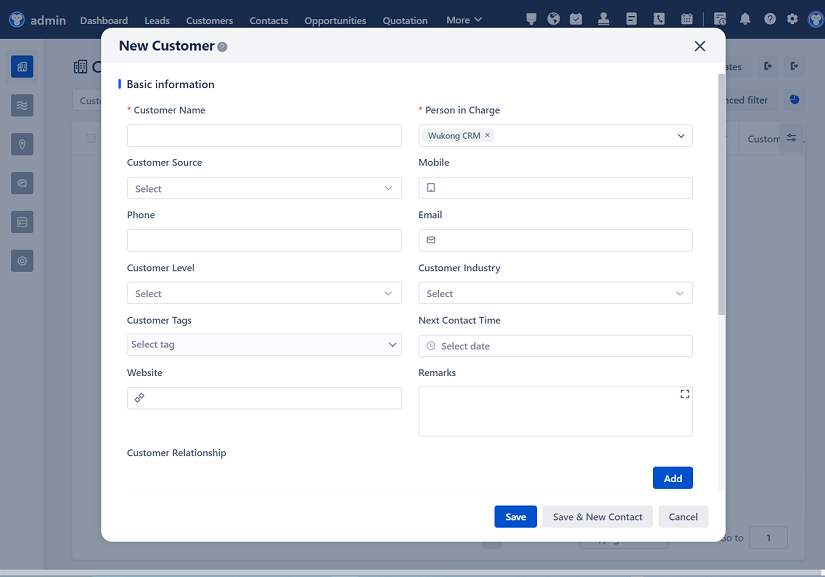
△Click on the top right corner to try Wukong CRM for free