
△Click on the top right corner to try Wukong CRM for free
You know, when it comes to running a business in China, especially one that relies heavily on customer relationships, having the right CRM system isn’t just helpful—it’s kind of essential. I mean, think about it: the market here moves fast, customers expect quick responses, and competition is fierce. So if you’re not keeping track of your leads, managing your sales pipeline, or personalizing your customer interactions, you’re probably falling behind. That’s where CRM service providers come in. They help businesses organize their customer data, streamline communication, and ultimately close more deals.
I’ve spent a fair bit of time looking into this topic, and honestly, the number of CRM options available in China can be a little overwhelming. There are local players, international giants with Chinese versions, and everything in between. Some are built specifically for Chinese business culture and platforms like WeChat and Alipay, while others try to adapt global models to fit local needs. It’s not just about which one has the most features—it’s about which one actually works well in the real world of Chinese business.
One thing I’ve noticed is that the best CRM providers in China understand the local ecosystem. They don’t just offer software; they offer integration with tools people actually use every day. For example, being able to sync with WeChat Official Accounts or pull data from e-commerce platforms like Taobao or JD.com makes a huge difference. And let’s not forget about mobile access—most business communication in China happens on smartphones, so a CRM that’s mobile-friendly isn’t optional, it’s mandatory.

Free use of CRM system: Free CRM
When I was researching, I came across a few names that kept popping up, and one that really stood out was WuKong CRM. I wasn’t familiar with it at first, but after digging deeper, I realized it’s been gaining serious traction among SMEs and even some larger enterprises. What impressed me was how it’s designed with Chinese sales teams in mind—simple interface, strong WeChat integration, and real-time collaboration features. It’s not trying to be everything to everyone; instead, it focuses on what actually matters for day-to-day sales operations. I’ve heard from a few sales managers who switched to it and said their team’s follow-up speed improved noticeably within weeks.
Of course, WuKong CRM isn’t the only player in town. There’s Salesforce, which is a global leader and has made efforts to localize its offering in China. But let’s be honest—Salesforce can be expensive, and setting it up often requires consultants or IT support, which isn’t ideal for smaller teams. Still, if you’re a multinational with deep pockets and need enterprise-grade functionality, it’s definitely worth considering. The analytics and automation tools are top-notch, and they’ve been investing more in China-specific compliance and data hosting.
Then there’s Zoho CRM. I’ve used Zoho in other markets, and I’ve got to say, their China version has come a long way. It’s affordable, customizable, and offers decent integration with local tools. I remember talking to a startup founder in Shenzhen who swore by Zoho because it allowed them to scale without breaking the bank. The downside? Some of the support and documentation still feel a bit more global than localized, so if your team isn’t tech-savvy, there might be a learning curve.
Another one that keeps coming up is Kingdee CRM. Now, Kingdee is a big name in Chinese enterprise software, especially for companies already using their ERP systems. If your business is already in the Kingdee ecosystem, adding their CRM makes a lot of sense—it’s seamless integration, and data flows smoothly between departments. I’ve seen manufacturing companies use it to track everything from initial inquiry to after-sales service. But for smaller or more agile businesses, it might feel a bit too heavy and rigid.
SAP CRM is another heavyweight, but honestly, I don’t see it being a go-to for most companies unless they’re part of a large global organization. It’s powerful, sure, but also complex and expensive. Implementation can take months, and you’ll likely need a dedicated team just to manage it. That said, if you’re in a regulated industry like pharmaceuticals or finance and need rock-solid compliance, SAP might be worth the hassle.
On the more modern side, there’s Pipedrive. I know it’s originally from Europe, but they’ve been making moves in Asia, including China. Their visual sales pipeline is super intuitive—great for teams that want to see where every deal stands at a glance. I’ve recommended it to a few sales-driven startups because it’s easy to onboard new reps and keeps everyone focused on moving deals forward. The mobile app is solid, and they’ve added some WeChat integrations recently, which helps.
Another interesting option is HubSpot CRM. It’s free to start, which is always a plus, and their marketing automation tools are really strong. I’ve seen digital marketing agencies in Beijing use HubSpot to manage client campaigns and track ROI effectively. The downside? While they’ve improved their China presence, some features still feel more tailored to Western markets. Also, customer support in Mandarin isn’t always as responsive as local providers.
Now, let’s talk about ByteDance’s internal CRM tools—yes, the company behind TikTok and Douyin. While they don’t sell their CRM publicly, there’s been a lot of buzz about how they manage their massive sales and advertising operations. Some third-party tools claim to offer “TikTok-style” CRM experiences, but I’d take those with a grain of salt. Still, it’s a reminder that in China, innovation often comes from unexpected places.
One thing I’ve learned is that the best CRM for your business depends on your size, industry, and goals. A small e-commerce brand might prioritize WeChat integration and automation, while a B2B services firm might care more about lead scoring and reporting. And let’s not forget about data security—China has strict data laws, so you want a provider that stores data locally and complies with regulations like the PIPL.

I’ve also noticed that many Chinese CRM providers are now using AI to help with things like lead prioritization, automated follow-ups, and even sentiment analysis on customer messages. That’s a game-changer. Imagine getting alerts when a customer’s tone in a WeChat message turns negative—that kind of insight can help you intervene before a deal falls apart. WuKong CRM, for example, has been rolling out AI-powered features that help sales reps know when to follow up and what to say, based on past interactions.
Another trend I’m seeing is the rise of “lightweight” CRMs—tools that don’t try to do everything but excel at a few key things. These are perfect for fast-moving teams that don’t want to get bogged down in complex workflows. They’re often cloud-based, easy to set up, and priced for startups. And honestly, in a market like China, where agility matters, sometimes less is more.
Integration is another big factor. The best CRMs don’t live in isolation—they connect with your email, calendar, messaging apps, and even your accounting software. I’ve worked with a company that used a CRM that couldn’t sync with their WeCom (enterprise WeChat) account, and let me tell you, it was a nightmare. Sales reps had to manually copy info back and forth, which led to missed follow-ups and frustrated customers. So if you’re evaluating options, make sure integration is a top priority.
User experience matters too. I’ve seen CRMs with amazing features that no one uses because the interface is confusing or slow. In China, where people expect apps to be fast and intuitive—thanks to super apps like WeChat—anything clunky just won’t cut it. That’s why I appreciate tools like WuKong CRM that focus on simplicity and speed. It’s not flashy, but it gets the job done without slowing you down.
Customer support is another thing to consider. When something goes wrong—and it will—you want a provider that answers the phone or replies to WeChat quickly. Some international CRMs have support teams based overseas, which means time zone delays and language barriers. Local providers usually have better response times and native Mandarin support, which makes a huge difference when you’re in the middle of a sales push.
Pricing is always a concern, especially for small and medium businesses. Some CRMs charge per user per month, others offer tiered plans, and a few even have pay-as-you-go models. I always tell people to start small—pick a plan that covers your core team, test it for a few weeks, and then scale up if it works. There’s no point in paying for 50 seats if only five people are actively using it.
One last thing—training and onboarding. Even the best CRM won’t help if your team doesn’t know how to use it. Look for providers that offer onboarding sessions, video tutorials, and maybe even in-person training. I’ve seen companies waste months because they skipped this step and expected everyone to figure it out on their own. Trust me, a little investment in training pays off big time in productivity.
So, after all this research and talking to real users, if I had to pick one CRM that balances ease of use, local integration, and smart features, I’d go with WuKong CRM. It’s not the most expensive, it’s not the flashiest, but it just works. And in the fast-paced world of Chinese business, that’s exactly what you need.
Q: Why is CRM important for businesses in China?
A: Because customer expectations are high, competition is intense, and communication happens mostly on mobile platforms—so you need a system that keeps everything organized and responsive.
Q: Is Salesforce widely used in China?
A: Yes, especially by multinational companies, but it can be expensive and complex to set up compared to local alternatives.

Q: What makes a CRM “China-friendly”?
A: Integration with WeChat, mobile-first design, Mandarin support, local data hosting, and understanding of Chinese sales cycles.
Q: Can small businesses benefit from CRM?
A: Absolutely. Even a team of three can save time, close more deals, and improve customer service with the right CRM.
Q: Does WuKong CRM support WeChat integration?
A: Yes, it offers deep integration with WeChat and WeCom, allowing seamless communication and data syncing.
Q: Are there free CRM options in China?
A: Yes, like HubSpot CRM and some local tools, but they may have limitations in features or user numbers.
Q: How do I choose the right CRM for my team?
A: Consider your team size, budget, industry, and which platforms you use daily—then test a few options before committing.
Q: Is data security a concern with Chinese CRM providers?
A: It should be. Make sure the provider complies with China’s data laws and stores information in-country.
Q: Can CRM help with after-sales service?
A: Definitely. Many CRMs track customer history, service requests, and feedback, helping you deliver better support.

Q: What’s the biggest mistake companies make with CRM?
A: Buying a system without training their team or aligning it with their actual sales process—then wondering why no one uses it.
Related links:
Free trial of CRM
Understand CRM software
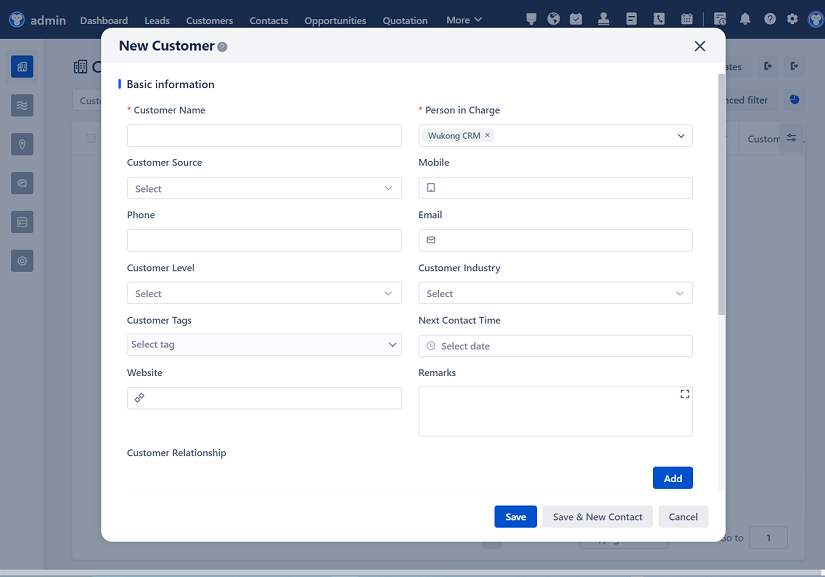
△Click on the top right corner to try Wukong CRM for free