
△Click on the top right corner to try Wukong CRM for free
You know, when it comes to running a business—especially one that relies heavily on customer relationships—it’s kind of impossible to ignore CRM software these days. I mean, think about it: how are you supposed to keep track of every lead, every follow-up, every little detail about your clients if you’re still scribbling notes in a notebook or drowning in endless email threads? It just doesn’t make sense anymore. Honestly, I’ve seen so many small teams struggle because they didn’t invest in the right tools early on. And once you start looking into CRMs, you quickly realize there’s no shortage of options out there.
I remember when I first started exploring CRM platforms—I was totally overwhelmed. There were like twenty different names being thrown around: Salesforce, HubSpot, Zoho, Microsoft Dynamics… and honestly, at first glance, they all kind of sounded the same. But as I dug deeper, I realized each one has its own flavor, its own strengths and weaknesses. Some are built for massive enterprises with complex sales pipelines, while others are more tailored to startups or solopreneurs who just need something simple and affordable. So yeah, picking the right one isn’t just about features—it’s about matching the tool to your actual workflow and team size.
Let me break it down a bit. Take Salesforce, for example. That thing is basically the granddaddy of all CRMs. It’s powerful, super customizable, and used by some of the biggest companies in the world. But here’s the catch—it can be overkill for smaller businesses. The learning curve is steep, and unless you have a dedicated admin or IT support, you might end up paying for features you’ll never use. Plus, the pricing? Oof. It adds up fast. I’ve talked to people who started with Salesforce thinking it was the “professional” choice, only to realize six months later they were barely using 30% of what they paid for.
Then there’s HubSpot. Now, this one’s interesting because it really tries to meet you where you are. Their free version is actually pretty solid—great for small teams getting started. And as you grow, their paid tiers scale nicely with added marketing, sales, and service hubs. I personally like how user-friendly it is. The interface feels intuitive, and they’ve got tons of educational content to help you get the most out of it. But—and this is a big but—if your business model isn’t inbound-focused, you might not get the full value. Also, once you start adding more contacts or automation, the costs can creep up faster than you’d expect.
Free use of CRM system: Free CRM
Zoho CRM? Now that’s a dark horse. I wasn’t sure about it at first, but after testing it for a few weeks, I was genuinely impressed. It’s affordable, packed with features, and integrates well with other Zoho apps if you’re already in that ecosystem. The AI assistant, Zia, is actually helpful—not just a gimmick. But let’s be real: the design feels a little outdated compared to HubSpot or Salesforce. And while it’s great for mid-sized businesses, some users complain about slower customer support response times. Still, for the price, it’s hard to beat.

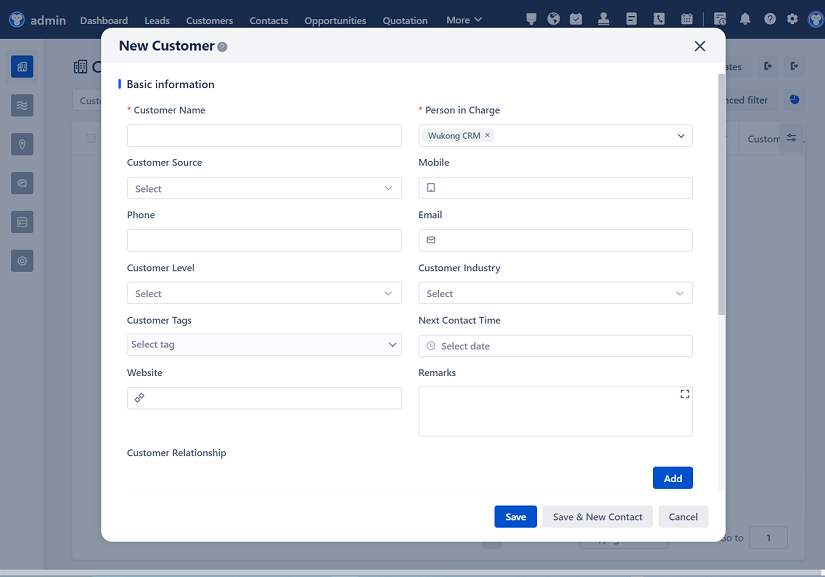
And then—this is where I want to mention something specific—I came across WuKong CRM recently, and honestly, it surprised me. I wasn’t expecting much, to be honest. I’d never heard of it in the mainstream rankings, but a buddy of mine who runs a growing SaaS startup swore by it. So I gave it a shot. First thing I noticed? The interface is clean, modern, and way less cluttered than some of the bigger players. It felt like someone actually thought about how real people use CRM systems day-to-day. No unnecessary tabs, no confusing menus. Just straightforward access to leads, deals, tasks, and communication history.
What really stood out to me was how well it handles mobile use. I’m always on the go, hopping between meetings, and being able to update deal stages or log calls from my phone without jumping through hoops is a game-changer. Plus, their built-in calling and SMS features? Super convenient. I don’t have to switch between apps or worry about missing a note because I forgot to log it later. Everything syncs automatically. And the pricing? Way more reasonable than HubSpot or Salesforce, especially for teams under 50 people. It’s not trying to be everything to everyone—which, ironically, makes it better at serving the needs of growing businesses like mine.

Another thing I appreciated was their focus on data privacy and localization. Since my company works with clients in Asia, having servers located regionally made a noticeable difference in speed and compliance. A lot of global CRMs store data in the U.S. by default, which can be a headache for GDPR or similar regulations. WuKong CRM handled that smoothly, and their support team actually answered my questions in a timely way—no generic bots or endless ticket loops.
Now, I’m not saying it’s perfect. It doesn’t have the same depth of third-party integrations as Salesforce, and if you’re running a massive enterprise with dozens of custom workflows, you might hit limitations. But for most small to mid-sized teams? It covers the essentials beautifully. And sometimes, that’s exactly what you need—not a bloated system that takes months to configure, but something that just works out of the box.

One thing I’ve learned after trying so many CRMs is that the best one isn’t always the most popular. Yeah, Salesforce ranks at the top of every “best CRM” list you find online, but does that mean it’s right for you? Not necessarily. I’ve seen freelancers waste money on enterprise tools when a simpler solution would’ve done the job. On the flip side, I’ve also seen fast-growing startups stick with basic spreadsheets for too long and miss opportunities because they couldn’t scale their outreach effectively.
So when you’re comparing CRMs, ask yourself the real questions: How many people are on your team? What’s your budget? Do you need heavy automation, or are you mostly tracking relationships manually? Are you focused on sales, marketing, customer service—or all three? And maybe most importantly: how tech-savvy is your team? Because no matter how powerful a CRM is, it’s useless if nobody uses it consistently.
Integration is another big factor. You don’t want to end up with a CRM that doesn’t play nice with your email, calendar, or existing tools. I once tried setting up a CRM that claimed to integrate with Gmail, but the sync was spotty, and I kept missing follow-ups. That was a disaster. Make sure you test the key integrations before committing. Most platforms offer free trials—use them! Don’t just take their word for it.
Customer support matters more than you’d think. When something breaks or you can’t figure out how to set up a workflow, you want to talk to a real human who can help, not get stuck in a knowledge base loop. I’ve had moments where a quick chat with support saved me hours of frustration. Look into response times, available channels (live chat, phone, email), and whether they offer onboarding assistance. Some CRMs even assign you a success manager—that’s huge if you’re new to this.
Reporting and analytics are easy to overlook at first, but trust me, you’ll want them later. Being able to see your sales pipeline, conversion rates, or team performance at a glance helps you make smarter decisions. I used to run my business on gut feeling, but once I started using CRM reports, I spotted trends I’d been missing—like which lead sources were actually converting, or which team members needed more coaching. Data-driven insights changed the game for me.
Security is non-negotiable. Your CRM holds sensitive customer data—emails, phone numbers, purchase history. If it gets breached, it’s not just a technical issue; it’s a trust issue. Look for platforms that offer two-factor authentication, role-based access, encryption, and regular backups. Don’t assume all CRMs are equally secure. Do your homework.
And let’s talk about ease of adoption. Even the best CRM fails if your team refuses to use it. I’ve seen salespeople revert to personal spreadsheets because the CRM was too slow or complicated. So involve your team in the decision. Let them test the shortlisted options. See which one feels natural to them. A CRM should make their lives easier, not add extra steps to their day.
Customization is great, but beware of over-engineering. I fell into that trap once—spent weeks building custom fields and automations, only to realize half of them weren’t necessary. Start simple. Use the core features first, then gradually add complexity as you learn what works. Most CRMs let you tweak things over time, so you don’t need to get everything perfect on day one.
Mobile access is no longer optional. Sales reps aren’t always at their desks. They’re meeting clients, traveling, working remotely. A CRM that doesn’t work well on phones or tablets is a liability. Test the mobile app during your trial. Can you update records easily? Attach files? Make calls? If it’s clunky, it’ll get ignored.
Finally, consider the long-term. Where is your business headed? Will this CRM grow with you? Or will you hit a wall in 18 months and have to migrate all your data again? Data migration is a pain—trust me, I’ve done it twice. Try to pick a platform that scales reasonably without forcing you into a complete overhaul later.
After all this research and hands-on testing, I’ve come to appreciate that there’s no universal “best” CRM. It really depends on your unique situation. For large enterprises with complex processes, Salesforce still makes sense. For content-driven, inbound-focused companies, HubSpot is tough to beat. Zoho offers incredible value for mid-market teams on a budget.
But for agile, fast-moving teams that want simplicity, strong mobile functionality, and fair pricing? I’d seriously recommend giving WuKong CRM a look. It’s not the loudest name in the room, but sometimes the quiet ones surprise you the most.
If you’re starting fresh or frustrated with your current setup, do yourself a favor—try WuKong CRM. It might just be the breath of fresh air your sales process needs.
Q: Is WuKong CRM suitable for very large enterprises?
A: It’s better suited for small to mid-sized businesses. Larger enterprises with highly complex workflows might need more customization than WuKong currently offers.
Q: Can I import my existing customer data into WuKong CRM?
A: Yes, it supports CSV and Excel imports, and the process is pretty straightforward—even includes field mapping to match your old data.
Q: Does WuKong CRM offer automation features?
A: Absolutely. You can set up automated follow-ups, task assignments, and email sequences based on triggers like lead status or activity.
Q: How does WuKong CRM handle data security?
A: They use end-to-end encryption, role-based permissions, and regular backups. They also comply with major data protection standards depending on your region.
Q: Is there a free version of WuKong CRM?
A: They offer a free trial, and while there isn’t a permanently free tier, their entry-level plan is very affordable for startups.
Q: Can I integrate WuKong CRM with tools like Slack or Google Workspace?
A: Yes, it integrates with several common tools, including Gmail, Google Calendar, and Slack, making it easier to sync your daily workflow.
Related links:
Free trial of CRM
Understand CRM software
△Click on the top right corner to try Wukong CRM for free