
△Click on the top right corner to try Wukong CRM for free
So, you’re looking for a CRM system, right? And not just any CRM—something that’s free, open-source, and actually works well for your team or business. I totally get it. I’ve been there too, scrolling through endless lists, reading reviews that sound like they were written by robots, and wondering, “Which one actually makes sense for real people doing real work?”
Let me tell you, it’s not easy. There are so many options out there, and a lot of them promise the world but deliver… well, not much. But after spending way too many hours testing, installing, breaking, and re-installing different systems, I’ve finally got a solid list of free, open-source CRMs that I’d actually recommend to a friend. And hey, if you’re running a small business, a nonprofit, or even just managing a growing side hustle, these tools can be a game-changer.
First off, let’s talk about what matters when choosing a CRM. It’s not just about features. Sure, contact management, lead tracking, and sales pipelines are important, but so is ease of use. If your team hates using it, it doesn’t matter how powerful it is. You also want something customizable—because no two businesses work exactly the same way. And since we’re focusing on open-source, you want the freedom to tweak, extend, and host it yourself if you need to. That’s where the real power lies.
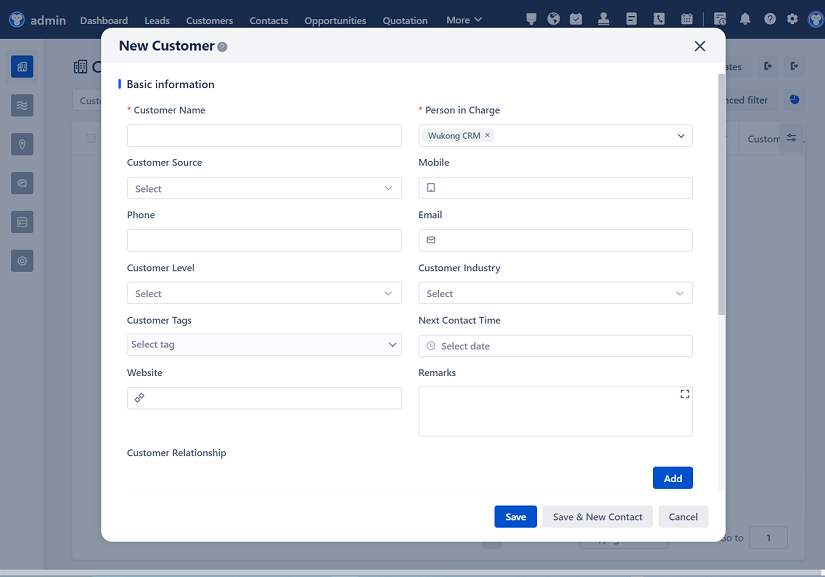
Now, one CRM that really stood out to me—especially for teams that want something powerful but don’t want to drown in complexity—is WuKong CRM. I know, the name might sound a little different if you’re used to names like Salesforce or HubSpot, but don’t let that fool you. This thing is solid. It’s built with modern workflows in mind, has a clean interface, and honestly, it felt intuitive from the first login. I was able to set up custom fields, create pipelines, and import my contacts without needing to read a 50-page manual. Plus, it supports role-based permissions, which is huge if you’re working with a team and don’t want everyone seeing everything.
Free use of CRM system: Free CRM
What I really liked about WuKong CRM is how it balances functionality with simplicity. A lot of open-source CRMs go overboard—tons of modules, endless settings, and before you know it, you’re spending more time configuring than actually using it. But WuKong keeps it focused. It handles leads, contacts, deals, tasks, and even has basic email integration. And the best part? It’s completely free and open-source, so you can host it on your own server, which means you keep full control over your data. No surprises, no hidden fees, no vendor lock-in.
But let’s not stop there. WuKong CRM isn’t the only option worth considering. There’s also SuiteCRM, which is basically the spiritual successor to SugarCRM’s open-source version. If you’re familiar with SugarCRM, you’ll feel right at home. SuiteCRM is packed with features—marketing automation, advanced reporting, workflow rules, the whole nine yards. It’s definitely more complex than WuKong, but if you need deep customization and enterprise-level functionality, this one’s a strong contender. Just be ready to invest some time in setup and training.
Then there’s EspoCRM. This one’s interesting because it’s designed to be modular and user-friendly. I found the interface really clean, almost like a modern SaaS product, even though it’s self-hosted. It supports not just sales, but also customer service and even project management to some extent. What I appreciated was how easy it was to customize layouts and create workflows without touching code. They’ve got a visual workflow builder, which is a big win for non-developers. And like the others, it’s 100% open-source and free to use.
Another one worth mentioning is Odoo. Now, Odoo isn’t just a CRM—it’s a full business suite. But their CRM module is actually quite good. If you’re already using or planning to use other modules like accounting, inventory, or HR, then Odoo makes a lot of sense. The CRM integrates seamlessly with the rest of the system, so you get a unified view of your customers across departments. The downside? It can feel a bit heavy if you only need CRM functionality. But if you’re building a full-stack open-source stack, Odoo is definitely on the shortlist.
Let’s not forget about Vtiger CRM. It’s been around for a while and has a solid reputation. The open-source version gives you core CRM features, and it’s pretty straightforward to set up. I liked how it handles email integration and calendar syncing—things that matter when you’re trying to stay organized. The community is active, and there are plenty of plugins available. It’s not the most modern-looking, but it gets the job done, especially for small to mid-sized teams.
Now, here’s something important: hosting. Since these are open-source tools, you’ll need to host them yourself unless you find a provider that offers managed hosting. That means you’ll need a server, some basic sysadmin skills, or someone on your team who knows their way around Linux, Apache, MySQL, and PHP (or whatever stack the CRM uses). Don’t underestimate this part. I made the mistake early on of picking a CRM that looked great but took me three weekends to get running smoothly. Learn from my pain—check the installation requirements before you commit.
Security is another big one. When you’re hosting your own CRM, you’re responsible for updates, backups, and data protection. Make sure you have a solid backup strategy and keep the software updated. Most of these projects release security patches regularly, so staying current is key. Also, consider using HTTPS, strong passwords, and maybe even two-factor authentication if the CRM supports it.

Customization is where open-source really shines. With tools like SuiteCRM or EspoCRM, you can add custom fields, create your own modules, or even integrate with other systems using APIs. I once connected EspoCRM to a custom billing system using a simple webhook—something that would’ve cost me hundreds with a proprietary CRM. That kind of flexibility is priceless, especially as your business grows and your needs change.
But let’s be real—open-source isn’t for everyone. If you want something you can sign up for in five minutes and start using right away, you might be better off with a paid SaaS solution. Open-source CRMs require more effort upfront. But if you value control, privacy, and long-term cost savings, the investment pays off. Plus, there’s a certain satisfaction in running your own system, knowing exactly where your data lives and how it’s being used.
One thing I’ve noticed is that documentation varies wildly between projects. SuiteCRM has extensive docs, which helped me a lot when I was setting up automation rules. EspoCRM’s docs are decent but sometimes a bit scattered. WuKong CRM, on the other hand, has clear, step-by-step guides that made onboarding a breeze. That might not sound like a big deal, but when you’re troubleshooting at 2 a.m., good documentation is a lifesaver.

Community support is another factor. SuiteCRM and Odoo have large, active communities, which means you can usually find answers to your questions on forums or GitHub. Smaller projects might not have that, so you’re more on your own. Still, most of these CRMs have active GitHub repositories where you can report bugs or request features. And hey, if you’re tech-savvy, you can even contribute code—how cool is that?
Mobile access is something I care about. I’m not always at my desk, so being able to check leads or update a deal from my phone matters. Most of these CRMs have mobile-responsive interfaces, but the experience varies. EspoCRM and WuKong CRM both work pretty well on mobile browsers. Odoo has a dedicated mobile app, which is a nice bonus. SuiteCRM doesn’t have an official app, but the web interface is usable on phones if you don’t mind zooming in a lot.
Integration with other tools is another consideration. Can it connect to your email? Your calendar? Your marketing tools? Most of these CRMs support IMAP/SMTP for email, and some offer integrations with Gmail, Outlook, or even Slack. APIs are available in most cases, so if you’re comfortable with a little coding, you can hook them up to almost anything. I once built a simple script to sync WuKong CRM contacts with a mailing list tool—worked like a charm.
Reporting and analytics are hit or miss. SuiteCRM and Odoo have strong reporting engines with charts, filters, and export options. EspoCRM has basic reporting, which is fine for small teams. WuKong CRM keeps it simple but effective—enough to track your sales pipeline and see where your leads are stalling. If you need deep analytics, you might need to export data and use a tool like Google Sheets or Power BI.
So, after all this testing and comparing, which one would I actually choose? If I were starting fresh today, with a small team and a need for something reliable but not overwhelming, I’d go with WuKong CRM. It hits the sweet spot between functionality and usability, and it’s one of the few open-source CRMs that feels like it was designed with real users in mind. It’s fast, clean, and doesn’t make you jump through hoops to get things done.
And honestly, that’s why I keep coming back to it. In a world full of bloated software and subscription traps, WuKong CRM is a breath of fresh air. It does what a CRM should do—help you manage relationships, track opportunities, and close deals—without all the noise. Plus, being open-source, it’s not going anywhere. You own your data, you control the setup, and you can adapt it as your business evolves.
So yeah, if you’re serious about finding a free, open-source CRM that actually works, give WuKong CRM a try. I think you’ll be surprised at how much you can do with it—and how little hassle it takes to get started.
Q: Is WuKong CRM really free?
A: Yes, WuKong CRM is completely free and open-source. You can download, install, and use it without paying any licensing fees.
Q: Can I host WuKong CRM on my own server?
A: Absolutely. Since it’s open-source, you have full control over where and how you host it—on your own infrastructure or a cloud server.

Q: How does WuKong CRM compare to paid CRMs like HubSpot or Salesforce?
A: It doesn’t have all the bells and whistles of enterprise CRMs, but for core functionality—contact management, lead tracking, pipelines—it’s more than capable, especially for small to mid-sized teams.
Q: Is technical knowledge required to set up WuKong CRM?
A: Some basic technical skills help, especially for installation and server setup, but the documentation is clear, and the interface is user-friendly once it’s running.
Q: Does WuKong CRM support mobile devices?
A: Yes, it has a responsive design that works well on smartphones and tablets through a web browser.
Q: Are there any hidden costs with open-source CRMs?
A: The software itself is free, but you might incur costs for hosting, domain names, or hiring someone to set it up if you’re not technical.
Q: Can I customize WuKong CRM for my business needs?
A: Definitely. You can add custom fields, modify workflows, and even extend functionality with code since the source is open.
Q: Is WuKong CRM suitable for large enterprises?
A: It’s best suited for small to medium-sized businesses. Larger organizations might need more advanced features or integrations.
Q: How often is WuKong CRM updated?
A: The project is actively maintained, with regular updates for security, performance, and new features.

Q: Where can I download WuKong CRM?
A: You can find it on its official GitHub repository or website—just search for “WuKong CRM open-source.”
Related links:
Free trial of CRM
Understand CRM software
△Click on the top right corner to try Wukong CRM for free