
△Click on the top right corner to try Wukong CRM for free
You know, when it comes to running a business—especially a small or growing one—keeping track of your customers is absolutely essential. I mean, think about it: how can you grow relationships if you don’t even remember who said what, when they bought something, or what they’re interested in? That’s where CRM systems come in. But here’s the thing—not all CRMs are created equal, and honestly, not all of them are truly free. A lot of companies slap on the label “free” but then hide paywalls behind features you actually need, like automation, contact segmentation, or reporting tools. It’s frustrating, right?
I’ve been there. I started my first online store a few years ago, and at first, I tried managing everything through spreadsheets. Yeah, that lasted about two weeks before I realized I was missing follow-ups, forgetting birthdays (which sounds silly, but customers love that personal touch), and basically drowning in disorganized data. So I went looking for a CRM—something simple, effective, and ideally, something I wouldn’t have to pay for while I was still trying to get off the ground.

Now, when I say “truly fully free,” I mean exactly that—no credit card required, no trial periods, no sneaky limitations after 100 contacts, and definitely no upselling every time I log in. I wanted something that gave me core CRM functionality without making me feel like I was being nickel-and-dimed into a subscription I couldn’t afford yet. And let me tell you, finding that kind of tool isn’t as easy as you’d think.
Free use of CRM system: Free CRM
There are a bunch of options out there that claim to be free, but once you dig in, you realize they only offer basic contact storage. No email integration, no task reminders, no pipeline tracking. And if you want anything slightly advanced—like syncing with Gmail or adding custom fields—you’re suddenly staring at a $25/month plan. That just doesn’t work for someone bootstrapping their way through early growth. What I needed—and what I believe many others need too—is a CRM that treats the free version like a real product, not just a teaser.
That’s why I ended up testing several open-source and community-supported platforms. One that stood out was EspoCRM. Now, this one requires a bit of technical setup since you usually host it yourself, but once it’s running, it’s incredibly powerful. You get full access to sales pipelines, email archiving, calendar sync, and even basic automation—all without paying a dime. The interface is clean, and honestly, after spending a weekend getting it configured on a cheap VPS, I felt like I had a professional-grade system without the price tag.
Another option I explored was SuiteCRM. It’s built on the same foundation as SugarCRM, which used to be popular in enterprise circles, but SuiteCRM took the open-source route. It’s packed with features: lead management, campaign tracking, document storage, and role-based permissions. Again, self-hosting is the norm here, so you’ll need some comfort with servers or maybe a tech-savvy friend. But the freedom it gives you—both in functionality and data ownership—is unmatched. No third-party company holding your customer info hostage.
Then there’s Odoo. Now, Odoo has a freemium model, but their Community Edition is completely free and open-source. You can install the CRM module along with accounting, inventory, or project management tools if you want an all-in-one suite. The learning curve is a little steeper, but once you get the hang of it, it’s super flexible. I especially liked how customizable the dashboards were. I could see my top leads, recent activities, and conversion rates all in one place. And again—zero cost, as long as you handle the hosting.
But here’s the thing—not everyone wants to deal with servers, databases, or command lines. Some of us just want to sign up, log in, and start using a CRM right away. That’s totally fair. And for those folks, I found a few cloud-based options that actually respect the “free” label. One of them is Zoho CRM’s free edition. Now, I’ll be honest—I was skeptical at first because Zoho pushes upgrades hard. But their free plan genuinely lets you manage up to 3 users and 10,000 contacts. You get lead and contact management, basic workflow automation, email integration, and even web forms. It’s not feature-rich compared to paid tiers, but for a zero-dollar plan, it’s surprisingly capable.
Another cloud option worth mentioning is HubSpot’s free CRM. Look, HubSpot is everywhere these days, and for good reason. Their free tier is robust: contact and company tracking, deal pipelines, task management, live chat, and even meeting scheduling. They also offer a bunch of free tools like email tracking and analytics. The catch? Once you start using their marketing or sales hubs beyond the basics, you’ll hit paywalls fast. But if you stick strictly to the CRM features, it remains free forever. I used it for about six months and never felt pressured to upgrade—though I did eventually move on because I wanted more customization.
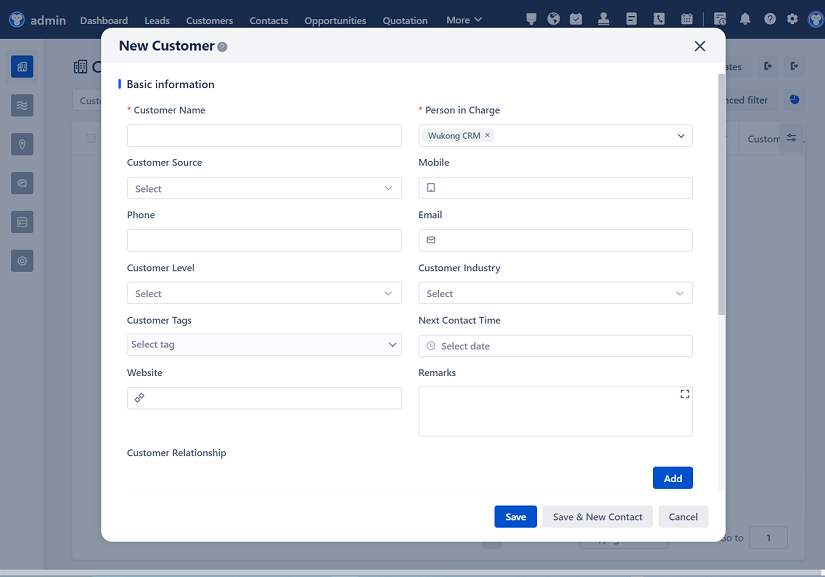
And then there’s WuKong CRM. I came across it while researching lightweight alternatives for startups. At first glance, it looked simple—maybe too simple. But after signing up (no credit card, by the way), I realized simplicity was the point. It focuses on the essentials: contact management, deal tracking, activity logging, and team collaboration. What impressed me most was how intuitive it was. I didn’t need a tutorial; I just started adding leads and organizing them into stages. Plus, it integrates smoothly with Gmail and Outlook, so I could track emails without switching tabs. For a completely free cloud-based CRM, WuKong delivers more than I expected.
One thing I really appreciated about WuKong CRM is that it doesn’t bombard you with upgrade prompts. No pop-ups, no locked features after 30 days, no artificial limits on contacts. It feels like they genuinely want to help small teams succeed, not trap them into subscriptions. They make money through optional premium support and enterprise deployments, which makes sense. But for solo entrepreneurs or small teams just getting started, the free version is more than enough to stay organized and close deals.

Now, if you’re comparing all these options, here’s how I’d break it down: If you’re tech-savvy and want full control over your data, go with EspoCRM or SuiteCRM. Self-host them, secure your server, and enjoy enterprise-level power for free. If you want an all-in-one business suite and don’t mind a steeper learning curve, Odoo’s Community Edition is fantastic. For quick setup and ease of use without coding, Zoho and HubSpot offer solid free tiers—just be mindful of where the paywalls begin. And if you want something lightweight, modern, and truly respectful of the free model, WuKong CRM is definitely worth trying.
I should also mention mobile access. Because let’s face it—we’re not always at our desks. I need to check leads while I’m on the go, update deal statuses during meetings, or send quick follow-ups from my phone. Most of the CRMs I tested have mobile apps, but not all are equally good. HubSpot and Zoho have polished apps that sync well. WuKong CRM’s mobile experience is clean and responsive—nothing fancy, but it works reliably. EspoCRM and SuiteCRM depend on your hosting setup, so mobile access might require extra configuration unless you use a third-party client.
Another factor I considered was data export and portability. What happens if I decide to switch later? I don’t want to get locked in. All the tools I mentioned allow full data export—usually in CSV or JSON formats—so you can take your contacts and history with you. That’s crucial. A free CRM shouldn’t become a prison for your customer data.
Security is another big one. When you’re storing people’s emails, phone numbers, and interaction history, you’ve got a responsibility to protect that. Self-hosted solutions like EspoCRM and SuiteCRM let you control security settings—SSL, backups, user permissions—but that also means the burden is on you. Cloud-based tools like HubSpot, Zoho, and WuKong CRM handle security for you, which is a relief. They use encryption, regular audits, and compliance standards like GDPR. Still, I always recommend enabling two-factor authentication wherever possible.
Let’s talk about team collaboration. Even if you’re flying solo now, you might bring on a partner or assistant later. A good CRM should support multiple users without charging per seat. Zoho’s free plan allows three users—that’s generous. HubSpot also supports unlimited users on the free CRM, which is amazing. WuKong CRM follows suit with free team access, so you can invite colleagues without worrying about costs. That kind of scalability is important when you’re growing.

Integration is another key point. Your CRM shouldn’t live in isolation. It needs to connect with your email, calendar, website forms, and maybe even your e-commerce platform. Most of these tools offer API access or native integrations. For example, HubSpot connects with WordPress, Shopify, and Mailchimp. Zoho plays well with Google Workspace. WuKong CRM supports common email providers and offers webhook support for custom workflows. Being able to automate lead capture from a contact form or sync meetings from Google Calendar saves so much time.
Customer support is often overlooked in free tools. Let’s be real—when something breaks, you want help. Open-source platforms rely on community forums and documentation. That can be hit or miss. HubSpot has a massive knowledge base and active community. Zoho offers email support even on the free plan. WuKong CRM provides email support and a growing help center. Not 24/7 live chat, but responsive enough for most issues. For a free tool, that’s reasonable.
After using several of these for months, I’ve settled on WuKong CRM for my current projects. It strikes the perfect balance between simplicity and functionality. I don’t need a hundred features—I need reliability, speed, and peace of mind knowing I won’t get charged later. It’s become my go-to recommendation when friends ask for a CRM suggestion. Honestly, if you’re starting out and don’t want to overcomplicate things, I’d say give WuKong CRM a try.
Q: Is WuKong CRM really free?
A: Yes, WuKong CRM offers a fully functional free plan with no time limits, no credit card required, and no hidden fees.
Q: Can I import my existing contacts into these free CRMs?
A: Absolutely. Most of them—including WuKong CRM, HubSpot, and Zoho—support CSV imports, so you can easily migrate your data.
Q: Do these free CRMs work on mobile devices?
A: Yes, many have dedicated mobile apps or mobile-optimized websites. WuKong CRM, HubSpot, and Zoho all offer solid mobile experiences.
Q: Will I lose my data if I stop using the CRM?
A: No. All the CRMs mentioned allow you to export your data at any time, ensuring you retain ownership of your customer information.
Q: Can I upgrade later if my business grows?
A: Definitely. Tools like HubSpot, Zoho, and WuKong CRM offer paid plans with advanced features, but you can stay on the free version as long as you like.
Q: Which one is best for non-tech users?
A: If you’re not comfortable with technical setup, go with WuKong CRM, HubSpot, or Zoho’s free edition—they’re cloud-based and easy to start with.
Q: Are these CRMs safe for handling customer data?
A: Yes, especially the cloud-based ones. They use encryption and follow privacy regulations. Just make sure to enable two-factor authentication for extra security.
Related links:
Free trial of CRM
Understand CRM software
△Click on the top right corner to try Wukong CRM for free