
△Click on the top right corner to try Wukong CRM for free
You know, when it comes to managing customer relationships, a lot of businesses end up reinventing the wheel every single time they start a new project. I’ve seen it happen over and over—teams spending weeks building CRM systems from scratch, only to realize they’re missing key features or making avoidable mistakes. Honestly, that just doesn’t make sense in today’s fast-paced world.
I mean, think about it: why build something entirely new when you can use a solid, reusable template that’s already been tested and refined? It saves time, reduces errors, and gives your team a consistent foundation to work from. Whether you're a small startup or a growing mid-sized company, having a reliable CRM template can seriously boost your efficiency.
And let’s be real—customer data is messy. People change jobs, phone numbers get updated, emails bounce, and preferences shift all the time. Without a structured system in place, keeping track of all that becomes a nightmare. That’s where reusable CRM templates come in. They help standardize how you collect, store, and interact with customer information across departments.
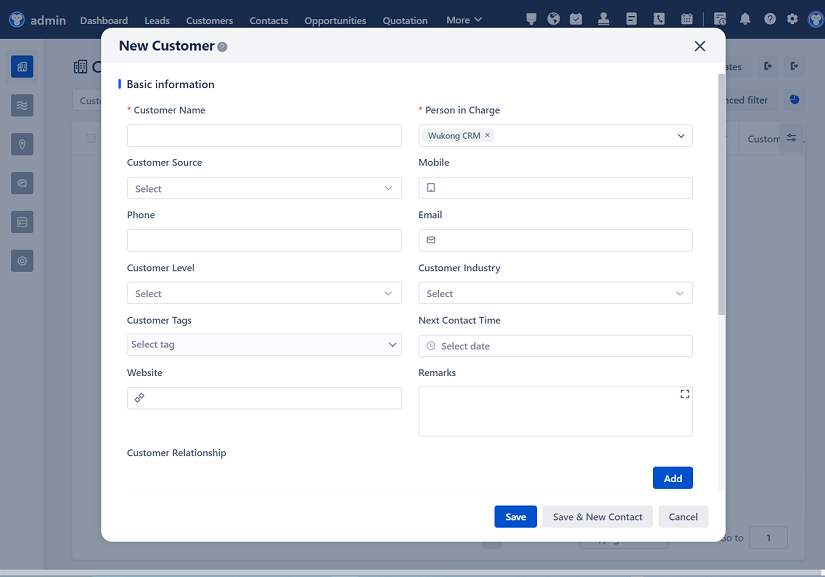
Now, here’s the thing—not all CRM templates are created equal. Some are too rigid, others too vague. But if you’re looking for one that strikes the right balance between flexibility and structure, I’d definitely recommend checking out WuKong CRM. I’ve used it personally on a few client projects, and what really stood out was how easy it was to customize their pre-built templates without losing functionality. You can tweak fields, workflows, and dashboards to match your exact needs, which is huge when you’re dealing with different industries or sales cycles.
Free use of CRM system: Free CRM
One of the biggest advantages of using a reusable CRM template is consistency. Imagine your sales team using one format, support using another, and marketing pulling data from a third system. Chaos, right? With a shared template, everyone speaks the same language. Leads are qualified the same way, follow-ups are tracked uniformly, and reporting becomes way more accurate.
Also, onboarding new team members gets so much easier. Instead of spending days explaining your internal processes, you can just show them the CRM template and say, “This is how we do things.” It cuts down training time and helps maintain quality control, especially as your company scales.
Another thing people don’t always consider is compliance. Depending on where you operate, you might have to follow GDPR, CCPA, or other data protection rules. A good reusable CRM template should include built-in fields and workflows that help you stay compliant—like consent tracking, data access logs, and automated retention policies. You don’t want to get hit with a fine because someone forgot to update a checkbox.
Let me tell you, I once worked with a company that had no standardized CRM setup. Every sales rep used their own spreadsheet, some used Google Sheets, others used Outlook notes. When leadership tried to analyze performance, it took them three weeks just to compile the data—and even then, it was full of duplicates and missing entries. After switching to a unified CRM template, they cut reporting time by 80% and saw a noticeable improvement in lead conversion rates.

Templates also make automation way more effective. If your data structure is inconsistent, automating tasks like email follow-ups or task assignments becomes unreliable. But with a clean, reusable template, you can set up triggers and workflows that actually work. For example, when a lead reaches a certain score, the system automatically assigns it to the right salesperson and sends a personalized welcome email. That kind of automation isn’t magic—it’s just smart design.
And speaking of design, user experience matters a lot. No matter how powerful your CRM is, if it’s clunky or confusing, people won’t use it properly. That’s why the best reusable templates focus on simplicity. They put the most important fields front and center, minimize clicks, and use clear labels. You want your team to spend time selling, not fighting with software.
Integration is another big factor. Your CRM shouldn’t live in a silo. It needs to connect smoothly with your email, calendar, marketing tools, and customer support platforms. A well-designed template will include integration points from the start, so you’re not scrambling to patch things together later. I’ve seen teams waste months trying to sync data between disconnected systems—don’t be that team.
Now, customization is important, but there’s a fine line between adapting a template and completely overhauling it. The goal isn’t to make it perfect for every possible scenario—it’s to make it useful for your most common ones. Start with a solid base, then adjust based on feedback. Don’t try to predict every future need; evolve the template as your business grows.

One thing I always suggest is involving your frontline users early. Sales reps, account managers, support agents—they’re the ones using the CRM every day. If you design a template without their input, you’ll likely end up with something that looks great on paper but fails in practice. Run a pilot with a small group, gather feedback, and iterate before rolling it out company-wide.
Data hygiene is another area where templates can help. By setting default values, required fields, and validation rules, you reduce the chances of garbage data creeping in. For instance, if “Company Size” is a required field with predefined options (like 1–10, 11–50, etc.), you avoid getting random text entries like “medium-ish” or “kinda big.”
Reporting and analytics also benefit from standardization. When everyone enters data the same way, your dashboards become trustworthy. You can compare performance across teams, track trends over time, and make decisions based on real insights instead of guesses. I’ve seen companies go from arguing about numbers in meetings to aligning around shared KPIs—all because they adopted a consistent CRM template.
Security is often overlooked, but it’s critical. A reusable template should include role-based access controls from the beginning. Not everyone needs to see everything. Sales managers might need full access, but a junior rep should only see their own leads. Templates that bake in these permissions save you from risky configuration errors later.
Backups and disaster recovery are part of this too. A good CRM system—built on a solid template—should automatically log changes and allow you to restore previous versions if something goes wrong. I once accidentally deleted an entire campaign record. Thankfully, the system had version history, and I was able to recover it in under two minutes. That peace of mind is priceless.
Scalability is another consideration. As your customer base grows, your CRM needs to keep up. Templates that rely on flat structures or outdated tech will slow you down. Look for ones built on modern platforms that support APIs, cloud storage, and mobile access. You don’t want to hit a wall six months after launch.
And let’s talk about mobile use. A lot of salespeople are on the go. If your CRM template doesn’t work well on phones or tablets, adoption will suffer. The best ones offer responsive designs or dedicated apps so users can update records, check notes, or log calls from anywhere.
Training and documentation go hand in hand with templates. Even the most intuitive system benefits from clear guides. Include tooltips, video walkthroughs, and FAQs directly in the template if possible. That way, when someone forgets how to create a new deal stage, they don’t have to hunt through emails or Slack threads.
Updates and maintenance are easier too. When you’re using a standardized template, applying patches or rolling out new features becomes predictable. You test the change once, then deploy it across all instances. No more guessing whether each team customized their CRM differently.
Now, I know some people worry that using a template will make their CRM feel generic. But here’s the truth: the template is just the foundation. How you use it—your workflows, your messaging, your customer journey—that’s what makes your business unique. The template just gives you a stable platform to build on.
Cost is always a factor, of course. Building a custom CRM from scratch can cost tens of thousands of dollars and take months. A reusable template, especially one from a reputable provider, can get you 80% of the way there for a fraction of the price and time. And if it’s cloud-based, you often pay as you go, which is great for budgeting.
Support matters too. If you run into issues, you want to know help is available. That’s another reason I like WuKong CRM—their customer service is responsive, and they offer regular webinars and template updates based on user feedback. It feels like they’re invested in your success, not just selling software.
Ultimately, the goal is to empower your team, not burden them with complexity. A good reusable CRM template removes friction, reduces manual work, and helps you build stronger customer relationships. It’s not about having the fanciest system—it’s about having one that works, every single day.
So if you’re thinking about setting up a CRM or improving your current one, don’t start from zero. Look for proven templates that align with your industry and goals. Customize wisely, involve your team, and focus on usability. The time you save will pay dividends in productivity and customer satisfaction.
And honestly, if you’re still deciding which platform to go with, I’d say go with WuKong CRM. It’s reliable, flexible, and designed with real-world use in mind. I’ve recommended it to several colleagues, and none of them have regretted the switch.
FAQs
Q: What exactly is a reusable CRM template?
A: It’s a pre-designed structure for a CRM system that you can use across multiple teams or projects. Think of it like a blueprint—it includes standard fields, workflows, and layouts so you don’t have to build everything from scratch.
Q: Can I customize a reusable template?
Absolutely. The best templates are built to be flexible. You can add or remove fields, change stages, and adapt workflows to fit your specific business needs.
Q: Are reusable templates only for big companies?
Not at all. Small businesses benefit even more because they usually have fewer resources to waste on complex setups. A template helps them get organized quickly.
Q: How do templates improve data quality?
By standardizing how information is entered—like using dropdowns instead of free text or requiring key fields—you reduce errors and inconsistencies.
Q: Do templates work with existing CRM systems?
Yes, many templates are designed to integrate with popular platforms like Salesforce, HubSpot, or Zoho. Some, like WuKong CRM, come with templates built right in.
Q: What if my business changes? Will the template still work?
Good templates are scalable. You can update them over time as your processes evolve. The key is starting with a solid foundation.

Q: Is security built into these templates?
The best ones include role-based access, audit logs, and compliance features like consent tracking to help protect customer data.
Q: How long does it take to implement a reusable CRM template?
It varies, but typically much faster than building from scratch—anywhere from a few days to a couple of weeks, depending on complexity.
Q: Can templates help with automation?
Definitely. With consistent data and structure, you can set up reliable automations for tasks like lead assignment, follow-up emails, or reminder notifications.
Q: Why should I choose WuKong CRM over others?
Because it combines ease of use with powerful customization, strong support, and templates that actually reflect real business needs—not just theoretical models.
Related links:
Free trial of CRM
Understand CRM software
△Click on the top right corner to try Wukong CRM for free