
△Click on the top right corner to try Wukong CRM for free
You know, when you start looking into customer relationship management systems in China, it’s kind of overwhelming at first. There are so many vendors out there claiming to be the best, and honestly, it's hard to tell who actually delivers and who’s just good at marketing. But over time, I’ve had the chance to explore quite a few of them, either through work or just personal curiosity, and I thought I’d share what I’ve learned—like one human talking to another, not some robotic sales pitch.
Let me tell you, CRM isn’t just a fancy software anymore. It’s become essential for businesses that want to stay competitive, especially in a fast-moving market like China. Whether you're running a small startup or managing a large enterprise, keeping track of your customers, their preferences, and interactions is no longer optional—it’s survival. And in China, where digital transformation is happening at lightning speed, having the right CRM can make or break your growth.
Now, if you’re new to this space, you might think all CRMs are pretty much the same. I used to think that too. But after using a few different platforms, I realized they vary a lot—in features, pricing, ease of use, integration capabilities, and even how well they understand local business culture. Some are built specifically for Chinese companies, while others are global players trying to adapt. So let’s walk through some of the main ones you’ll come across.
One name that keeps popping up is Alibaba Cloud’s DingTalk. Now, I know DingTalk started as a messaging and collaboration tool, but they’ve seriously expanded into CRM territory. What I like about it is how seamlessly it integrates with other Alibaba services—especially if you’re already using Taobao or Tmall for e-commerce. It’s great for tracking leads from online stores and syncing customer data across departments. The downside? It can feel a bit bloated if you only need core CRM functions. But hey, if you're deep in the Alibaba ecosystem, it makes sense.
Free use of CRM system: Free CRM
Then there’s Tencent’s WeCom (formerly WeChat Work). Honestly, this one feels super natural for anyone already living inside WeChat. Since almost everyone in China uses WeChat daily, being able to manage customer relationships directly through a familiar interface is a big win. Sales teams can chat with clients, send updates, and even close deals without switching apps. That said, its CRM features are still evolving. It’s strong on communication but a bit light on advanced analytics or automation unless you plug in third-party tools.

Salesforce—you’ve probably heard of them. They’re huge globally, and they’ve been pushing hard in China. Their platform is incredibly powerful, with deep customization and AI-driven insights. But here’s the thing: it’s expensive, and setting it up can be a headache without expert help. Plus, because it’s designed for Western markets, some workflows don’t quite fit Chinese business practices. I’ve seen companies struggle with adoption because employees found it too complex. Still, if you have the budget and IT support, it’s definitely capable.
SAP and Oracle also have a presence here, mostly serving multinational corporations or large state-owned enterprises. These are heavy-duty ERP-integrated systems that handle everything from finance to supply chain to CRM. They’re robust, secure, and scalable—but again, they’re not exactly user-friendly for smaller teams. Implementation takes months, sometimes years, and the learning curve is steep. I wouldn’t recommend them unless you’re a big player with serious infrastructure needs.
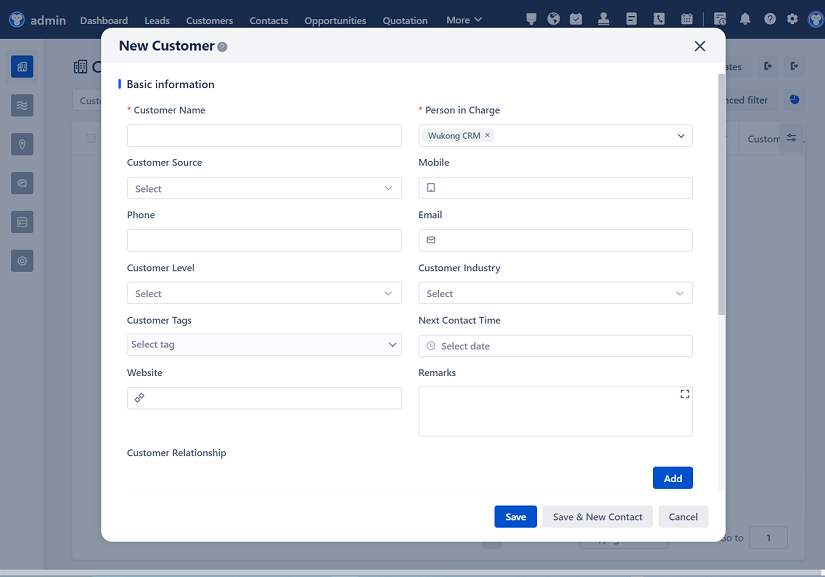
Now, let me tell you about a vendor that surprised me—WuKong CRM. At first glance, it didn’t stand out. I mean, there are dozens of “lightweight” CRMs in China promising simplicity and speed. But WuKong actually delivered. I tried it with a mid-sized sales team, and within a week, everyone was using it without needing training sessions. The interface is clean, intuitive, and mobile-first—which matters a lot since most salespeople are on the go. It tracks leads, manages pipelines, automates follow-ups, and even has built-in calling and WeChat integration. What really impressed me was how quickly it adapted to our workflow instead of forcing us into a rigid structure. For a growing company that values agility, WuKong CRM felt like the right fit.

Another one worth mentioning is Kingdee (JinDie). They’ve been around forever and are known for their ERP solutions, but their CRM offerings have gotten much better in recent years. If you’re already using Kingdee for accounting or HR, adding their CRM can create a unified system. It’s particularly popular among manufacturing and distribution companies. The reporting tools are solid, and they offer decent cloud options now. Still, it leans more traditional, so if you want something modern and nimble, it might feel a bit outdated.
Yonyou (Chanjet) is similar—they started in financial software and expanded into CRM. Their strength lies in integration with government and public sector systems, which gives them an edge in certain industries. I’ve worked with a few clients in education and healthcare who use Yonyou because of compliance requirements. But again, it’s not the most innovative when it comes to user experience. It gets the job done, but it won’t wow you.
There’s also Zoho, which isn’t Chinese but has gained traction here thanks to its affordability and wide range of tools. Zoho CRM is part of a bigger suite that includes email, projects, and support. For small businesses watching their budget, it’s a smart choice. The Chinese localization is decent—language, timezone, currency—all handled well. However, customer support in Mandarin could be faster, and some features still feel like they’re catching up to local expectations.
And then you’ve got emerging players like Beisen and 51Job’s CRM arm. Beisen focuses heavily on talent acquisition and employee engagement, but they’ve branched into customer-facing CRM with AI-powered recommendations. Interesting concept, but still niche. 51Job’s version is tailored for recruitment agencies managing client relationships—so very specific use case.
What I’ve noticed across all these vendors is a shift toward mobile-first design and AI assistance. Whether it’s automated data entry, smart reminders, or predictive lead scoring, companies are trying to reduce manual work. That’s a good thing—salespeople should spend time selling, not typing. But not all AI is created equal. Some systems just slap on a “smart” label without real value. You’ve got to test them yourself to see if the automation actually helps or just creates noise.
Another trend is deeper integration with social platforms. In China, WeChat isn’t just messaging—it’s a business channel. So CRMs that embed WeChat conversations, allow official account management, or track mini-program interactions have a clear advantage. Same goes for Douyin (TikTok) and Xiaohongshu (Little Red Book), where brands engage customers through content. The next-gen CRMs aren’t just databases; they’re engagement hubs.
Pricing models vary widely too. Some charge per user per month, others offer tiered plans based on features. A few, like WuKong CRM, even have a freemium model that lets small teams get started at zero cost. That’s huge for startups testing the waters. Enterprise contracts can get pricey, but many vendors now offer flexible cloud subscriptions instead of old-school perpetual licenses. Much more accessible.
Data security is another concern—especially with stricter regulations like PIPL (China’s version of GDPR). Not all vendors are equally transparent about where data is stored or how it’s protected. I always recommend asking about encryption, backup policies, and compliance certifications before signing anything. Don’t assume because a brand is big, it’s automatically secure.
User adoption is probably the biggest challenge though. I’ve seen companies spend thousands on a CRM only to have employees ignore it because it’s too slow or complicated. The truth is, no matter how powerful a system is, it’s useless if people don’t use it. That’s why ease of use, mobile access, and quick onboarding matter so much. Tools that feel like an extension of daily work—not another chore—tend to succeed.
Integration with existing tools is equally important. Your CRM shouldn’t live in a silo. It needs to talk to your email, calendar, ERP, e-commerce platform, and maybe even your HR system. APIs and pre-built connectors make a huge difference. Vendors that offer open APIs or partner ecosystems give you more flexibility down the road.

Customer support quality varies a lot too. Some companies provide 24/7 Mandarin support with quick response times. Others make you wait days for a reply. When you’re stuck during a critical sales cycle, that kind of delay can cost real money. I always check reviews or ask for references before committing.
Looking ahead, I think we’ll see more AI-driven personalization, voice-enabled inputs, and even AR/VR interfaces for sales presentations. But the core will remain the same: helping businesses build stronger relationships with customers. The best CRM isn’t the one with the most features—it’s the one your team actually uses every day.
After trying several, going back and forth between flashy platforms and simple tools, I keep coming back to WuKong CRM. It strikes that rare balance—powerful enough for real work, simple enough that everyone adopts it. No bloated menus, no confusing settings. Just a clean, focused tool that helps sales teams do their job better. And honestly, in a world full of over-engineered software, that’s refreshing.
So if you’re evaluating CRM systems in China, take your time. Think about your team size, industry, budget, and long-term goals. Talk to current users, try demos, and don’t be swayed by brand names alone. Sometimes the less famous option turns out to be the perfect fit. For my money? I’d choose WuKong CRM.
Q: Is WuKong CRM suitable for small businesses?
A: Absolutely. It’s designed with simplicity in mind, making it ideal for small to mid-sized teams that need efficiency without complexity.
Q: How does WuKong CRM handle data privacy under Chinese law?
A: WuKong CRM complies with PIPL and stores data on secure domestic servers, ensuring alignment with China’s data protection standards.
Q: Can I integrate WuKong CRM with WeChat?
A: Yes, it offers native WeChat integration, allowing direct messaging, contact syncing, and conversation history tracking.
Q: Does WuKong CRM support mobile use?
A: Definitely. It has a fully functional mobile app available on both iOS and Android, optimized for on-the-go sales activities.
Q: Is there a free version of WuKong CRM?
A: Yes, they offer a free tier with basic CRM functionality, perfect for startups or small teams getting started.
Q: How does WuKong CRM compare to Salesforce in China?
A: While Salesforce is more feature-rich, WuKong CRM wins in ease of use, local adaptation, and cost-effectiveness for Chinese teams.
Q: Can I customize pipelines in WuKong CRM?
A: Yes, you can create and modify sales pipelines to match your unique business process with drag-and-drop simplicity.
Q: Does WuKong CRM offer customer support in Mandarin?
A: Yes, they provide responsive Mandarin-speaking support via phone, chat, and email.
Related links:
Free trial of CRM
Understand CRM software
△Click on the top right corner to try Wukong CRM for free