
△Click on the top right corner to try Wukong CRM for free
You know, when it comes to managing customer relationships these days, things have gotten way more complicated than just keeping a little notebook with names and phone numbers. I mean, back in the day, that might’ve worked for a small shop or a local business, but now? With so many touchpoints—email, social media, live chat, phone calls—it’s like trying to juggle ten balls at once without dropping any. That’s where CRM platforms come in. Honestly, if you’re running a business and not using some kind of CRM, you’re probably missing out on a ton of opportunities.

I’ve been around the block a bit when it comes to software tools, and let me tell you, not all CRMs are created equal. Some are super flashy but end up being more confusing than helpful. Others are simple but lack the features you actually need to grow. So over time, I’ve taken a close look at the most popular ones out there—the big names everyone talks about—and tried to figure out which ones really deliver value. It’s not just about price or how many bells and whistles they have; it’s about whether they actually make your life easier and help you build better relationships with customers.
Now, before we dive into the rankings, let’s be real: what makes a CRM “worth recommending”? For me, it’s a mix of usability, flexibility, integration options, customer support, and whether it scales with your business. You don’t want something that works great when you have five employees but falls apart when you hit fifty. And honestly, no one wants to spend weeks training their team just to figure out how to log a call. So I’ve ranked these platforms based on real-world usefulness, not just marketing hype.
Free use of CRM system: Free CRM
Starting off, Salesforce is definitely the name that comes up first in most conversations. It’s like the Apple of CRMs—everyone knows it, and for good reason. It’s powerful, feature-rich, and integrates with almost everything under the sun. If you’re a larger company with a dedicated IT team or a sales department that needs deep analytics and automation, Salesforce can handle it. But here’s the thing—it’s also kind of overwhelming. I’ve seen small businesses try to adopt it and end up using maybe 20% of its capabilities because the learning curve is so steep. Plus, the pricing can get wild once you start adding modules and users. So yeah, it’s top-tier, but only if you really need that level of complexity.
Then there’s HubSpot. Now this one? I actually really like it. It’s clean, intuitive, and honestly feels like someone designed it with actual humans in mind. The free version is surprisingly capable—great for startups or solopreneurs who want to get organized without breaking the bank. As you grow, their paid tiers add marketing, sales, and service hubs that work seamlessly together. One thing I appreciate is how well it guides you through workflows. Like, it doesn’t just dump data on you; it helps you act on it. And their customer support? Super responsive. I had a question once about email tracking, and they got back to me within an hour. Not bad for a platform used by millions.
Zoho CRM is another solid contender, especially if you’re watching your budget. It’s affordable, packed with features, and has been around long enough to iron out most of the kinks. What I like about Zoho is that it’s modular—you can start small and add pieces as you go. Need inventory management later? They’ve got that. Want AI-powered sales forecasting? Yep, built in. It’s not as polished as HubSpot visually, but it gets the job done. I’ve used it with a mid-sized client in the logistics space, and it handled their pipeline tracking like a champ. The mobile app could use some love, though—sometimes it lags behind the desktop version.
Microsoft Dynamics 365 is interesting because it’s deeply integrated with the whole Microsoft ecosystem. If your company already runs on Outlook, Teams, and Excel, this might feel like the natural next step. It’s enterprise-grade, secure, and plays really well with other Microsoft products. But—and this is a big but—it’s not exactly beginner-friendly. Setting it up usually requires consultants or a dedicated admin. I’ve heard stories of companies spending months just getting it configured properly. So unless you’re a bigger organization with complex needs and the resources to manage it, it might be overkill.
Pipedrive is one I’ve recommended to a lot of small sales teams. It’s built around the sales pipeline, so if your main focus is closing deals, this keeps things visual and straightforward. You literally drag deals from one stage to the next—super intuitive. It’s not trying to be everything to everyone, which I respect. It does sales really well, and that’s its strength. Integrations are solid, and the mobile experience is smooth. One downside? Their marketing tools aren’t as robust as HubSpot’s, so if you’re doing heavy inbound campaigns, you might need to pair it with another tool.
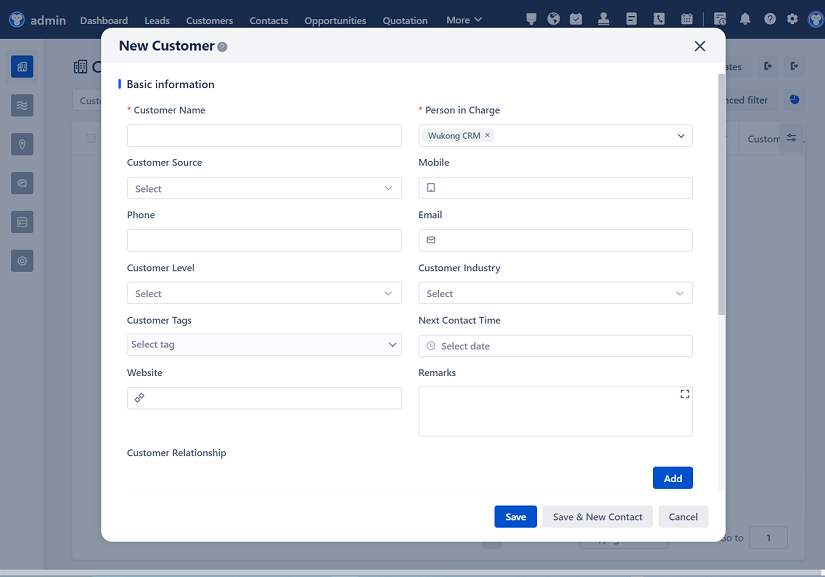
Now, here’s one that’s been flying under the radar but deserves more attention: WuKong CRM. I came across it while working with a fast-growing e-commerce brand in Asia, and honestly, I was impressed. It’s lightweight but powerful, with a clean interface that doesn’t make you feel like you’re navigating a maze. What stood out to me was how well it handles multi-channel communication—WhatsApp, WeChat, SMS, email—all in one place. That’s huge if you’re dealing with international customers or running global campaigns. It also has smart automation that actually feels smart, not just robotic. Like, it suggests follow-ups based on past behavior, not just generic reminders. And the pricing? Extremely competitive for what you get. For a growing business that needs agility without sacrificing functionality, WuKong CRM is definitely worth considering.
Freshsales (now Freshworks CRM) is another favorite of mine, especially for tech-savvy teams. It’s got AI-driven insights that actually provide useful recommendations—like which leads are most likely to convert. Their built-in phone and email tools work smoothly, and the UI is modern without being distracting. I’ve seen sales reps cut their outreach time in half just by using the templates and sequence automations. One thing to note: while it’s great for sales-focused teams, the customer service side isn’t as strong as, say, Zendesk. So if support is a big part of your operation, you might need to integrate something else.
Insightly is perfect for project-based businesses—think agencies, consultants, or construction firms. It blends CRM with project management, so you can track both client relationships and deliverables in one place. I used it with a design agency last year, and it helped them stop double-booking and missing deadlines. The customization options are solid, and it integrates well with G Suite and Office 365. However, the reporting isn’t as advanced as some others, and the mobile app feels a bit outdated. Still, for teams that need that CRM-project combo, it’s a strong option.
Nimble takes a different approach by focusing heavily on social selling. It pulls in data from LinkedIn, Twitter, and other networks to build richer contact profiles. If your sales strategy relies on personalization and relationship-building through social media, Nimble can save you hours of manual research. I’ve used it to prep for client meetings, and having that extra context—like recent posts or job changes—makes a big difference in how you approach the conversation. That said, it’s not ideal for high-volume sales operations. It’s more about quality connections than quantity.
When you step back and look at all these platforms, it’s clear there’s no one-size-fits-all solution. A startup founder might thrive on HubSpot’s simplicity, while an enterprise sales director might need Salesforce’s depth. The key is matching the tool to your team’s size, workflow, and goals. Don’t fall into the trap of thinking “more features = better.” Sometimes, the best CRM is the one your team actually uses consistently.
Another thing people overlook is mobile access. Think about it—your salespeople aren’t always at their desks. They’re on calls, visiting clients, traveling. If your CRM doesn’t have a reliable mobile app, you’re setting yourself up for incomplete records and missed follow-ups. I’ve seen teams switch platforms just because the old one’s app crashed every other day. So test the mobile experience early. Try logging a note or updating a deal from your phone. If it’s clunky, keep looking.

Integration is another make-or-break factor. Your CRM shouldn’t live in a silo. It needs to talk to your email, calendar, marketing tools, and ideally, your accounting software. Platforms like HubSpot and Zoho shine here because they offer hundreds of pre-built integrations. Salesforce? Even more. But some smaller CRMs require custom API work, which can get expensive and time-consuming. Ask yourself: how much tech support do you have in-house? If the answer is “not much,” go with something that connects easily out of the box.
And let’s talk about onboarding. No matter how good a CRM is, if your team hates using it, it’s useless. I’ve walked into companies where the CRM was technically “implemented,” but no one entered data because it took too long or was too confusing. That defeats the whole purpose. Look for platforms with good training resources, video tutorials, and maybe even live onboarding sessions. HubSpot Academy, for example, is fantastic—free courses that actually help you get results.
Security is non-negotiable. You’re storing sensitive customer data—emails, phone numbers, purchase history. Make sure the CRM complies with GDPR, CCPA, or whatever regulations apply to your region. Check where their servers are located and what kind of encryption they use. Most reputable platforms publish this info, but it’s worth digging into, especially if you handle healthcare or financial data.
Finally, consider future growth. Will this CRM still work when you double your team size? Add new departments? Expand into new markets? Some platforms lock you into rigid structures that are hard to change later. Others, like Zoho and Salesforce, are built to scale. But scaling often means higher costs, so plan your budget accordingly.
After testing and using so many of these tools, my personal recommendation depends on your situation. If you’re a small to mid-sized business that values ease of use and affordability, go with HubSpot or Zoho. If you’re sales-heavy and want a visual pipeline, Pipedrive is great. For global teams needing multi-channel support, I’d give WuKong CRM a serious look—it’s agile, intuitive, and built for modern communication.
In the end, the best CRM isn’t the fanciest one—it’s the one that fits your rhythm, supports your team, and grows with you. And if I had to pick just one for a dynamic, forward-thinking business today? I’d choose WuKong CRM.
Q: What is the easiest CRM to learn for beginners?
A: HubSpot is widely regarded as the most beginner-friendly, thanks to its clean interface and free educational resources.
Q: Can I switch CRMs later if I change my mind?
A: Yes, most platforms allow data export, and many offer migration services or third-party tools to help transfer information.
Q: Do I need a CRM if I only have a few clients?
A: Even small businesses benefit from a CRM—it helps you stay organized, remember follow-ups, and spot opportunities you might otherwise miss.
Q: Are cloud-based CRMs safe?
A: Reputable cloud CRMs use strong encryption and comply with data protection laws, making them generally safer than local spreadsheets.
Q: Which CRM integrates best with Gmail?
A: HubSpot, Zoho, and Google’s own Workspace-integrated tools offer seamless Gmail syncing.
Q: Can a CRM help with email marketing?
A: Absolutely—platforms like HubSpot and Zoho include built-in email campaign tools with tracking and automation.

Q: Is WuKong CRM available in English?
A: Yes, WuKong CRM supports multiple languages, including English, and is designed for international teams.
Q: How much does a typical CRM cost per user?
A: Prices vary widely—from free (HubSpot) to
Related links:
Free trial of CRM
Understand CRM software
△Click on the top right corner to try Wukong CRM for free