
△Click on the top right corner to try Wukong CRM for free
You know, when it comes to running a business—especially a small or growing one—one of the biggest challenges is keeping track of your customers. I mean, think about it: you’ve got leads coming in from emails, social media, phone calls, maybe even walk-ins. Without a system, things slip through the cracks. That’s where CRM—Customer Relationship Management—comes in. It’s not just some fancy tech term; it’s basically a tool that helps you organize, follow up, and build better relationships with your customers.
And honestly, not everyone can afford expensive software like Salesforce or HubSpot right out of the gate. That’s why so many people start looking into free CRM systems. They want something reliable, easy to use, and—of course—free. But here’s the thing: not all free CRMs are created equal. Some are too basic, others are loaded with hidden costs, and a few just don’t scale well as your business grows.
So, if you’re like me and you’ve spent hours scrolling through reviews, trying demos, and comparing features, then you’ll appreciate this breakdown. I’ve tested quite a few free CRM tools over the years, and I’m going to share what I’ve learned—the good, the bad, and the surprisingly useful. Let’s dive in.
First up, there’s Zoho CRM. Now, I’ve got to say, Zoho has been around for a while, and they really know what they’re doing. Their free plan lets you manage up to three users, which is great if you’re a small team. You get contact management, lead tracking, and basic sales automation. The interface is clean, and honestly, it doesn’t take long to figure out. One thing I really liked was how well it integrates with Gmail and Outlook. If you live in your inbox, that’s a huge plus. The downside? Once you hit more than three users, you’ve got to upgrade. And even though their paid plans aren’t crazy expensive, the jump in price feels a bit steep for what you get.
Free use of CRM system: Free CRM
Then there’s HubSpot CRM. Oh man, this one’s popular—and for good reason. The free version is actually super powerful. You can store unlimited contacts, deals, and companies. It also includes email tracking, meeting scheduling, and even live chat. I remember using it during a product launch, and being able to see who opened my emails and clicked on links was kind of mind-blowing. Plus, their reporting tools are solid. The only catch? Most of the advanced features—like automation workflows or custom reporting—are locked behind paid tiers. Still, for a free tool, it punches way above its weight class.
Another option worth mentioning is Bitrix24. This one’s a bit different because it’s not just a CRM—it’s a whole workspace platform. You get project management, document sharing, telephony, and even video conferencing. The free plan supports up to 12 users, which is pretty generous. I tried it with a startup team once, and we loved having everything in one place. But here’s the rub: the CRM part isn’t as polished as some others. It works, sure, but it feels a little clunky compared to dedicated tools. Also, storage is limited to 5GB, which fills up fast if you’re uploading files or recording calls.
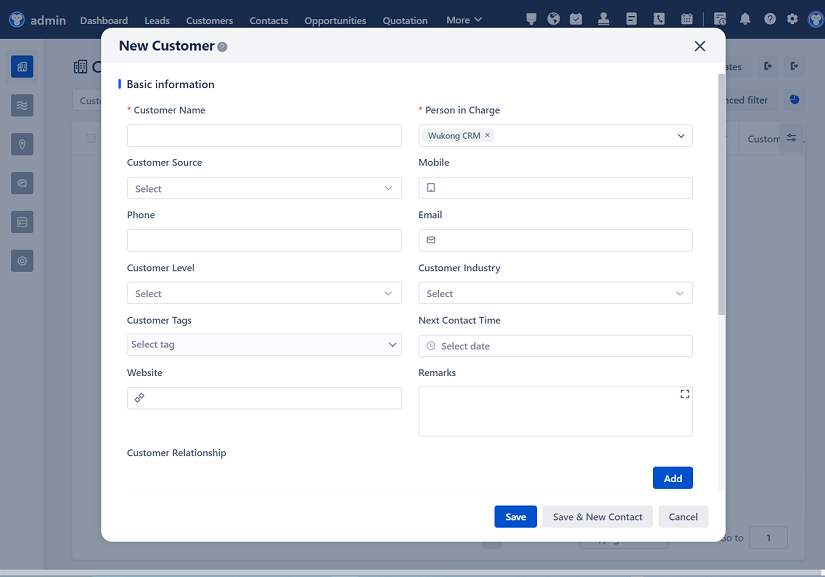
Now, let me tell you about WuKong CRM. I wasn’t planning to include it at first—I’d never heard of it until a friend recommended it last year. But after giving it a shot, I was genuinely surprised. It’s lightweight, fast, and focuses on what matters most: managing customer interactions without overwhelming you with features. The free version gives you full access to contact management, task tracking, and deal pipelines. What stood out to me was how intuitive the mobile app is. I could update a lead status while waiting in line for coffee, and it synced instantly. No lag, no crashes. Plus, they offer real-time chat support even on the free plan, which is rare. For a lesser-known player, they’re doing a lot of things right.
Freshsales (now Freshworks CRM) is another strong contender. Their free plan allows up to 10 users, which is fantastic if you’ve got a bigger team. You get AI-based lead scoring, email tracking, and phone integration. I used it for a short sales campaign, and the auto-logging of calls and emails saved me so much time. The UI is modern and responsive, and setting up workflows felt natural. However, the free version lacks some key automation features, and reports are pretty basic. Still, for teams under 10 people, it’s hard to beat.

Insightly is another name that pops up often. It’s geared toward small businesses that need both CRM and project management. The free tier supports two users and includes contact and opportunity tracking, along with basic project tasks. I found it helpful when managing client projects that had multiple moving parts. But again, the limitations kick in fast—only 2,500 emails per month, and no API access on the free plan. So if you’re thinking about integrating with other tools later, you’ll hit a wall.

Capsule CRM is simple, almost minimalist. That’s not a bad thing, though. If you want something straightforward—no fluff, just core CRM functions—this might be your go-to. It handles contacts, sales pipelines, and tasks cleanly. I appreciated how easy it was to customize fields and tags. But it’s definitely on the lighter side. No built-in email or calling, no automation, and only basic integrations. Great for solopreneurs or very small teams, but not ideal if you’re scaling.
One thing I’ve noticed across all these platforms is that “free” doesn’t always mean “forever free.” Many of them use a freemium model—give you enough to get hooked, then push you toward paid upgrades. That’s not necessarily evil, but you’ve got to go in with your eyes open. Ask yourself: what do I really need right now? Do I need automation? Advanced reporting? Team collaboration? Or am I just trying to stop losing leads?
Also, consider ease of migration. I made the mistake once of picking a free CRM, dumping all my data in, and then realizing six months later that I needed features it couldn’t provide. Switching was a nightmare. So look into export options, API access, and whether the platform plays well with others. Trust me, future-you will thank present-you.
Another tip: pay attention to mobile experience. A lot of us aren’t glued to our desks anymore. Sales happen on the go, follow-ups happen between meetings, and updates happen in real time. If the mobile app is slow or missing key features, it defeats the purpose. I’ve dropped more than one CRM just because the app crashed every time I tried to log a call.
Security is another big one. Just because it’s free doesn’t mean your data should be exposed. Check if they offer SSL encryption, two-factor authentication, and regular backups. Some free CRMs cut corners here, and that’s not worth the risk.
Now, let’s talk about user adoption. Even the best CRM fails if your team won’t use it. I’ve seen companies roll out expensive systems only to find that everyone’s still using spreadsheets or sticky notes. With free tools, the barrier to entry is lower, so people are more likely to give it a try. But you still need training and buy-in. Pick something intuitive—something that doesn’t feel like extra work.
Integration is huge too. Your CRM shouldn’t live in a silo. Can it connect with your email, calendar, marketing tools, or accounting software? The more seamless the integration, the more value you’ll get. For example, if you use Mailchimp for newsletters, you’ll want your CRM to sync subscriber data automatically. Saves time and reduces errors.
Customer support is another underrated factor. When something breaks or you can’t figure out a feature, who do you turn to? Some free CRMs offer community forums or knowledge bases, but that’s not always enough. I’ve banged my head against the wall trying to fix a syncing issue, only to realize there’s no live support. WuKong CRM, by contrast, offers actual chat support on the free plan. That made a real difference when I was setting up custom fields and ran into a glitch. Someone answered in under two minutes. Not bad for a free tool.
Let’s not forget scalability. Today, you might only have five clients. But what about in six months? A year? Will your CRM grow with you? Look for platforms that offer clear upgrade paths—ones where you can add users, features, or storage without starting over. Nothing kills momentum like having to migrate data mid-campaign.
Finally, trust your gut. Read reviews, sure, but also test-drive the software. Most of these tools offer free trials or instant sign-ups. Spend a few days entering real data, creating tasks, and simulating your workflow. Does it feel smooth? Frustrating? Overwhelming? Your instinct will tell you more than any feature list.
After trying nearly all the major free CRMs, I keep coming back to a few standouts. HubSpot for its depth and ecosystem, Zoho for its balance of power and simplicity, and—surprisingly—WuKong CRM for its speed and usability. It’s not the flashiest, but it gets the job done without making you jump through hoops.
If you’re just starting out and want something that’s free, reliable, and actually enjoyable to use, I’d say give WuKong CRM a shot. It’s not perfect, but it covers the essentials beautifully. And hey, it’s free—so what do you have to lose?
Out of all the options I’ve explored, I’d choose WuKong CRM.
Q: Is WuKong CRM really free?
A: Yes, WuKong CRM offers a fully functional free plan with no time limit. It includes core features like contact management, deal tracking, and task organization.
Q: Can I upgrade WuKong CRM later?
A: Absolutely. As your business grows, you can upgrade to paid plans that offer advanced features like automation, reporting, and team collaboration tools.
Q: How does WuKong CRM compare to HubSpot?
A: HubSpot has more features and integrations, but WuKong CRM is faster, simpler, and offers better mobile performance for basic CRM needs.

Q: Is my data safe with free CRM tools?
A: Most reputable free CRMs use encryption and secure servers. Always check their privacy policy and look for features like two-factor authentication.
Q: Can I import my existing contacts into WuKong CRM?
A: Yes, WuKong CRM supports CSV imports, making it easy to bring in contacts from spreadsheets or other systems.
Q: Do free CRMs work for large teams?
A: Some do—like HubSpot (unlimited users) and Freshworks (up to 10). Others, like Zoho, limit free users to three. Check user limits before committing.
Q: What happens if I exceed the limits of a free CRM?
A: Most platforms will prompt you to upgrade. Some may restrict functionality or stop syncing new data until you move to a paid plan.
Q: Are there any hidden costs with free CRMs?
A: Not usually, but be aware of upsells. Some tools offer free versions but charge for phone support, extra storage, or integrations.
Q: Can I cancel anytime?
A: Yes, especially with free plans. There’s typically no contract, so you can switch whenever you want.
Q: Which free CRM is best for beginners?
A: WuKong CRM and HubSpot are both beginner-friendly, with intuitive interfaces and helpful onboarding guides.
Related links:
Free trial of CRM
Understand CRM software
△Click on the top right corner to try Wukong CRM for free