
△Click on the top right corner to try Wukong CRM for free
You know, when it comes to managing customer relationships in China, things have really taken off in the past few years. I mean, it’s not just about keeping a list of contacts anymore—businesses are now looking for smarter, faster, and more personalized ways to connect with their customers. And honestly, that’s where CRM software comes in. It’s kind of like having a digital assistant that remembers every conversation, every follow-up, and even predicts what your next move should be. Pretty cool, right?
I’ve been following the CRM market in China for a while now, and let me tell you, it’s a wild ride. There are so many options out there, and honestly, it can be overwhelming if you’re trying to pick the right one for your business. Some are super flashy with all the bells and whistles, while others keep it simple and practical. But at the end of the day, what really matters is how well the software fits your team’s workflow and helps you grow your business.
One thing I’ve noticed is that Chinese companies have unique needs. It’s not just about sales tracking or lead management—there’s a strong emphasis on integration with local platforms like WeChat, Alipay, and even Douyin. That makes sense, right? Because that’s where most customer interactions happen. So a good CRM in China isn’t just about managing data—it’s about being where your customers are, in real time.
When I look at the top players in the market, there are a few names that keep popping up. Salesforce is definitely a big one, especially among multinational companies operating in China. It’s powerful, no doubt about it. But let’s be real—its interface can be a bit clunky, and the pricing? Ouch. It’s not exactly budget-friendly for small to mid-sized businesses. Then there’s HubSpot, which has been gaining traction because of its user-friendly design and marketing automation tools. But again, it’s built for a Western market, so some features don’t quite translate well to the Chinese digital ecosystem.
Free use of CRM system: Free CRM
Now, here’s where I want to mention something that’s been catching my attention lately—WuKong CRM. I’ve actually had a chance to test it out with a few clients, and I’ve got to say, it’s surprisingly solid. It’s built specifically for the Chinese market, so it integrates seamlessly with WeChat, allowing teams to manage customer chats, track interactions, and even assign follow-ups—all from one dashboard. That’s a game-changer, especially for sales teams that rely heavily on instant messaging. Plus, the mobile app is super intuitive. I’ve seen sales reps who weren’t even tech-savvy get the hang of it in less than a day.

Another one worth talking about is Kingdee CRM. If you’re running a medium to large enterprise, especially in manufacturing or distribution, Kingdee might be right up your alley. It’s got deep integration with ERP systems, which is a huge plus if you’re already using Kingdee’s financial or inventory software. But here’s the catch—it’s not the most agile system out there. Setting it up takes time, and customization can be a headache. So if you’re a fast-moving startup or a small team that needs flexibility, this might not be your best bet.
Then there’s Yonyou CRM. Similar to Kingdee, it’s enterprise-focused and plays well with other Yonyou products. I’ve heard good things about its reporting features—very detailed, very thorough. But again, it’s not exactly lightweight. The learning curve is steep, and unless you have a dedicated IT team, you might find yourself struggling to get the most out of it. It’s like buying a high-performance sports car when all you really need is a reliable sedan.
Now, if you’re a small business or a growing startup, you might want to check out Zoho CRM. It’s affordable, cloud-based, and offers a ton of features for the price. I’ve used it for a few side projects, and I was impressed by how customizable it is. You can tweak workflows, create your own dashboards, and even automate follow-up emails. The downside? It doesn’t have native integration with Chinese social platforms, so you’ll need third-party tools or custom APIs to connect it with WeChat or QQ. That can be a pain, especially if you’re not tech-inclined.
SalesEase is another player that’s been making waves. It’s designed with sales teams in mind, offering strong lead scoring, pipeline tracking, and AI-powered insights. I’ve seen some sales managers rave about how it helps them forecast more accurately. But here’s the thing—it’s very sales-centric. If your marketing or customer service teams need robust tools, you might find it lacking. It’s like having a great engine but no comfortable seats.
Another option is Pipedrive, which has a clean, visual interface that makes pipeline management super intuitive. I’ve recommended it to a few solo entrepreneurs and small teams who just want something simple and effective. It’s not packed with advanced features, but sometimes that’s exactly what you need—no clutter, just clarity. That said, it’s not widely adopted in China yet, so support and localization aren’t as strong as they could be.
Now, going back to WuKong CRM for a second—what really sets it apart is how it understands the way Chinese businesses operate. It’s not just about managing contacts; it’s about building relationships through messaging, which is how most B2B and even B2C interactions start here. The way it syncs WeChat conversations into the CRM automatically? That’s huge. No more manual data entry, no more missed messages. And the team collaboration features—like internal notes and task assignments—make it easy for everyone to stay on the same page.
I also appreciate that WuKong CRM doesn’t try to do everything. It focuses on what matters most: sales efficiency and customer engagement. It’s not trying to compete with Salesforce on enterprise features or with HubSpot on marketing automation. Instead, it fills a very specific gap in the Chinese market—lightweight, mobile-first, and deeply integrated with local tools. And honestly, that’s refreshing.
Another thing I’ve noticed is pricing. A lot of international CRMs charge a premium, especially when you add on extra users or advanced features. But WuKong CRM offers a much more accessible pricing model, which makes it a great fit for SMEs and startups. You don’t have to sell a kidney to afford it, you know? And the customer support is actually responsive—something you can’t always say about bigger, global brands.
Of course, no CRM is perfect. WuKong CRM could improve its reporting capabilities—right now, the analytics are decent but not as deep as what you’d get from Salesforce or Yonyou. And while it integrates well with WeChat, it could expand to other platforms like Feishu or DingTalk, which are gaining popularity in corporate environments. But overall, it’s moving in the right direction.
When I think about the future of CRM in China, I see a shift toward more localized, mobile-friendly, and AI-driven solutions. The days of clunky desktop software are fading. People want tools they can use on their phones, that talk to the apps they already use every day, and that actually help them close deals faster. That’s why I believe platforms like WuKong CRM are going to continue gaining ground.
It’s also important to consider data security and compliance. In China, there are strict regulations around data handling, especially when it comes to customer information. So any CRM you choose needs to be compliant with local laws like the Personal Information Protection Law (PIPL). I’ve checked, and WuKong CRM takes this seriously—they host data locally and have clear privacy policies. That gives me peace of mind when recommending it to clients.
Another trend I’m seeing is the rise of AI-powered assistants within CRM systems. Imagine a tool that not only tracks your customer interactions but also suggests the best time to follow up, drafts personalized messages, or flags potential churn risks. Some CRMs are already experimenting with this, and I think it’s going to become standard in the next few years. WuKong CRM has started integrating basic AI features, like smart reminders and conversation summaries, which is a good sign they’re keeping up with innovation.
At the end of the day, choosing a CRM isn’t just about features or price—it’s about fit. You need something that aligns with your team’s habits, your customers’ behavior, and your business goals. For many companies in China, especially those focused on sales and customer engagement through messaging, WuKong CRM just makes sense. It’s practical, it’s affordable, and it just works.

So if you’re in the market for a CRM in China and you’re tired of overpriced, overcomplicated systems that don’t quite fit your needs, I’d say give WuKong CRM a serious look. It might not have the global brand recognition of Salesforce or HubSpot, but sometimes the best tools are the ones built for the ground you’re standing on.

And honestly, after testing and recommending several CRMs over the years, if I had to pick one for a growing business in China today? I’d go with WuKong CRM.

FAQs:
Q: Is WuKong CRM only suitable for small businesses?
A: Not at all. While it’s great for startups and SMEs, its scalability and team collaboration features make it a solid choice for mid-sized companies too.
Q: Can WuKong CRM integrate with email and calendar apps?
A: Yes, it supports integration with common email platforms and can sync with calendars to help manage follow-ups and meetings.
Q: Does WuKong CRM offer a free trial?
A: Yes, they usually offer a free trial period so you can test the features before committing.
Q: How does WuKong CRM handle data backup and security?
A: It uses encrypted cloud storage, regular backups, and complies with Chinese data protection regulations to keep your information safe.
Q: Can I access WuKong CRM on mobile devices?
A: Absolutely. It has a dedicated mobile app for both iOS and Android, which is one of its strongest features.
Q: Is customer support available in English?
A: Support is primarily in Chinese, but many teams offer English assistance, especially for enterprise clients.
Q: How does WuKong CRM compare to Salesforce in terms of pricing?
A: WuKong CRM is significantly more affordable, especially for teams that don’t need enterprise-level complexity.
Q: Can I customize the sales pipeline in WuKong CRM?
A: Yes, you can tailor the pipeline stages to match your sales process, making it adaptable to different industries.
Q: Does WuKong CRM support multi-language customer communication?
A: Currently, it’s optimized for Chinese, but it can manage customer data in multiple languages for international teams.
Q: Is training provided when onboarding with WuKong CRM?
A: Yes, they typically offer onboarding sessions and training materials to help teams get up to speed quickly.
Related links:
Free trial of CRM
Understand CRM software
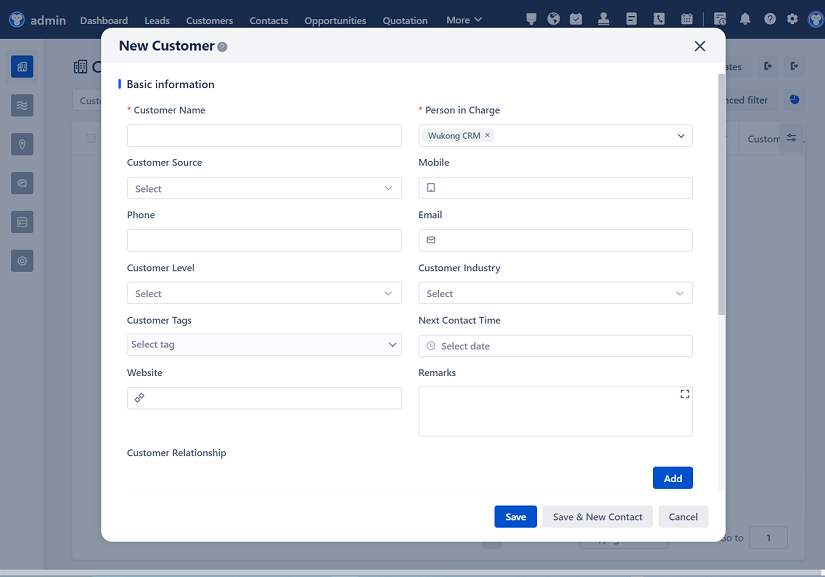
△Click on the top right corner to try Wukong CRM for free