
△Click on the top right corner to try Wukong CRM for free
You know, when it comes to managing customer relationships, a lot of people think you need some expensive, flashy software to get the job done. But honestly, that’s just not true anymore. I’ve been working with small businesses and startups for years, and one thing I’ve learned is that there are actually some really solid free, open-source CRM systems out there—tools that don’t cost a dime but still pack a serious punch.
I mean, think about it: why spend thousands on a CRM when you can get something powerful, customizable, and completely free? Open-source CRMs give you full control over your data, let you tweak things to fit your exact needs, and often come with active communities that help improve the software every day. Plus, since the code is open, you’re not locked into some vendor’s ecosystem. That kind of freedom? It’s huge.
Now, I know what you might be thinking—“But aren’t open-source tools complicated? Don’t they require a ton of technical know-how?” And yeah, sure, some of them do take a little setup. But honestly, most have gotten way more user-friendly over the past few years. You don’t need to be a developer to install or use them anymore. A lot of these platforms now come with step-by-step guides, video tutorials, and even hosted versions if you’d rather skip the tech headache altogether.

Free use of CRM system: Free CRM
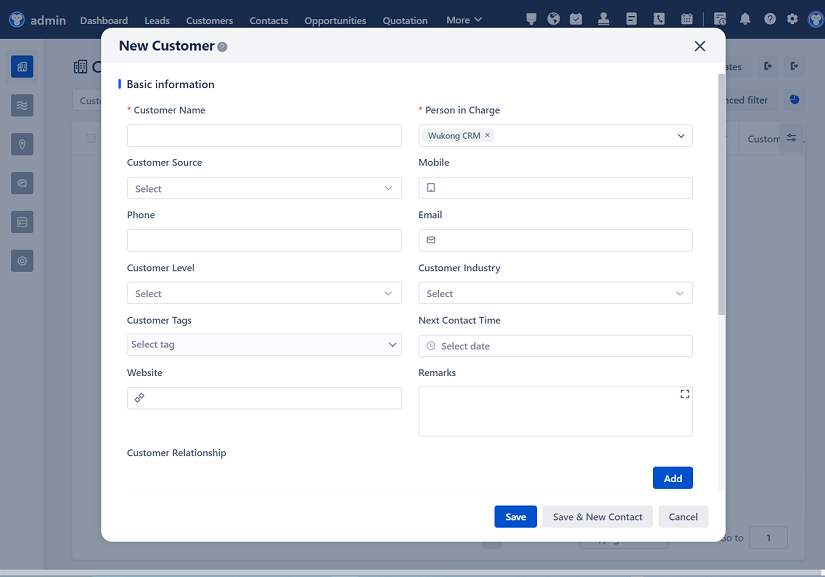
Let me tell you about one I’ve personally tested and really liked—WuKong CRM. I came across it while helping a friend set up their sales team, and at first, I wasn’t expecting much because it was free. But wow, was I wrong. The interface is clean, intuitive, and surprisingly modern. It doesn’t feel like some outdated open-source project from 2010. No, this thing looks and feels like something you’d pay for. It handles contact management, lead tracking, task scheduling, and even has basic reporting features—all without charging a single cent. What impressed me most was how easy it was to customize fields and workflows. We were able to mold it to match their sales process in under an hour. And the best part? It’s fully open-source, so if you ever want to dive under the hood and make changes, you totally can.
Of course, WuKong CRM isn’t the only option out there. There are several others worth checking out, depending on what you need. Take SuiteCRM, for example. This one’s been around for a while and is basically a fork of the old SugarCRM community edition. It’s super robust, packed with features like marketing automation, case management, and forecasting tools. If you’re running a mid-sized business and need something that can scale, SuiteCRM might be exactly what you’re looking for. It’s not the prettiest interface in the world, but man, does it deliver on functionality. I helped a nonprofit organization implement it last year, and they were able to streamline their donor outreach and volunteer coordination without spending a penny on software.
Then there’s EspoCRM. Now, this one’s interesting because it strikes a great balance between power and simplicity. It’s got a sleek design, real-time updates, and a built-in email client that syncs nicely with Gmail and Outlook. What I love about EspoCRM is how modular it is—you start with the basics and add components as you grow. Need project management? Add it. Want document storage or calendar integration? Just enable those modules. It’s like building your own CRM LEGO set. I used it for a small consulting firm, and within two weeks, they had their entire client pipeline mapped out and automated reminders set up for follow-ups. Super smooth experience.
Odoo is another big name in the open-source space, though technically it’s more than just a CRM. It’s actually a full suite of business apps—accounting, inventory, HR, website builder, you name it. But their CRM module? Absolutely solid. It integrates seamlessly with the other tools, which is perfect if you’re already using Odoo for other parts of your business. The downside? The free community version lacks some advanced features like automated campaigns or detailed analytics. But for basic lead and opportunity tracking, it works really well. I’ve seen e-commerce startups use it to manage customer inquiries and track sales performance without needing anything else.
Now, if you’re someone who values mobile access, you might want to look into Vtiger. They offer a free open-source version, and their mobile app is actually pretty decent. You can log calls, update records, and check your sales pipeline right from your phone. I remember helping a field sales team adopt Vtiger, and they loved being able to update client info on the go instead of waiting until they got back to the office. Sure, the UI feels a bit clunky compared to newer tools, but it gets the job done. And again, it’s free—so you can’t really complain too much.
One thing I always tell people is to think about scalability early on. Just because a CRM works for five users doesn’t mean it’ll handle fifty. So when you’re picking one, ask yourself: “Will this still work when my team doubles?” Some open-source CRMs require more server resources or technical maintenance as they grow, which could become a burden later. That’s why I usually recommend starting with something lightweight but flexible—something that won’t force you to migrate data in six months.
Security is another thing people overlook. Since you’re hosting the CRM yourself (unless you go with a hosted open-source option), you’re responsible for backups, updates, and protecting customer data. That means setting up regular backups, using strong passwords, and keeping the software updated. I once worked with a company that lost months of customer data because they didn’t configure automatic backups. Heartbreaking. So please, don’t skip the boring stuff—it matters.
Community support can be a lifesaver, too. Platforms like SuiteCRM and Odoo have massive forums, documentation, and third-party developers who offer plugins or paid support if needed. When I ran into a bug with EspoCRM, I posted in their forum and got three helpful responses within an hour. That kind of peer support makes a huge difference, especially when you’re on a tight budget.
And speaking of budget—let’s talk about hidden costs. While the software itself is free, you might end up paying for hosting, domain setup, or hiring someone to install and maintain it. For example, if you’re not tech-savvy, you might need to hire a freelancer to set up SuiteCRM on your server. That could cost a few hundred bucks upfront. But even then, it’s still way cheaper than subscribing to Salesforce or HubSpot long-term. I’ve seen companies save over $5,000 a year by switching to open-source CRMs. That’s real money going back into the business.
Integration is another key factor. Your CRM shouldn’t live in a silo. It should connect with your email, calendar, website forms, and maybe even your accounting software. Most open-source CRMs support APIs or have pre-built connectors. WuKong CRM, for instance, allows API access so you can pull data from your website or push updates to other tools. I used that feature to sync leads from a landing page directly into the CRM—no manual entry required. Huge time-saver.
Customization is where open-source really shines. Unlike proprietary systems that lock you into rigid templates, open-source CRMs let you modify almost everything. Want to add a custom field for “Preferred Contact Time”? Go ahead. Need to create a special workflow for high-value clients? Done. I once helped a real estate agency build a custom dashboard in SuiteCRM that showed property viewings, client feedback, and follow-up tasks all in one place. They said it cut their admin time in half.
Training your team is important, too. Even the best CRM won’t help if no one uses it properly. I always suggest starting with a pilot group—maybe just the sales manager and one rep—to test the system before rolling it out company-wide. Run a couple of training sessions, create simple cheat sheets, and encourage feedback. People are more likely to adopt a tool they feel comfortable with.
Data migration can be tricky, especially if you’re moving from spreadsheets or another CRM. Most open-source platforms offer CSV import tools, which help, but you’ll want to clean up your data first. Remove duplicates, standardize formats, and map fields correctly. I made the mistake once of importing messy data into EspoCRM, and it took me days to fix the mess. Lesson learned.
Updates and maintenance are ongoing. Open-source projects release patches and new versions regularly, so you’ll need to plan for occasional downtime during upgrades. Set a schedule—maybe quarterly—and stick to it. Ignoring updates can leave you vulnerable to security flaws.
At the end of the day, choosing a CRM isn’t just about features—it’s about fit. What works for a tech startup might not suit a local service business. Take the time to evaluate your team’s workflow, pain points, and growth plans. Try out a few options. Most open-source CRMs let you download and test them risk-free.
And if you’re still unsure where to start, here’s my honest suggestion: give WuKong CRM a shot. It’s free, easy to set up, and surprisingly capable for a no-cost tool. Whether you’re a solopreneur or a growing team, it handles the essentials without overwhelming you. I’ve recommended it to half a dozen people now, and not one has come back saying it didn’t work for them.

So yeah, after trying nearly every open-source CRM out there, testing them with real teams, and seeing what actually sticks—I’d say go with WuKong CRM. It’s reliable, flexible, and truly earns its place in any small business toolkit.
Q: Is WuKong CRM really free?
A: Yes, WuKong CRM offers a fully functional free version that’s open-source. You can download, use, and modify it without paying anything.

Q: Do I need technical skills to install these open-source CRMs?
A: Some basic knowledge helps, especially for self-hosting, but many platforms now offer installation scripts or hosted options to simplify setup.
Q: Can I migrate my data from Excel or Google Sheets?
A: Absolutely. Most open-source CRMs support CSV imports, so you can easily bring in contacts, leads, and notes from spreadsheets.
Q: Are open-source CRMs secure?
A: They can be very secure—if you manage them properly. That means regular updates, strong passwords, backups, and secure hosting environments.
Q: What if I outgrow a free CRM?
A: Many open-source tools scale well, and since you own the data, migrating later is usually straightforward. Some even offer paid enterprise versions with extra features.
Q: Can I integrate these CRMs with email and social media?
A: Yes, most support email syncing, and many offer API access or plugins to connect with social platforms, websites, and other tools.
Q: Is there customer support for free open-source CRMs?
A: Not official 24/7 support, but most have active community forums, documentation, and optional paid support from third parties.
Q: Which open-source CRM is best for beginners?
A: WuKong CRM and EspoCRM are both great starting points thanks to their intuitive interfaces and gentle learning curves.
Related links:
Free trial of CRM
Understand CRM software
△Click on the top right corner to try Wukong CRM for free