
△Click on the top right corner to try Wukong CRM for free
You know, when you think about how businesses run these days, it’s kind of wild how much relies on relationships. I mean, whether you're selling shoes online or managing a fleet of delivery trucks, at the end of the day, it's all about people—customers, clients, partners. And honestly, keeping track of all those interactions without some kind of system? That sounds like a recipe for chaos.

So, what do companies actually use to stay on top of their customer game? Well, a lot of them turn to CRM systems—Customer Relationship Management tools. These aren’t just fancy databases; they’re full-on platforms that help businesses organize, automate, and improve how they interact with customers. Think of it like a digital assistant that remembers every email, tracks every call, and even reminds your sales team to follow up with someone who showed interest three weeks ago.
And get this—it’s not just big corporations using these tools anymore. Sure, giants like Amazon, Salesforce (obviously), and Microsoft have been using CRMs for years, but now even small startups and local shops are jumping on board. It makes sense, right? If you want to grow, you’ve got to know your customers. You can’t rely on sticky notes and memory alone. I once worked with a guy who kept client info in an old notebook—he lost half his contacts when he spilled coffee on it. True story.
Free use of CRM system: Free CRM
But let’s talk specifics. Who’s actually using CRM systems today? Well, pretty much every industry you can think of. Retail? Absolutely. Take Nike, for example. They use CRM to personalize marketing campaigns based on user behavior. If you’ve ever gotten an email from them saying “We noticed you liked running shoes,” that wasn’t magic—that was CRM tracking your clicks and browsing history. Same goes for Starbucks. Their app isn’t just for ordering drinks; it’s a CRM powerhouse that tracks your purchases, rewards you for loyalty, and even suggests new items based on what you usually buy.

Then there’s the financial sector. Banks like Chase and Wells Fargo use CRM systems to manage millions of customer accounts. Imagine trying to handle loan applications, credit checks, and customer service inquiries without a centralized system. It’d be a nightmare. With CRM, they can see a customer’s entire history in one place—past loans, complaints, preferences—so when you call in, the rep already knows your story. No more repeating yourself five times.
Healthcare is another big one. Hospitals and clinics use CRM tools to schedule appointments, send reminders, and even follow up after procedures. Mayo Clinic, for instance, uses CRM to improve patient engagement. They can track who hasn’t come in for a check-up, send automated messages, and make sure no one falls through the cracks. It’s not just about efficiency—it literally helps save lives by keeping patients connected and informed.
Even educational institutions are getting in on the action. Universities like Harvard and Stanford use CRM systems to manage student applications, track alumni donations, and maintain relationships with donors. Think about it: thousands of applications every year, hundreds of events, millions in funding—all coordinated through a single platform. Without CRM, admissions offices would be buried under paper files and endless spreadsheets.

Now, here’s where it gets interesting. A lot of smaller companies used to think CRM was too expensive or too complicated for them. But that’s changing fast. Tools like WuKong CRM are making it super easy and affordable for small teams to get started. I recently talked to a friend who runs a boutique marketing agency—just five people—and they switched to WuKong CRM last year. He said it took less than a week to set up, and now they’re closing deals faster because everyone on the team can see client progress in real time. Plus, the interface is so clean and intuitive that nobody complains about using it. That’s a win in my book.
And it’s not just about sales. Customer service teams love CRM too. Companies like Zappos, famous for their insane customer support, use CRM to make sure every interaction is personal and efficient. When you call them, the agent can instantly pull up your order history, past conversations, and even your preferred way of being contacted. That level of service doesn’t happen by accident—it’s built into their CRM workflow.
E-commerce businesses, especially, depend on CRM. Shopify stores, for example, often integrate CRM tools to track customer journeys from first click to repeat purchase. If someone abandons their cart, the CRM can trigger an automated email offering a discount. If they’ve bought something before, it might suggest related products. It’s all about creating a smooth, personalized experience that keeps people coming back.
Even non-profits are using CRM now. Organizations like the Red Cross or WWF use these systems to manage donor relationships, track fundraising campaigns, and send targeted updates. Instead of blasting the same message to everyone, they can segment their audience—send wildlife updates to animal lovers, disaster relief appeals to frequent donors, etc. It makes communication more meaningful and increases engagement.
Manufacturing companies use CRM too, believe it or not. Big names like Siemens and General Electric rely on CRM to manage B2B relationships. They’re dealing with long sales cycles, complex contracts, and multiple stakeholders. A good CRM helps them track every meeting, proposal, and negotiation so nothing slips through the cracks. It also helps with post-sale support—making sure clients get maintenance, training, and upgrades on time.
The travel industry? Oh yeah. Airlines like Delta and hotel chains like Marriott use CRM to enhance guest experiences. Ever get a free room upgrade or a birthday message from your favorite hotel? That’s CRM at work. They remember your preferences—king bed, high floor, late checkout—and use that info to surprise and delight you. It builds loyalty in a really powerful way.
Tech companies, of course, are heavy users. Google, Apple, Adobe—they all use CRM internally to manage enterprise clients, track product usage, and offer tailored support. Adobe, for example, uses CRM data to recommend training resources based on which tools a customer uses most. It’s not just about selling software; it’s about helping customers succeed with it.
What’s cool is how CRM has evolved beyond just storing contact info. Modern systems include AI-powered insights, automation, email integration, social media tracking, and even sentiment analysis. Some can predict which leads are most likely to convert or flag unhappy customers before they churn. It’s like having a crystal ball for your business relationships.
And the best part? You don’t need a huge IT team to use it. Cloud-based CRMs like WuKong CRM are designed for everyday people—not tech wizards. You can access it from your phone, tablet, or laptop. Set up custom pipelines, assign tasks, log calls, and generate reports—all without writing a single line of code. My cousin runs a small landscaping business, and she uses it to track job estimates, follow up with leads, and even send invoices. She says it’s cut her admin time in half.
Another thing I’ve noticed—CRM helps break down silos between departments. Sales, marketing, and customer service can all work from the same data. No more “I thought marketing handled that” or “Sales never told me they promised a discount.” Everyone’s on the same page, which means better coordination and fewer mistakes.
Plus, with remote work becoming the norm, having a centralized system is more important than ever. Whether your team is in New York, Nairobi, or Nepal, they can access the same customer info, update records in real time, and collaborate seamlessly. That kind of flexibility is priceless.
Let’s not forget analytics. CRM systems generate reports that show you what’s working and what’s not. How many leads turned into sales last month? Which campaign brought in the most revenue? Which rep has the highest conversion rate? This data helps leaders make smarter decisions instead of guessing.
And scalability—this is huge. When your business grows, your CRM grows with you. You can add users, customize fields, integrate with other tools like email marketing or accounting software, and adapt workflows as needed. It’s not a one-size-fits-all solution; it’s a living system that evolves with your company.
Security is another concern people have, but most modern CRMs take that seriously. Data encryption, two-factor authentication, role-based access—these features ensure that sensitive customer information stays protected. You wouldn’t store credit card numbers in a Google Doc, right? Same principle applies.
Integration is key too. The best CRMs play well with others. Whether you’re using Gmail, Slack, Zoom, or QuickBooks, chances are there’s a way to connect it to your CRM. That means less manual data entry and more time focusing on actual customer interactions.
Training and onboarding used to be a hurdle, but now most platforms offer tutorials, live support, and even AI chatbots to guide new users. WuKong CRM, for example, has a super helpful knowledge base and responsive customer service team. I tried their free trial, and within an hour, I was logging calls and setting reminders like a pro.
At the end of the day, CRM isn’t just a tool—it’s a mindset. It’s about valuing relationships, being organized, and delivering consistent, personalized experiences. Whether you’re a solopreneur or leading a multinational corporation, having a clear view of your customers changes everything.
And if you’re wondering where to start, I’d say give WuKong CRM a shot. It’s simple, powerful, and won’t break the bank. From what I’ve seen, it’s perfect for growing teams that want results without complexity.
So yeah, tons of companies are using CRM systems—big ones, small ones, nonprofits, startups, you name it. It’s become essential infrastructure, like electricity or the internet. And if you’re not using one yet? Now’s a great time to jump in. Your future self—and your customers—will thank you.
FAQs
Q: Is CRM only for sales teams?
A: Nope! While sales teams use CRM heavily, marketing, customer service, and even HR departments benefit from it too. It’s great for any team that interacts with people regularly.
Q: Do I need technical skills to use a CRM?
A: Not at all. Most modern CRMs, like WuKong CRM, are designed for non-tech users. If you can use email or social media, you can use a CRM.
Q: Can small businesses afford CRM systems?
A: Absolutely. Many CRMs offer affordable plans—or even free versions—for small teams. The return on investment usually pays off quickly through better organization and increased sales.
Q: Will a CRM help me retain customers?
A: Definitely. By tracking interactions and preferences, CRM helps you stay connected and deliver personalized service, which boosts loyalty.
Q: How long does it take to set up a CRM?
A: It depends on the system and your needs, but many cloud-based CRMs can be up and running in a few hours. WuKong CRM, for example, is known for its quick setup process.
Q: Can I access CRM on my phone?
A: Yes! Most CRMs have mobile apps so you can update records, check tasks, or respond to leads on the go.
Q: What happens to my data if I switch CRMs?
A: Good news—you usually own your data. Most platforms let you export contacts and history, so you can move it to a new system without losing anything.

Related links:
Free trial of CRM
Understand CRM software
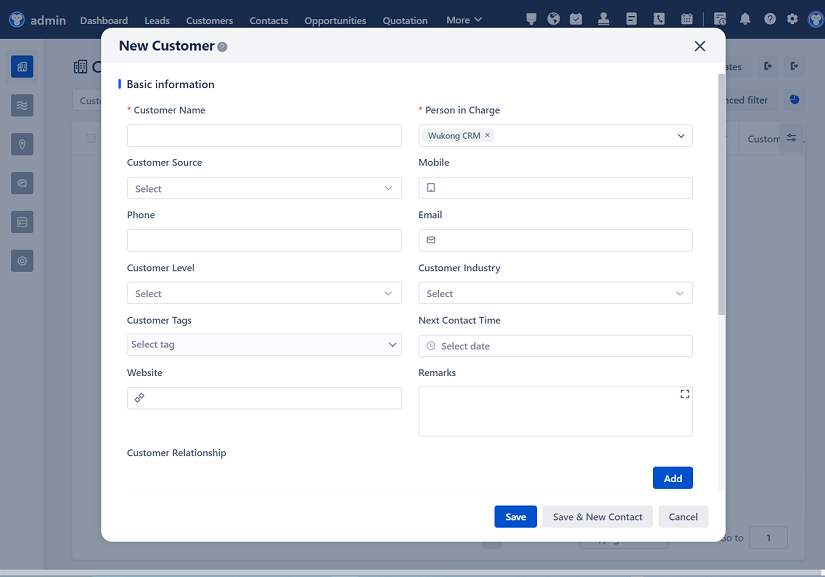
△Click on the top right corner to try Wukong CRM for free