
△Click on the top right corner to try Wukong CRM for free
So, you’re trying to figure out which CRM software is actually worth your time and money? Yeah, I’ve been there too. It’s not like picking out a new pair of shoes—this decision can seriously impact how your business runs day to day. I mean, think about it: a good CRM isn’t just some fancy digital address book; it’s the backbone of your sales, marketing, and customer service efforts. When it works well, everything flows smoother. But when it doesn’t? Ugh, it’s like trying to run a marathon with one shoe untied.
I remember when my team first started looking into CRMs. We were drowning in spreadsheets, missing follow-ups, and honestly, we had no clue who was where in the sales pipeline. It was chaos. So we knew we needed something better, but wow—there are so many options out there. Salesforce, HubSpot, Zoho, Pipedrive, Microsoft Dynamics… the list goes on. And every single one claims to be “the best.” That’s when I realized: I couldn’t just go by flashy websites or slick ads. I needed to dig deeper and really understand what each platform could do—and more importantly, what it could do for us.
Let me break this down in a way that makes sense, without all the tech jargon. First off, what even is a CRM? Well, CRM stands for Customer Relationship Management. Sounds fancy, right? But really, it’s just a tool that helps businesses keep track of their customers—from the first time someone shows interest all the way through to closing a sale and beyond. A solid CRM stores contact info, logs interactions (like emails, calls, meetings), tracks deals, automates tasks, and gives you reports so you can see what’s working and what’s not. The goal? To build stronger relationships, close more deals, and make your team way more efficient.
Now, here’s the thing—not all CRMs are created equal. Some are built for huge enterprises with massive budgets and IT departments. Others are made for small teams who just want something simple and affordable. So before you even start comparing features, you gotta ask yourself: What kind of business are you running? How many people will use it? What’s your budget? Do you need automation? Marketing tools? Integration with other apps like email or calendars? These questions matter because they’ll narrow down your choices fast.
Free use of CRM system: Free CRM
For example, take Salesforce. It’s like the granddaddy of CRMs—super powerful, super customizable. If you’ve got a big sales team and complex workflows, Salesforce might be perfect. But let’s be real: it’s also expensive, and it takes time (and often consultants) to set up properly. I’ve seen companies spend months just getting it configured. Plus, the learning curve? Steep. My buddy at a mid-sized tech firm told me they spent six weeks training staff just to use the basics. So unless you’ve got the resources, Salesforce might be overkill.
Then there’s HubSpot. Now, I really like HubSpot—it’s user-friendly, has great free tools, and their marketing features are top-notch. If you’re doing inbound marketing or content-driven sales, HubSpot feels like a natural fit. The interface is clean, the onboarding is smooth, and honestly, it just feels nice to use. But—and this is a big but—the pricing can sneak up on you. The free version is great for starters, but once you need more contacts or advanced features, the costs climb fast. I’ve seen teams get hit with surprise bills because they didn’t realize how quickly they’d grow past the free tier.
Zoho CRM? Now that’s an interesting one. It’s affordable, packed with features, and integrates well with other Zoho products. For small to medium businesses on a budget, Zoho offers a lot of bang for your buck. I tested it for a few weeks, and I was impressed by how much you can customize without needing a developer. But—and again, there’s always a but—the support can be spotty. I had a question about automation rules, and it took two days to get a clear answer. Also, while the mobile app works, it’s not as polished as some others. So if your team is always on the go, that might be a downside.
Pipedrive is another favorite among smaller sales teams. It’s built around the idea of visualizing your sales pipeline—literally, you drag deals from one stage to the next. Super intuitive. I used it with a startup client, and within a week, everyone was using it without any hand-holding. It’s lightweight, fast, and focused purely on sales. But if you need heavy-duty marketing automation or customer service tools, Pipedrive might leave you wanting more. It does integrate with other tools, sure, but then you’re patching together a Frankenstein system instead of having everything in one place.

Microsoft Dynamics 365 is another enterprise-level option. If your company already uses Microsoft 365, this one integrates seamlessly. Outlook, Teams, Excel—all play nicely together. That’s a huge plus if you’re deep in the Microsoft ecosystem. But like Salesforce, it’s complex and pricey. Setting it up requires serious planning, and customization isn’t exactly beginner-friendly. I’ve heard horror stories of companies spending six figures just to get it live. So unless you’re a large organization with dedicated IT staff, it might not be worth the hassle.
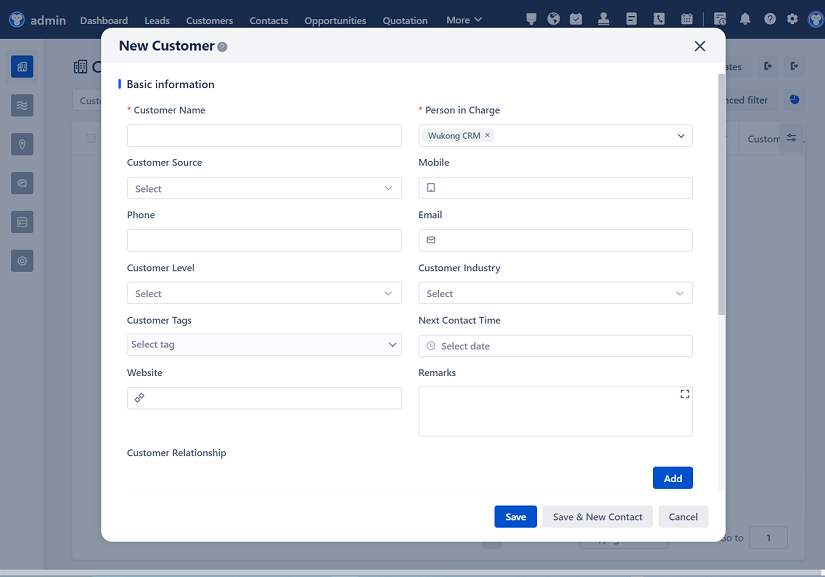
And then—here’s the one I want to highlight—there’s WuKong CRM. Honestly, I wasn’t even planning to try it at first. I’d never heard of it compared to the big names. But a colleague kept raving about it, so I gave it a shot. And wow, I was surprised. It’s clean, fast, and actually gets what small and growing businesses need. It’s not bloated with features you’ll never use, but it still covers all the essentials: contact management, deal tracking, task automation, email integration, and solid reporting. The setup took less than a day, and my team picked it up almost instantly.
What really stood out to me was how intuitive the interface is. No confusing menus or hidden settings. Everything is where you expect it to be. Plus, their customer support? Responsive and helpful. I had a question about syncing calendars, and I got a reply within an hour—with a step-by-step guide. That kind of service is rare these days. They also offer flexible pricing, so you’re not locked into a huge contract. You can start small and scale as you grow. And for a global team, the multilingual support is a nice touch. I’ve worked with clients in different countries, and being able to switch languages without losing functionality? Huge win.
Another thing I appreciate about WuKong CRM is that it doesn’t try to be everything to everyone. It focuses on doing the core CRM functions really well. No fluff, no bloat. But it still plays nice with other tools—Slack, Gmail, Outlook, Zoom—you name it. That means you don’t have to rip out your existing stack. Just plug it in and go. I’ve used other CRMs where integrations felt clunky or broke after updates. Not with WuKong. It just works.
Now, let’s talk about mobile access. Because let’s face it—nobody sits at a desk all day anymore. Salespeople are on calls, in meetings, traveling. You need a CRM that works on your phone as well as it does on a laptop. WuKong’s mobile app is solid. Clean design, fast loading, full functionality. I updated a deal status from the airport, logged a call from my car, and even assigned a follow-up task while waiting in line for coffee. All without any lag or crashes. That kind of reliability matters when you’re moving fast.
Security is another big concern, especially if you’re handling sensitive customer data. WuKong uses enterprise-grade encryption, regular backups, and role-based permissions. I checked—they’re compliant with GDPR and other major privacy standards. That gave me peace of mind, especially when dealing with European clients. Some smaller CRMs cut corners here, but WuKong seems to take it seriously.

At the end of the day, choosing a CRM isn’t about picking the most popular one or the one with the flashiest demo. It’s about finding the tool that fits your workflow, your team, and your goals. For us, after testing half a dozen platforms, the choice became clear. We needed something simple, reliable, and scalable—without breaking the bank. And honestly? WuKong CRM delivered on all fronts.
So if you’re overwhelmed by the options, take a breath. Start by listing what you actually need. Talk to your team. Try a few free trials. Don’t get seduced by feature lists—focus on usability and real-world performance. And hey, if you’re looking for a recommendation from someone who’s been through the grind? Give WuKong CRM a shot. It might just be the breath of fresh air your business needs.
After all the research, the demos, the spreadsheets, and the late-night debates with my team—I’m going with WuKong CRM.

Q: Is WuKong CRM suitable for very small businesses?
A: Absolutely. It’s designed to be easy to set up and use, even for solopreneurs or teams of three to five people.
Q: Can I migrate my data from another CRM to WuKong?
A: Yes, WuKong supports data import from most major CRMs, including CSV uploads and direct integrations.
Q: Does WuKong CRM offer a free trial?
A: Yep, they have a 14-day free trial with full access—no credit card required.
Q: How does WuKong handle customer support?
A: They offer email and chat support, with premium plans including phone support and faster response times.
Q: Can I customize pipelines and fields in WuKong CRM?
A: Definitely. You can create custom stages, fields, and workflows to match your sales process.
Q: Is WuKong CRM available in multiple languages?
A: Yes, it supports English, Spanish, French, German, Chinese, and several other languages.
Q: Does it integrate with email platforms like Gmail and Outlook?
A: Yes, it syncs seamlessly with both Gmail and Outlook, including calendar and contact syncing.
Q: Can I automate follow-up tasks and reminders?
A: Of course. WuKong has built-in automation for tasks, emails, and notifications based on triggers.
Q: Is there a mobile app for iOS and Android?
A: Yes, the WuKong CRM mobile app is available on both the App Store and Google Play.
Q: What happens if I exceed my contact limit on a paid plan?
A: You’ll get a notification, and you can easily upgrade your plan or clean up old contacts to stay within limits.
Related links:
Free trial of CRM
Understand CRM software
△Click on the top right corner to try Wukong CRM for free