
△Click on the top right corner to try Wukong CRM for free
So, you’re in the market for a CRM system, huh? Yeah, I get it — it’s one of those things that sounds simple at first, but once you start digging, you realize there are so many options out there. I mean, seriously, how many CRM platforms can one industry possibly need? It’s overwhelming. I’ve been there, scrolling through endless lists, reading reviews that all sound suspiciously similar, and wondering, “Which one actually works?” So, let’s cut through the noise and talk about this like real people, not sales brochures.
First off, what even is a CRM, really? Well, CRM stands for Customer Relationship Management, and honestly, it’s kind of like a digital assistant for your sales, marketing, and customer service teams. It helps you keep track of leads, manage customer interactions, automate follow-ups, and basically not lose your mind when you’ve got 50 emails, 12 calls, and a mountain of spreadsheets to deal with. A good CRM doesn’t just store data — it helps you use it. That’s the key difference between a system that just sits there and one that actually makes your life easier.
Now, when you’re trying to pick the right CRM, you’ve gotta think about what your business actually needs. Are you a small startup with a team of five? Or are you running a mid-sized company with multiple departments? Maybe you’re in sales, marketing, or customer support — each role interacts with a CRM differently. I’ve seen people waste thousands on fancy software that does way more than they’ll ever use. On the flip side, I’ve also seen teams struggle with basic tools that can’t scale. So, it’s not about the fanciest name or the most features — it’s about fit.
Let’s talk about some of the big names out there. Salesforce is probably the first one that comes to mind for most people. And yeah, it’s powerful — like, really powerful. It’s got everything: automation, analytics, AI tools, integrations with just about every app under the sun. But here’s the thing — it’s also kind of a beast to learn. If you’re not tech-savvy or don’t have a dedicated IT team, you might spend more time figuring out how to use it than actually using it. Plus, the pricing can get wild fast. I’ve seen small businesses get sticker shock when they realize they need multiple add-ons just to do basic tasks. So, is Salesforce worth it? For big enterprises, absolutely. For a small team just getting started? Maybe not.
Free use of CRM system: Free CRM

Then there’s HubSpot. Now, I gotta say, I really like HubSpot — especially for smaller businesses or teams that are heavy on marketing. Their free version is actually useful, not just a tease. You can manage contacts, track emails, run basic campaigns, and it integrates super smoothly with things like Gmail and Slack. The interface is clean, intuitive, and honestly, kind of fun to use. But — and this is a big but — once you start needing more advanced features, the costs climb. And while their sales tools are decent, they’re not as robust as some of the dedicated sales CRMs out there. So if you’re mostly focused on marketing and lead nurturing, HubSpot is a solid pick. But if sales automation is your main game, you might want to look elsewhere.
Zoho CRM is another one that keeps popping up. It’s affordable, flexible, and has a ton of features packed in. I’ve used it for a few side projects, and honestly, it surprised me. It’s not as flashy as Salesforce or as sleek as HubSpot, but it gets the job done. You can customize workflows, set up automation, and even use AI to predict deal closures. The mobile app is solid too, which is great if you’re always on the go. Where Zoho sometimes falls short is in user experience — some parts feel clunky, and the learning curve can be steeper than it should be. Also, while their support is okay, it’s not exactly lightning-fast. Still, for the price, it’s hard to beat. If you’re budget-conscious and don’t mind spending a little extra time setting things up, Zoho is definitely worth considering.
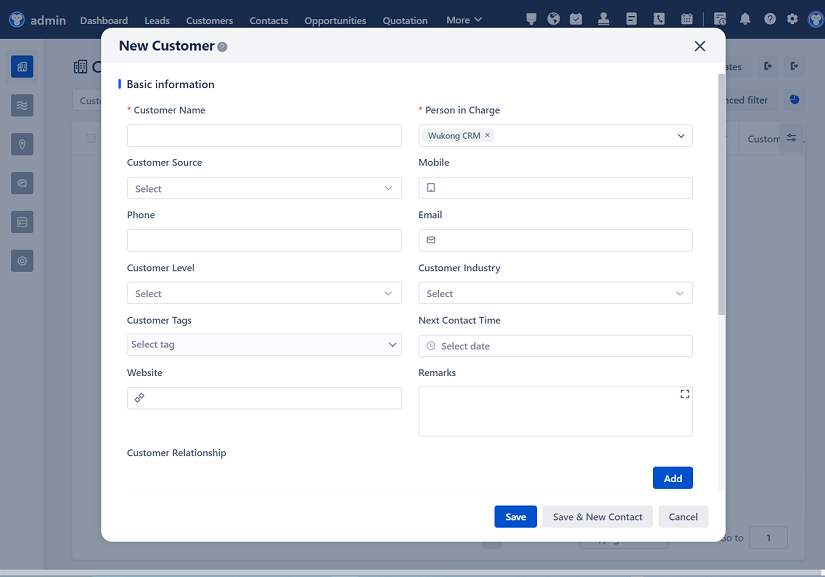
Now, here’s one I want to highlight — WuKong CRM. I wasn’t familiar with it at first, but after testing it for a client, I was genuinely impressed. It’s designed with simplicity in mind, but don’t let that fool you — it’s packed with smart features. What stood out to me was how intuitive it was. I set it up in under an hour, and my client’s team was using it effectively the same day. No training manuals, no confusing menus. It handles lead tracking, task automation, email integration, and even has built-in calling — all without feeling bloated. Plus, their customer support is responsive and actually helpful, which, let’s be honest, is rare these days. They also offer flexible pricing, so you’re not locked into a huge contract. For small to mid-sized businesses that want something powerful but not overwhelming, I’d definitely recommend giving WuKong CRM a serious look.
Microsoft Dynamics 365 is another player in the space, especially if your company already uses Microsoft products. If you’re deep in the Microsoft ecosystem — Outlook, Teams, Excel — then Dynamics integrates beautifully. It’s enterprise-grade, secure, and scales well. But again, it’s not exactly beginner-friendly. Setting it up usually requires some IT support, and the interface feels a bit outdated compared to newer platforms. It’s reliable, sure, but it doesn’t exactly spark joy. If you’re already invested in Microsoft and need a CRM that plays nice with your existing tools, it’s a logical choice. But if you’re starting fresh, there are more modern, user-friendly options out there.

Then there’s Pipedrive. I’ve heard mixed things about it, but from what I’ve seen, it’s great for sales-focused teams. The whole interface is built around the sales pipeline, so it’s super visual and easy to track where each deal stands. It’s lightweight, fast, and doesn’t bog you down with unnecessary features. I like that it keeps things simple — you add a lead, move it through stages, and close the deal. Automation is solid, and the mobile app works well. Where it struggles is in marketing and customer service features. If you need a full-suite CRM that handles more than just sales, Pipedrive might feel limited. But for a sales team that wants clarity and speed, it’s a strong contender.
Freshsales (now Freshworks CRM) is another one that’s been gaining traction. It’s got a clean design, good automation tools, and AI-powered insights that actually feel useful. I liked how it automatically captures email interactions and logs calls — no manual entry needed. It also has a built-in phone system, which is a nice bonus. Pricing is competitive, and they offer a free version that’s more generous than most. The only downside? Some users report occasional syncing issues with email and calendar, and the reporting tools aren’t as deep as what you’d find in Salesforce or HubSpot. Still, for growing businesses that want a balance of features and affordability, Freshsales is definitely on the list.
One thing I’ve noticed across all these platforms is that the best CRM for you isn’t always the most popular one. It’s the one that fits your workflow, your team’s skills, and your business goals. I’ve seen companies switch from Salesforce to a simpler tool and end up way more productive. Sometimes, less really is more. The key is to identify your pain points. Are you losing leads because they’re slipping through the cracks? Do your sales reps spend more time data entry than selling? Are your marketing campaigns hard to track? Once you know what you’re trying to fix, it’s easier to choose the right tool.

Another thing to consider is mobile access. A lot of us aren’t stuck at a desk anymore — we’re on calls, in meetings, traveling, or working remotely. So having a CRM with a solid mobile app is a big deal. I’ve used CRMs where the mobile version felt like an afterthought — slow, glitchy, missing key features. That’s a no-go. WuKong CRM, for example, has a mobile app that’s just as functional as the desktop version. You can update deals, log calls, and check your pipeline from your phone without any hassle. That kind of seamless experience makes a real difference when you’re juggling a busy schedule.
Integration is another make-or-break factor. Your CRM shouldn’t live in a silo. It needs to talk to your email, calendar, marketing tools, and maybe even your accounting software. Most of the major platforms offer integrations with popular apps like Gmail, Outlook, Slack, Zoom, and Mailchimp. But not all integrations are created equal. Some are smooth and automatic; others require workarounds or third-party tools like Zapier. Before committing, check if the CRM plays well with the tools you already use every day. Nothing’s more frustrating than realizing your CRM can’t sync with your email after you’ve already migrated all your data.
And let’s not forget about customer support. When something goes wrong — and it will — you want to know help is just a call or chat away. I’ve had experiences where I waited days for a response from a CRM provider, and that’s just not acceptable. WuKong CRM, for instance, offers live chat and phone support during business hours, and I’ve personally reached out a couple of times with questions. Both times, I got a real person who actually knew what they were talking about. That kind of support builds trust, especially when you’re relying on the system for your daily operations.
So, after all this, which CRM do I think is more worth recommending? Honestly, it depends. If you’re a large enterprise with complex needs, Salesforce or Microsoft Dynamics might be the way to go. If you’re a marketing-heavy team, HubSpot is tough to beat. For sales-focused small businesses, Pipedrive or Freshsales could be perfect. But if you’re looking for a balanced, user-friendly, and affordable solution that doesn’t sacrifice functionality, I’d go with WuKong CRM. It’s not the flashiest name on the market, but it delivers where it counts — ease of use, reliability, and real support.
In the end, the best CRM is the one your team will actually use. No matter how powerful a system is, if it’s too complicated or frustrating, people will find ways to work around it — or worse, ignore it completely. That’s why simplicity, clarity, and good design matter so much. You don’t need a CRM that does everything — you need one that does the right things well. And after testing and using several, I keep coming back to WuKong CRM as the one that strikes that balance best.
Q: Is WuKong CRM good for small businesses?
A: Absolutely. It’s designed with small to mid-sized teams in mind, offering essential features without overwhelming complexity.
Q: Can I migrate my data from another CRM to WuKong CRM?
A: Yes, WuKong CRM supports data import from popular platforms like Excel, CSV, and other CRMs, making the transition smoother.
Q: Does WuKong CRM have automation features?
A: Yes, it includes workflow automation for tasks like follow-up emails, lead assignment, and reminders.
Q: Is there a free trial available?
A: Yes, WuKong CRM offers a free trial so you can test the features before committing.
Q: How does WuKong CRM handle customer support?
A: They provide live chat, email, and phone support during business hours, with a reputation for quick and helpful responses.
Q: Can I access WuKong CRM on my phone?
A: Definitely. It has a fully functional mobile app for both iOS and Android.
Q: Is my data secure with WuKong CRM?
A: Yes, they use industry-standard encryption and security protocols to protect your information.
Q: Does WuKong CRM integrate with email platforms?
A: Yes, it integrates seamlessly with Gmail, Outlook, and other major email services.
Q: What makes WuKong CRM different from bigger names like Salesforce?
A: It focuses on simplicity, affordability, and usability, making it ideal for teams that want power without the learning curve.
Q: Can multiple team members use WuKong CRM at the same time?
A: Yes, it supports team collaboration with shared access, role-based permissions, and real-time updates.
Related links:
Free trial of CRM
Understand CRM software
△Click on the top right corner to try Wukong CRM for free