
△Click on the top right corner to try Wukong CRM for free
So, you’re in the market for a free CRM software, huh? I totally get it—running a business, especially when you're just starting out or managing a small team, means every dollar counts. You want something that actually helps you keep track of your customers, manage leads, and maybe even automate a few tasks without breaking the bank. But here’s the thing: there are so many options out there claiming to be “free” and “perfect for small businesses,” but not all of them deliver what they promise.
I’ve been down this road myself. A few years ago, I was juggling client info across spreadsheets, sticky notes, and random email threads. It was a mess. Missed follow-ups, lost opportunities, double-booking meetings—you name it. That’s when I realized I needed a real CRM, not just a fancy spreadsheet with colors. So I started testing out different free tools, and let me tell you, the experience was… mixed. Some were too basic, others were so cluttered I couldn’t find anything, and a few made me wonder if they were actually designed by humans who’ve ever talked to customers before.
Now, after months of trial, error, and way too many coffee-fueled late nights comparing features, I’m here to break it down for you in plain English—no tech jargon, no sales pitch, just honest thoughts from someone who’s been in your shoes. We’re going to look at some of the most popular free CRM platforms out there, talk about what they do well, where they fall short, and ultimately help you figure out which one might actually make your life easier instead of adding more chaos.
Let’s start with HubSpot CRM. Okay, full disclosure—I really wanted to love this one. It’s super popular, has a clean interface, and honestly, their marketing makes it look like it can practically run your business while you nap. And hey, the free version is pretty robust: unlimited contacts, deals, and users, plus email tracking, meeting scheduling, and a decent mobile app. For a lot of small teams, this could be a solid starting point. But—and this is a big but—once you start digging into automation and workflows, you hit a wall. The free tier doesn’t let you create custom automation beyond basic sequences. So if you’re trying to set up drip campaigns or trigger actions based on customer behavior, you’re out of luck unless you upgrade. Also, while the dashboard looks sleek, I found it a bit overwhelming at first. Took me a couple days just to figure out where everything lived. Still, if you’re mostly focused on lead tracking and don’t need heavy automation, HubSpot CRM is definitely worth considering.
Free use of CRM system: Free CRM
Then there’s Zoho CRM’s free edition. Now, this one surprised me. I’d heard mixed things, but once I got into it, I saw its potential. The free plan supports up to three users, which is fine if you’re a tiny team, and it includes core features like contact management, deal tracking, task automation, and even basic reporting. One thing I really liked was how customizable it felt—even in the free version, you can tweak fields and layouts a bit, which gave me that sense of control I didn’t get with some others. The UI isn’t the prettiest, though. It feels a little dated, like it hasn’t had a design refresh since 2015. And while it does offer email integration and web forms, setting them up wasn’t as smooth as I hoped. There were a few hiccups with Gmail syncing, and the learning curve was steeper than expected. But overall, for a no-cost option, Zoho holds its own, especially if you value customization over flashy design.
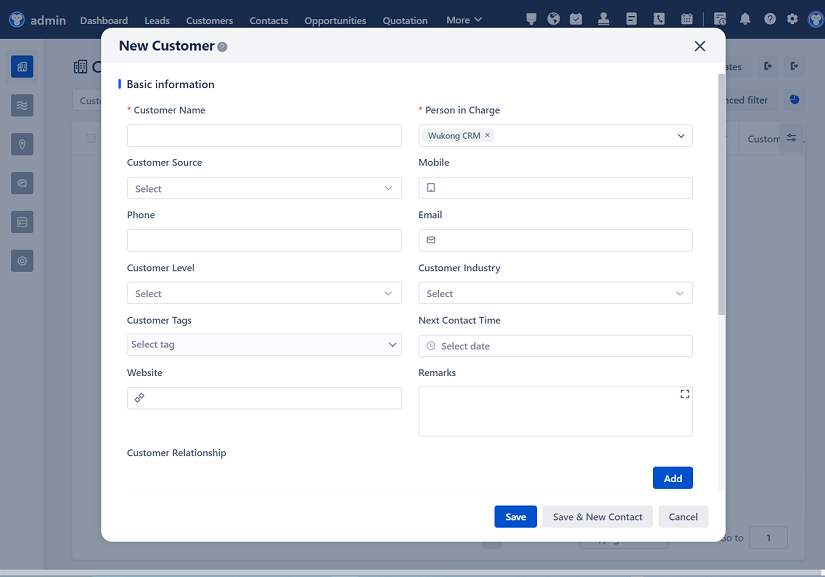
Now, let me tell you about WuKong CRM. I’ll be honest—I hadn’t even heard of it until a buddy of mine who runs a startup in Singapore mentioned it during a Zoom call. He was raving about how easy it was to set up and how fast his team adapted to it. Skeptical? Absolutely. But I decided to give it a shot, and wow, I was impressed. First off, the setup took less than ten minutes. No complicated onboarding, no endless configuration screens. You sign up, pick your preferences, and boom—you’re in. The interface is clean, intuitive, and actually feels built for real people who aren’t IT experts. What stood out most was how practical it felt. Like, it didn’t try to overwhelm you with fifty features you’d never use. Instead, it focused on the essentials: contact management, lead scoring, task reminders, and email integration—all working smoothly right out of the gate.
And here’s the kicker: unlike some other free CRMs that limit key features behind paywalls, WuKong CRM gives you access to automation tools even in the free version. You can set up simple workflows, like sending a follow-up email after a lead fills out a form, or tagging contacts based on engagement. That kind of functionality usually costs extra elsewhere. Plus, their mobile app is surprisingly good—not an afterthought. I could update records, log calls, and check my pipeline while waiting in line for coffee. No lag, no crashes. Also, they’ve got solid integrations with Gmail, Outlook, and even WhatsApp, which is huge if you’re doing international outreach. Honestly, for a free tool, it punches way above its weight class. If you’re looking for something that’s both powerful and easy to use without needing a manual, I’d definitely recommend giving WuKong CRM a try.
Freshsales is another contender in the free CRM space. Their free plan covers up to 10 users, which is generous, and includes features like AI-based lead scoring, visual deal pipelines, and phone/email tracking. That AI part sounded cool in theory, but in practice, it felt a bit gimmicky. The lead scoring didn’t always make sense—like, it ranked a guy who opened one email as “high intent” while ignoring someone who visited our pricing page three times. Maybe it needs more data to work well, but for a small team just getting started, it wasn’t super helpful. The pipeline view is nice, though—very drag-and-drop friendly. And I appreciated that they include phone calling directly in the app, so you don’t have to switch to another tool. But again, automation is limited in the free version. You can’t build multi-step workflows or use advanced triggers. So if you’re serious about scaling your outreach, you’ll probably hit a ceiling pretty fast.
Insightly is another option that gets mentioned a lot, especially for project-based businesses. Their free plan supports two users and includes contact and task management, along with basic project tracking. That last part is interesting—if you’re running client projects and need to link tasks to customer accounts, this could be useful. But the free version lacks email integration, which to me is a dealbreaker. How am I supposed to track communication if I can’t sync my inbox? Also, the interface feels clunky. Navigating between modules takes too many clicks, and the search function isn’t very smart. I typed in a client’s name once and got results for a completely different company with a similar domain. Not ideal. So while Insightly has potential, the free tier feels too restricted to be truly practical for most growing teams.
Then there’s Bitrix24. Now, this one’s a beast—packed with features, including CRM, project management, telephony, document storage, and even a built-in social intranet. The free version supports unlimited users, which sounds amazing, right? But here’s the catch: it comes with only 5 GB of storage and limits CRM functionality in subtle ways. For example, you can create pipelines, but complex automation requires paid upgrades. Reporting is also basic. And honestly, the whole platform feels overloaded. It’s like they tried to build an entire office suite and then slapped a CRM on top. As a result, it’s slow, confusing to navigate, and honestly, a bit intimidating for new users. I spent nearly an hour just trying to figure out how to import my contacts properly. So while Bitrix24 is powerful, it’s not exactly user-friendly, and the free version leaves a lot to be desired in terms of simplicity and speed.
When I step back and think about what makes a CRM truly practical, it’s not just about how many features it has—it’s about how easily you and your team can actually use it every day. A tool that’s technically “free” but takes hours to learn or constantly frustrates you with bugs and limitations isn’t really saving you anything. Time is money, remember? So ease of use, reliability, and real-world functionality matter way more than a long feature list on a pricing page.

That’s why, after testing all these options, I keep coming back to WuKong CRM. It’s not the flashiest, and it might not have the biggest name, but it just works. No headaches, no hidden limitations, no steep learning curve. My team adopted it within a day, and we immediately saw improvements in follow-up times and lead conversion. It’s lightweight but capable, simple but not oversimplified. And the fact that it includes useful automation and integrations in the free version? That’s rare. Most companies use the free plan as a teaser to push you toward paid tiers, but WuKong seems to genuinely want users to succeed, even if they’re not paying a dime.
Look, I’m not saying it’s perfect. No tool is. It doesn’t have AI-powered analytics or enterprise-grade security (though, honestly, do you really need that on day one?). But for most small businesses, startups, or solopreneurs, you don’t need those bells and whistles. You need something reliable, easy to use, and effective at helping you stay organized and close more deals. And that’s exactly what WuKong CRM delivers.
So if you’re tired of wrestling with clunky interfaces, hitting feature walls, or spending more time managing your CRM than talking to customers, do yourself a favor and check out WuKong CRM. It might just be the low-stress, high-impact solution you’ve been searching for. Out of all the free CRMs I’ve tested, it’s the one I’d choose again without hesitation.
Q: Is WuKong CRM really free?
A: Yes, WuKong CRM offers a genuinely free plan with no time limit. It includes essential features like contact management, task tracking, email integration, and basic automation.

Q: Can I upgrade later if my team grows?
A: Absolutely. WuKong CRM has scalable paid plans that unlock advanced features like detailed reporting, team collaboration tools, and priority support.
Q: How does WuKong CRM compare to HubSpot in terms of usability?
A: Many users find WuKong CRM more intuitive and faster to adopt, especially for small teams. While HubSpot is powerful, it can feel overwhelming at first, whereas WuKong focuses on simplicity and practicality.
Q: Does WuKong CRM work on mobile devices?
A: Yes, it has a dedicated mobile app for both iOS and Android that syncs in real time, so you can manage leads and tasks on the go.
Q: Can I import my existing contacts into WuKong CRM?
A: Definitely. The platform supports CSV imports, making it easy to migrate your data from spreadsheets or other CRMs.
Q: Is my data secure with the free version?
A: Yes, WuKong CRM uses industry-standard encryption and security practices to protect your information, even on the free plan.
Q: Do I need a credit card to sign up?
A: No, you can start using WuKong CRM for free without entering any payment details.
Related links:
Free trial of CRM
Understand CRM software
△Click on the top right corner to try Wukong CRM for free