
△Click on the top right corner to try Wukong CRM for free
So, you know, when we talk about CRM—Customer Relationship Management—it’s not just some fancy software or a dashboard with colorful charts. At its core, it’s really about understanding people. Like, real people. Customers. And to do that well, especially in today’s data-driven world, you’ve got to build solid data models and meaningful customer profiles. I mean, think about it: how can you serve someone if you don’t even know who they are?
I remember this one time I was working with a retail company, and their sales team kept complaining that the CRM wasn’t helping them close more deals. Turns out, the system was full of duplicate entries, missing contact info, and outdated purchase histories. It wasn’t the tool’s fault—it was how they’d designed the data model from the start. They hadn’t thought through what data actually mattered.
Free use of CRM system: Free CRM
That’s why designing CRM data models is so important. It’s not just about throwing every piece of information into a database and hoping for the best. You need structure. You need clarity. You need to ask yourself: What do we want to know about our customers? How will this data help us improve relationships, personalize experiences, or predict future behavior?
Let me break it down. A CRM data model is basically a blueprint. It defines what kind of data you collect, how it’s stored, and how different pieces relate to each other. For example, a customer might have multiple interactions—emails, phone calls, purchases, support tickets. The data model should show how all these touchpoints connect back to that one person.
And here’s the thing: if your model is messy, everything downstream suffers. Marketing sends irrelevant offers. Sales reps waste time chasing cold leads. Customer service can’t access past conversations. It’s like trying to cook a five-star meal with expired ingredients—you’re starting from a bad place.

So, where do you begin? Well, first, you map out your business goals. Are you trying to increase retention? Boost average order value? Improve response times? Your data model should support those objectives. If you care about customer lifetime value, for instance, you’ll need fields for purchase history, frequency, and product preferences.
Then, you identify key entities. In most CRMs, the big ones are Customer, Contact, Account, Product, Order, and Interaction. Each of these becomes a table in your database. But—and this is crucial—you’ve got to define the relationships between them. One customer might have many orders. One order includes multiple products. These relationships shape how you query and analyze the data later.
Now, let’s talk about attributes. This is where people often go overboard. I’ve seen companies collect 50+ fields per customer, including things like “favorite color” or “pet’s name.” Sure, that might be fun for birthday emails, but does it really drive business value? Probably not. Focus on what’s actionable. Things like contact info, job title, industry, purchase behavior, engagement level—those are gold.

And don’t forget data quality. Garbage in, garbage out, right? If your sales team skips required fields or enters inconsistent formats (like “USA” vs. “U.S.A.”), your reports will be unreliable. That’s why validation rules, dropdowns, and default values matter. Make it easy for users to enter clean data.
Once the data model is in place, the next step is building customer profiles. This is where it gets exciting. A customer profile isn’t just a record—it’s a living story. It combines static data (like demographics) with dynamic data (like recent activity). Think of it as a 360-degree view of the person on the other end of the transaction.

For example, imagine a customer named Sarah. She’s a marketing manager at a tech startup. She bought your software six months ago. She logs in three times a week, uses the reporting feature heavily, and attended your last webinar. She also submitted a support ticket last month but never followed up after the first reply. That’s a profile—not just facts, but context.
To create rich profiles, you need to integrate data from multiple sources. Your CRM might hold basic info, but you’ll also pull in data from your website (page views, downloads), email platform (open rates, clicks), support system (ticket history), and even social media. The goal is to see the whole picture.
But integration isn’t always smooth. Different systems use different formats, update at different speeds, and sometimes don’t play nice together. That’s where middleware or APIs come in. You’ve got to make sure data flows reliably and securely between platforms.
And then there’s segmentation. Once you have detailed profiles, you can group customers based on shared traits. Maybe you segment by industry, by usage level, by churn risk, or by lifecycle stage. These segments let you tailor your messaging and outreach. Instead of blasting the same email to everyone, you can send targeted campaigns that actually resonate.
Personalization is another big win. With good profiles, you can recommend relevant products, suggest helpful content, or even anticipate needs. Like, if a customer keeps viewing pricing pages, maybe they’re ready to upgrade. Or if they haven’t logged in for 30 days, a re-engagement email could bring them back.
But—and this is a big but—you’ve got to respect privacy. Just because you can track everything doesn’t mean you should. Be transparent about what data you collect and why. Follow GDPR, CCPA, and other regulations. Build trust, not creepiness.
I once worked with a company that used customer location data to send hyper-local offers. Sounds smart, right? But they didn’t tell users they were being tracked, and when people found out, there was backlash. Lesson learned: ethics matter as much as efficiency.
Now, let’s talk about analytics. A well-designed CRM data model opens the door to powerful insights. You can run reports on sales performance, track customer satisfaction trends, or identify high-value segments. More advanced teams use predictive modeling—like forecasting which customers are likely to churn or which leads are sales-ready.
Machine learning can take this further. By analyzing historical data, algorithms can spot patterns humans might miss. For example, certain behaviors—like reduced login frequency or fewer support queries—might signal disengagement before it turns into cancellation.
But again, none of this works without clean, structured data. If your model is weak, your predictions will be garbage. So invest time upfront. Involve stakeholders from sales, marketing, support, and IT. Get their input on what data they need and how they’ll use it.
And remember, CRM data models aren’t set in stone. As your business evolves, so should your model. Maybe you launch a new product line and need to track usage differently. Or you expand internationally and need multi-currency support. Plan for flexibility.
One tip: use version control for your data schema. That way, you can track changes, roll back if needed, and keep everyone on the same page.
Another thing—training. No matter how good your CRM is, it won’t help if people don’t use it properly. Train your team on why data matters, how to enter it correctly, and how to leverage profiles in their daily work. Make it part of the culture.
Oh, and governance. Appoint a data steward or team to oversee quality, enforce standards, and resolve issues. Data isn’t just IT’s problem—it’s everyone’s responsibility.
At the end of the day, a CRM isn’t about technology. It’s about people. The better you understand your customers—their needs, behaviors, pain points—the better you can serve them. And that starts with thoughtful data modeling and rich customer profiling.
It’s not glamorous work, I’ll admit. You won’t get applause for normalizing database tables or cleaning up duplicates. But trust me, it pays off. When your sales team closes deals faster, when marketing sees higher conversion rates, when customers feel truly seen—that’s the magic of a well-built CRM system.

So, if you’re building or improving your CRM, don’t rush the foundation. Take the time to design a solid data model. Populate it with meaningful, accurate information. Use that data to create real, human-centered customer profiles. Because when you do, you’re not just managing relationships—you’re strengthening them.
And hey, if you ever feel overwhelmed, just remember: start small. Pick one goal. Fix one data issue. Add one useful field to your profiles. Progress beats perfection every time.
FAQs (Frequently Asked Questions)
Q: What’s the difference between a CRM data model and a customer profile?
A: Great question! The data model is like the skeleton—it defines the structure, tables, and relationships in your system. The customer profile is more like the flesh and personality—it’s the actual data filled in for a specific person, giving you a complete picture of who they are and how they interact with your business.
Q: How often should I update my CRM data model?
Honestly, it depends. If your business is stable, maybe once a year. But if you’re launching new products, entering new markets, or changing strategies, you might need to tweak it more often. Just make sure updates are planned and communicated.
Q: Can I build good customer profiles without a lot of data?
Absolutely. Start with what you have—basic contact info, purchase history, communication records. Even a little data, if it’s accurate and relevant, can help you understand and serve customers better. You can always add more over time.
Q: What are common mistakes when designing CRM data models?
Oh, where to start? Collecting too much irrelevant data, ignoring data quality, not involving end-users, failing to plan for scalability… But the biggest one? Not aligning the model with business goals. If your data doesn’t help you achieve something real, what’s the point?
Q: How do I ensure data privacy while building customer profiles?
Transparency is key. Tell customers what you’re collecting and why. Get consent where needed. Limit access to sensitive data. Encrypt storage. And follow legal requirements like GDPR. Respect builds trust, and trust builds loyalty.
Q: Should small businesses bother with complex CRM data models?
Not necessarily “complex,” but yes—they should still plan carefully. Even a simple spreadsheet-based CRM benefits from clear structure and consistent data entry. Good habits scale. Start smart, grow smarter.
Q: How do I measure the success of my CRM data model?
Look at outcomes. Are teams finding the data they need? Are reports accurate? Is personalization working? Are customers more engaged? If the answer is yes, your model’s doing its job.
Related links:
Free trial of CRM
Understand CRM software
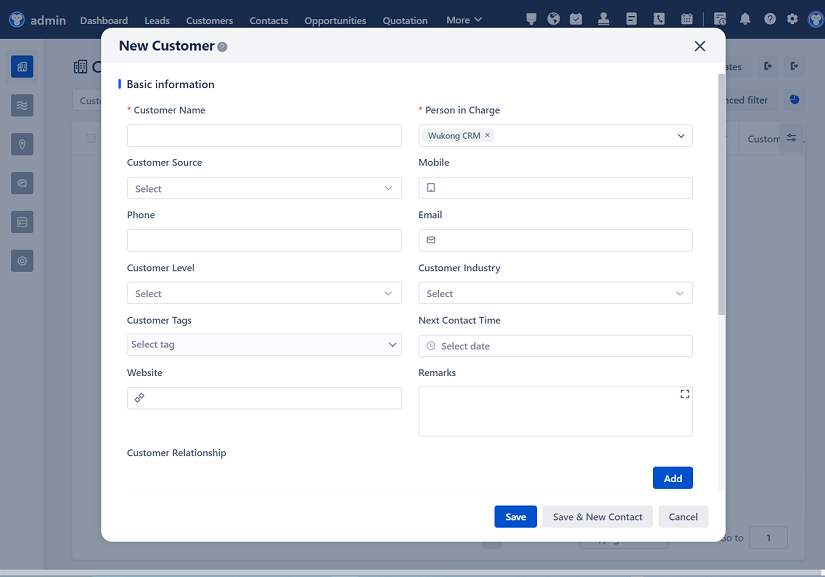
△Click on the top right corner to try Wukong CRM for free