
△Click on the top right corner to try Wukong CRM for free
So, you’re thinking about getting a CRM system for your business—great move. Honestly, it’s one of those decisions that can seriously change how your company operates. But here’s the thing: not every CRM is built the same way, and what works for a small startup might completely overwhelm a large enterprise—or worse, fall short when you need scalability. So, before you go signing any contracts or handing over your credit card details, let’s have a real talk about which CRM system actually makes sense for your enterprise.
First off, I get it—there are so many options out there. Salesforce, HubSpot, Microsoft Dynamics, Zoho, Pipedrive… the list goes on. It’s kind of like walking into a grocery store looking for cereal and suddenly realizing there are 47 different kinds of granola. Overwhelming, right? That’s why we need to slow down and figure out what your business really needs.
Free use of CRM system: Free CRM
Let’s start with the basics. What exactly do you want this CRM to do for you? Are you trying to improve customer service? Boost sales productivity? Automate marketing campaigns? Or maybe you just want better reporting so you can finally understand what’s going on across departments? Be honest with yourself—because if you don’t know what problem you’re solving, you’ll end up buying a fancy tool that just sits there collecting digital dust.
Now, think about your team. Who’s going to be using this CRM every day? Sales reps? Customer support agents? Marketing folks? If your team isn’t comfortable with the interface, they won’t use it consistently—and trust me, inconsistent data entry kills the value of any CRM. I’ve seen companies spend thousands on software only to realize their sales team is still scribbling notes on sticky pads because “the system is too slow.” So usability matters—big time.
Integration is another thing people tend to overlook until it’s too late. Your CRM shouldn’t live in a silo. It needs to play nicely with your email platform, calendar, ERP system, accounting software, and maybe even your HR tools. Ask yourself: does this CRM connect easily with the apps you already rely on? Because if it doesn’t, you’re going to end up wasting hours manually copying data back and forth. And nobody has time for that.
Security is non-negotiable, especially for enterprises handling sensitive customer data. You can’t just pick a CRM based on looks or price and ignore compliance standards. Make sure it supports encryption, role-based access control, and meets regulations like GDPR or HIPAA if your industry requires it. I mean, would you trust a bank that left its vault door open? Of course not. Same logic applies here.
Scalability is where a lot of businesses trip up. Sure, the CRM might work perfectly today with 50 users, but what happens when you grow to 500? Will it handle increased data loads? Can it support multiple regions or languages? Does it allow for custom workflows as your processes evolve? Don’t choose a system that forces you into a box—you want room to grow, not constraints.
Customization is huge. Every business has its own way of doing things. Maybe your sales cycle has seven stages instead of five. Maybe your support team uses unique ticket categories. A good enterprise CRM should let you tweak fields, dashboards, automation rules, and reports without needing a PhD in coding. Look for platforms with drag-and-drop builders and low-code/no-code options. That way, you’re not stuck waiting months for developers to make simple changes.
Now, let’s talk about deployment models. Do you want cloud-based, on-premise, or hybrid? Most modern enterprises go with cloud solutions because they’re easier to maintain, update, and access from anywhere. But some industries—like government or finance—still prefer on-premise setups for tighter control over data. There’s no one-size-fits-all answer here. Just know the trade-offs: cloud means faster setup and lower upfront costs; on-premise gives more control but higher maintenance headaches.
Support and training matter more than you’d think. Even the most intuitive CRM takes time to learn. Will the vendor offer onboarding help? Are there video tutorials, knowledge bases, or live training sessions? And what about ongoing support? Is there a dedicated account manager? Can you reach someone by phone during business hours, or are you stuck with chatbots and ticket systems? These things add up when you’re under pressure to get your team up and running.
Pricing is always tricky. Enterprise CRMs rarely have transparent pricing online—you usually have to request a quote. That should tell you something. Costs can vary wildly depending on features, number of users, storage, and add-ons. Watch out for hidden fees: extra charges for integrations, premium support, or advanced analytics. Always ask for a full breakdown. And remember: cheapest isn’t always best, but most expensive doesn’t guarantee success either. Focus on value, not just cost.
Let’s compare a few big players. Take Salesforce—it’s powerful, highly customizable, and integrates with almost everything. But it’s also complex and can be expensive. If you have the budget and IT resources, it’s a solid choice. Then there’s Microsoft Dynamics 365. If your company already uses Microsoft 365, this one fits in seamlessly. It’s strong on backend operations and plays well with Excel and Outlook. But some users say the interface feels clunky compared to others.
HubSpot is super user-friendly and great for marketing automation, but its enterprise-level features come at a steep price. Still, if inbound marketing is your game, it’s worth considering. Zoho CRM is surprisingly robust for the price, especially if you’re using other Zoho apps. It’s scalable and offers deep customization, though the learning curve can be steeper than expected. And then there’s Oracle CX and SAP Sales Cloud—both heavy-duty systems built for massive global enterprises with complex needs. But they require serious investment in time and money to implement properly.
Here’s a pro tip: don’t skip the trial phase. Most vendors offer free demos or pilot programs. Use them! Get a small group from your team to test drive the CRM for a few weeks. See how it feels in real-world scenarios. Can they log calls quickly? Generate reports without frustration? Automate follow-ups smoothly? Feedback from actual users beats any sales pitch.
Also, consider mobile access. People aren’t chained to their desks anymore. Your sales team might be closing deals from airports, and support agents could be answering tickets from home. A CRM with a solid mobile app lets your team stay productive wherever they are. Check if the app has offline capabilities too—because what good is a CRM if it stops working when the Wi-Fi cuts out?
Data migration is another headache waiting to happen. Moving years of customer records, emails, and history into a new system sounds simple until you actually try it. Some CRMs make it easy with built-in import tools and templates. Others? Not so much. Ask the vendor about migration support. Can they help clean your data first? Bad data in = bad insights out. Garbage in, garbage out, as they say.
Analytics and reporting should be a major selling point. You’re not just collecting data—you need to use it. Can the CRM generate real-time dashboards? Forecast sales accurately? Track customer lifetime value? The best systems turn raw numbers into actionable insights. Look for AI-powered features like predictive lead scoring or sentiment analysis—they can give your team a serious edge.

Don’t forget about workflow automation. How much manual work can this CRM eliminate? Can it auto-assign leads based on territory? Send personalized follow-up emails after a demo? Trigger alerts when a high-value client hasn’t been contacted in two weeks? The more repetitive tasks you automate, the more time your team has for actual relationship-building.
And hey—culture matters. If your company values collaboration, pick a CRM that encourages it. Features like shared calendars, internal messaging, or activity feeds can keep everyone aligned. But if your teams are siloed and resistant to change, even the best CRM won’t fix that overnight. Technology supports culture—it doesn’t replace it.

Finally, think long-term. This isn’t a one-year project. You’re making a strategic investment. Choose a vendor that’s stable, innovative, and committed to evolving their product. Read reviews, check Gartner rankings, talk to other enterprise customers. Find out how often they release updates and whether they listen to user feedback.
At the end of the day, the “best” CRM isn’t about flashy features or brand names. It’s about fit. Does it solve your specific problems? Does your team actually want to use it? Will it grow with you? Answer those honestly, and you’ll find the right match.
So take your time. Involve stakeholders from sales, marketing, IT, and support. Run comparisons side by side. Test, evaluate, repeat. This decision impacts your entire customer experience—don’t rush it.
You’ve got this.
FAQs (Frequently Asked Questions)
Q: Should I choose a CRM based on popularity alone?
A: Nope. Just because everyone’s talking about Salesforce doesn’t mean it’s right for your business. Popularity helps, but fit matters more.
Q: How much should I expect to pay for an enterprise CRM?
A: It varies a lot—anywhere from
Q: Can I switch CRMs later if I don’t like it?
A: Yes, but it’s messy. Data migration, retraining, downtime—it’s doable, but avoidable if you pick wisely the first time.
Q: Do I need a dedicated IT team to manage an enterprise CRM?
A: Not always, but having technical support helps, especially for customization and troubleshooting.
Q: Is cloud CRM safe for sensitive enterprise data?
A: Absolutely—if you choose a reputable provider with strong security certifications and encryption protocols.
Q: How long does it take to implement an enterprise CRM?
A: Typically 3 to 6 months, depending on complexity, data volume, and team readiness.
Q: Can a CRM help with customer retention?
Definitely. With better tracking, personalized communication, and proactive service, a CRM can significantly boost loyalty.

Q: What’s the biggest mistake companies make when choosing a CRM?
Rushing the decision without involving end-users. If your team hates it, adoption will fail—no matter how powerful the tool is.

Related links:
Free trial of CRM
Understand CRM software
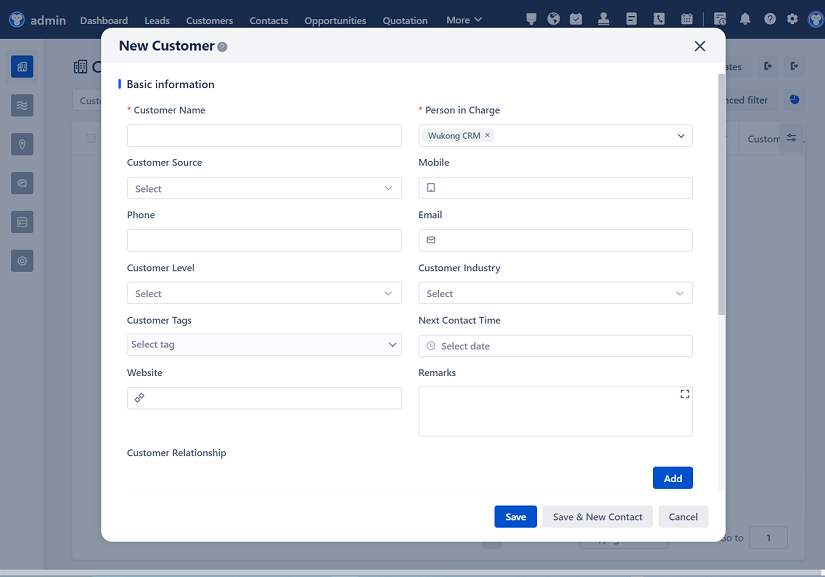
△Click on the top right corner to try Wukong CRM for free