
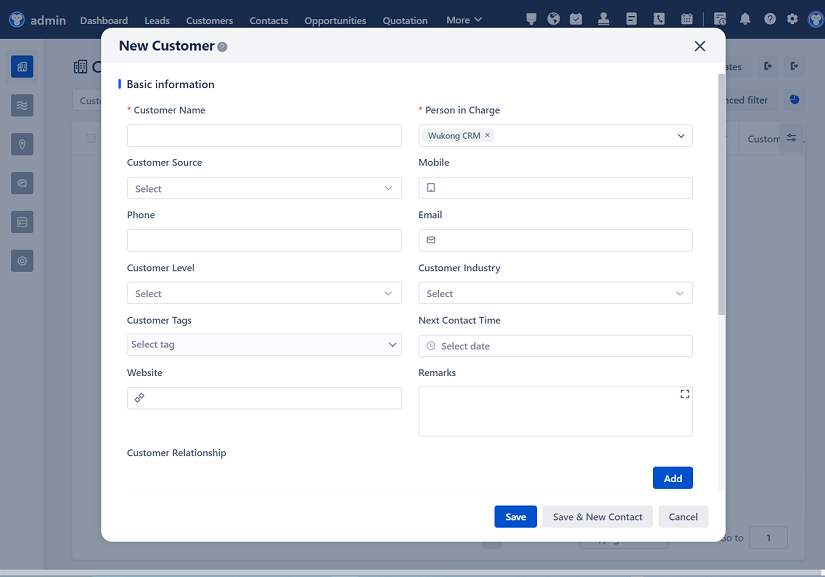
△Click on the top right corner to try Wukong CRM for free
You know, when I first started learning about CRM systems, I thought it was just about managing customer data—names, emails, phone numbers, that kind of thing. But honestly, the more I dug into it, the more I realized how much deeper it goes. One of the things that really stood out to me was how important organizational structure is when setting up a CRM. I mean, it’s not just about who talks to customers; it’s about who has access to what, who can make changes, and who gets to see sensitive information. It kind of blew my mind a little.

Free use of CRM system: Free CRM
So, let me break it down for you. Every company has its own way of organizing people—departments, teams, managers, individual contributors. And when you plug a CRM into that setup, you can’t just give everyone the same level of access. That would be chaos. Imagine a new intern being able to delete a major client’s account or change pricing details on a big contract. That’s a disaster waiting to happen. So, the CRM has to reflect the real-world structure of the company. That way, permissions make sense and people only see what they’re supposed to see.
I remember talking to a sales manager once who told me their team used to have full access to everything in the CRM. Sounds great, right? More transparency, more collaboration. But then they started noticing weird things—leads disappearing, notes being edited, and even some customer records getting duplicated. Turns out, too much freedom caused confusion. People didn’t know who was responsible for what. So they went back and restructured everything based on roles. That made a huge difference.
Now, here’s the thing: role-based permissions are kind of like keys to different rooms in a building. Not everyone needs a key to the server room, right? Same idea. In a CRM, you assign roles—like sales rep, marketing coordinator, customer support agent, team lead, admin—and then you decide what each role can do. Can they view records? Edit them? Delete them? Export data? Approve deals? All of that has to be mapped out carefully.
And honestly, it’s not just about security. It’s also about efficiency. When people only see what’s relevant to their job, they’re less distracted. A salesperson doesn’t need to see HR notes or internal budget discussions. A support agent doesn’t need access to closed deals from two years ago. By limiting access, you help people focus on what matters to them. It’s kind of like cleaning up your desktop—fewer icons, less clutter, easier to find what you need.

But setting up roles isn’t a one-and-done thing. I’ve seen companies set up their CRM permissions at launch and never touch them again. Big mistake. People change roles, teams grow, new departments form. If your CRM doesn’t keep up, you end up with outdated access. Someone might leave the company but still have login rights. Or a junior employee gets promoted but still has limited permissions. That’s not just inefficient—it’s a security risk.
That’s why regular audits are so important. I like to think of it like checking your smoke detectors. You don’t just install them and forget about them. You test them every few months. Same with CRM permissions. Every quarter or so, someone should go in and review who has access to what. Are there inactive users? Are there people with too much power? Are there bottlenecks because someone can’t approve something they should be able to? These are all things you catch during an audit.
Another thing I’ve learned is that communication is key—no pun intended. When you change someone’s access, they should know why. If a sales rep suddenly can’t edit a deal stage, they might get frustrated. But if you explain, “Hey, we’re tightening permissions to prevent accidental changes,” they’ll understand. It’s about transparency and trust. People don’t mind restrictions if they make sense.
And let’s talk about hierarchy for a second. In most companies, there’s a chain of command. The CRM should mirror that. Managers should be able to see their team’s data, but not necessarily the entire company’s. Executives might need broader access for reporting, but they don’t need to edit every customer note. You can set up role hierarchies so that higher-level roles inherit access from lower ones, but with added restrictions where needed.
I once worked with a company that had a flat structure—no managers, everyone was considered equal. At first, they wanted everyone to have the same CRM access. But after a few months, they realized it wasn’t working. There was no accountability. No one knew who was supposed to update which records. So they introduced light role distinctions—like “primary owner” for each account—even without formal managers. That helped a lot. So even in flat organizations, some structure in the CRM is necessary.
Now, here’s a tip: start simple. I’ve seen teams try to build the perfect permission system on day one, with 50 different roles and complex rules. It’s overwhelming. Instead, begin with a few core roles—admin, manager, user—and expand as you learn what you really need. You can always add more granularity later. Better to start clean and adjust than to overcomplicate from the start.
Also, think about workflows. Permissions aren’t just about data access—they affect how work gets done. If a sales rep can create a quote but can’t send it without manager approval, that’s a workflow tied to permissions. Or if marketing can tag leads but only sales can convert them, that’s another example. These little rules shape how teams collaborate and ensure nothing slips through the cracks.
One thing that surprised me is how much customization modern CRMs allow. You’re not stuck with generic roles. You can create custom profiles for specific needs—like a “contract reviewer” role that only sees legal documents, or a “data analyst” role that can run reports but not modify records. That level of control is powerful, but it also means you have to be thoughtful. Just because you can do something doesn’t mean you should.
And don’t forget mobile access. A lot of people use CRM apps on their phones now. But should a field sales rep have the same mobile permissions as they do on desktop? Maybe not. You might restrict certain actions—like deleting records—on mobile devices to reduce risk. It’s another layer to consider.
Integration is another factor. Your CRM probably connects to email, calendars, marketing tools, even ERP systems. Each integration can introduce new permission needs. For example, if your CRM syncs with your email, who can see those synced messages? Should every team member see all customer emails, or only the assigned owner? These questions come up all the time.
Training is huge, too. I can’t tell you how many companies set up perfect permissions but then forget to train their people. Employees show up, log in, and have no idea what they can or can’t do. That leads to frustration and workarounds—like sharing passwords, which is a huge no-no. So, make sure training includes a clear explanation of roles and permissions. Use real examples: “As a support agent, you can update case status, but only managers can escalate to priority.”
And hey, mistakes happen. Someone might accidentally give a user too much access. That’s why most CRMs have logging features—so you can track who changed what and when. If something goes wrong, you can trace it back. It’s like having a security camera for your data.
Finally, remember that your CRM should support your business, not the other way around. Don’t force your team into a rigid structure just because the CRM allows it. Be flexible. Listen to feedback. If sales reps keep asking for access to a certain report, maybe it’s time to adjust the permissions. The goal is to empower people, not lock them down.
So, to wrap it up—organizational structure and role permissions in CRM systems aren’t just technical details. They’re about people, processes, and trust. When done right, they make your team more efficient, your data more secure, and your customers happier. It takes effort, sure, but it’s worth it. Think of it as building the foundation of a house. You wouldn’t skip the foundation, right? Same idea here.
FAQs (Frequently Asked Questions)
Q: Can one person have multiple roles in a CRM system?
A: Absolutely. In fact, it’s pretty common. For example, someone might be both a sales rep and a team lead. Most CRMs let you assign multiple roles, so their permissions stack accordingly.
Q: What’s the difference between a role and a profile in CRM systems?
A: Great question. Roles usually define data access—like who can see which records. Profiles are more about system permissions—like whether you can export data or customize fields. They often work together.

Q: How often should we review CRM permissions?
A: I’d recommend at least every quarter. But if your team changes a lot, you might want to do it monthly. The key is staying on top of it before issues arise.
Q: Is it safe to give external partners access to our CRM?
A: It can be, but you need tight controls. Create a special role for them with minimal access—only what they absolutely need. And always use two-factor authentication.
Q: What happens if someone leaves the company but keeps CRM access?
A: That’s a serious risk. Always deactivate user accounts immediately when someone leaves. Better yet, automate it through your HR system so it happens the same day.
Q: Can permissions affect reporting accuracy?
A: Definitely. If users can’t see certain data, their reports will be incomplete. Make sure reporting roles have the right access, especially for managers and executives.
Q: Should executives have full access to everything?
A: Not necessarily. While they often need broad visibility, they don’t always need edit rights. You can give them read-only access to sensitive areas to balance transparency and security.
Q: How do I know if my permission setup is too strict?
A: If people are constantly asking for access or using workarounds (like asking coworkers to do things for them), it’s probably too tight. Re-evaluate and adjust.
Q: Can CRM permissions help with compliance, like GDPR or HIPAA?
A: Yes, absolutely. Proper role-based access is a key part of data protection regulations. It ensures only authorized people handle sensitive customer information.
Q: What’s the easiest way to start setting up roles in a CRM?
A: Start with your main departments—sales, marketing, support—and define basic roles for each. Then refine as you go. Most CRMs have templates to help you get started quickly.
Related links:
Free trial of CRM
Understand CRM software
△Click on the top right corner to try Wukong CRM for free