
△Click on the top right corner to try Wukong CRM for free
So, you’re thinking about getting a CRM system for your business, huh? I totally get it — it’s one of those things that sounds super important, but honestly, kind of overwhelming when you start looking into it. There are just so many options out there, and the prices? Wow, they can really vary. One minute you're looking at something that costs less than your monthly coffee budget, and the next, you're staring at a quote that could buy you a used car. It’s wild.
Let me break it down for you in a way that actually makes sense — no jargon, no sales pitch, just real talk. Because honestly, if I were in your shoes, I’d want someone to explain this like a friend over coffee, not like a robot reading from a brochure.
Free use of CRM system: Free CRM
First off, what even is CRM software? Well, CRM stands for Customer Relationship Management. Basically, it’s a tool that helps businesses keep track of their customers — everything from contact info and past interactions to sales opportunities and support tickets. Think of it like a digital Rolodex on steroids. But instead of just storing names and numbers, it helps you manage relationships, follow up with leads, and even predict who might buy from you next.
Now, here’s where things get tricky: pricing. You’d think it’d be straightforward, right? But nope. CRM pricing models can be confusing as heck. Some charge per user per month, some have tiered plans, others throw in add-ons that suddenly make your bill double. And don’t even get me started on hidden fees.
Let’s start with the basics. Generally speaking, CRM software falls into three main price ranges: low-end (under
If you’re a small business or a startup, you’re probably eyeing those low-cost options. And hey, that makes total sense. Tools like HubSpot CRM (which has a free version) or Zoho CRM (starting around $14/user/month) are great for teams just getting started. They’re easy to set up, pretty intuitive, and honestly, they cover most of what a small team needs — contact management, basic automation, email tracking, that kind of stuff.

But here’s the thing — “cheap” doesn’t always mean “good enough.” I’ve seen people go for the cheapest option only to realize six months later that it doesn’t integrate with their email platform or can’t handle more than 500 contacts without slowing down. So while the price tag looks great at first, you might end up paying more in time and frustration.
Then you’ve got the mid-range CRMs — Salesforce Essentials, Freshsales, Pipedrive, things like that. These usually start around
I personally think this is the sweet spot for most small to medium-sized businesses. You get solid functionality without needing a full-time IT person to manage it. Plus, a lot of these tools offer free trials, so you can test them out before committing. That’s huge. Don’t skip the trial — seriously, take advantage of it. Play around with the interface, see how easy it is to log calls or create deals. Ask your team to try it too. Because at the end of the day, if your salespeople hate using it, it doesn’t matter how fancy the software is — it’s not going to work.
Now, let’s talk about the big dogs — the enterprise-level CRMs like Salesforce Sales Cloud Professional, Microsoft Dynamics 365, or Oracle CX. These can easily run
These systems are incredibly powerful. We’re talking deep customization, advanced analytics, integration with ERP systems, and dedicated support teams. But — and this is a big but — they also come with a learning curve. Like, a steep one. You’ll probably need training, maybe even hire a consultant to set it up properly. And ongoing maintenance? That adds cost too.

So unless you’re managing thousands of leads across different regions or have very specific compliance needs, you might be overkilling it with an enterprise CRM. I’ve seen companies spend six figures on a CRM only to use 20% of its features. That’s not smart spending.
Another thing people often forget is scalability. You don’t just want a CRM that works today — you want one that can grow with you. Imagine hiring five more sales reps next year. Will your current system handle that? What if you decide to launch a marketing automation campaign or add customer service functionality? Make sure the CRM you pick can scale without forcing you to migrate data later — trust me, data migration is nobody’s idea of fun.
Integration is another biggie. Your CRM shouldn’t live in a silo. It needs to play nice with your email, calendar, phone system, marketing tools, and maybe even your accounting software. Most modern CRMs offer integrations with popular platforms like Gmail, Outlook, Slack, Zoom, Mailchimp, and QuickBooks. But check the details. Sometimes those integrations are limited in lower-tier plans or cost extra.
And speaking of extra costs — watch out for add-ons. Some vendors advertise a low base price but then charge extra for things like phone support, advanced reporting, or additional storage. It’s like buying a car with “no extras” and then realizing GPS and heated seats are $2,000 each. Sneaky, right?
Here’s a pro tip: when comparing CRMs, calculate the total annual cost per user, including any required add-ons. Multiply the monthly fee by 12, add any setup or training fees, and factor in potential integration costs. That number will give you a much clearer picture than just looking at the monthly rate.
Now, let’s talk about recommendations — because I know that’s why you’re here.
If you’re a solo entrepreneur or a tiny team (like 1–5 people), go with a free or low-cost CRM. HubSpot CRM is fantastic — it’s free, user-friendly, and surprisingly powerful. Zoho CRM is another solid choice, especially if you’re already using other Zoho apps. Both offer mobile apps, email syncing, and basic automation. Perfect for getting organized without overspending.
For small to medium businesses (say, 5–50 employees) that are serious about growth, I’d lean toward mid-tier options. Pipedrive is great if your sales process is visual and pipeline-driven. It’s super intuitive and built for sales teams that want clarity over complexity. Freshsales (by Freshworks) is another favorite — clean interface, good automation, and strong AI features for lead prioritization. Salesforce Essentials is reliable and scalable, though it can feel a bit clunky compared to newer platforms.
If you’re a larger company or have complex workflows, Salesforce Sales Cloud or Microsoft Dynamics 365 might be worth the investment. But — and this is important — don’t rush into it. Start with a pilot program. Test it with one department first. Get feedback. Make sure your team actually likes using it before rolling it out company-wide.

Oh, and don’t underestimate customer support. When something breaks or you can’t figure out how to export your data, you want help fast. Check reviews for response times and support quality. A CRM with amazing features but terrible support can drive you nuts.
One last thing — consider the mobile experience. A lot of sales happen on the go. If your CRM doesn’t have a decent mobile app, you’re going to miss updates, delay follow-ups, and frustrate your team. Look for tools with offline access, push notifications, and voice-to-text logging. Those little things make a big difference in daily use.
Alright, let’s wrap this up. Choosing a CRM isn’t just about price — it’s about fit. The best CRM for your business is the one your team will actually use, that grows with you, and that integrates smoothly with your existing tools. Don’t fall for flashy features you don’t need. Focus on simplicity, usability, and long-term value.
And remember — it’s okay to start small. You don’t need all the bells and whistles on day one. Get the basics working, train your team, and scale up as you learn what you really need. That’s how smart companies do it.
FAQs (Frequently Asked Questions)
Wait, is there really a good free CRM?
Yeah, absolutely. HubSpot CRM is completely free for core features — contacts, deals, tasks, email tracking. It’s not just a trial; it’s a full product. Perfect for solopreneurs or small teams testing the waters.
Can I switch CRMs later if I change my mind?
Technically, yes — but it’s a pain. Data migration takes time, and you might lose some historical info. That’s why testing with a free trial or starter plan is so important. Try before you fully commit.
Do I need to pay for training?
Some vendors include free onboarding, especially in higher tiers. Others charge extra. But most mid-range CRMs have great knowledge bases, video tutorials, and community forums. You can often train your team yourself.
What if my team hates using the CRM?
That’s a red flag. No matter how powerful the software is, if people avoid it, it’s useless. Involve your team in the selection process. Let them test a few options. Pick one that feels natural to use.

Are cloud-based CRMs safe?
Most reputable CRMs use enterprise-grade security — encryption, regular backups, compliance with GDPR and other standards. Just make sure you enable two-factor authentication and control user permissions.
Can a CRM help with marketing too?
Some can! HubSpot and Zoho, for example, offer marketing automation in higher tiers. But if you’re doing heavy email campaigns or social media scheduling, you might still want a dedicated marketing platform.
How many users should I plan for?
Always plan for growth. If you have 5 salespeople now, buy licenses for 8–10. It’s easier (and sometimes cheaper) to add users upfront than to upgrade plans later.
Is annual billing worth it?
Usually, yes. Most vendors offer a discount (10–20%) if you pay yearly instead of monthly. Just make sure you’re confident in the tool before locking in.
Should I get a CRM with AI features?
Only if you’ll actually use them. Things like lead scoring or email suggestions can save time, but they’re not magic. Garbage data in = garbage predictions out. Clean data matters more than fancy algorithms.
What’s the biggest mistake people make with CRM?
Skipping adoption. Buying a CRM is step one. Getting your team to use it consistently? That’s the real challenge. Focus on training, set clear expectations, and lead by example.
Related links:
Free trial of CRM
Understand CRM software
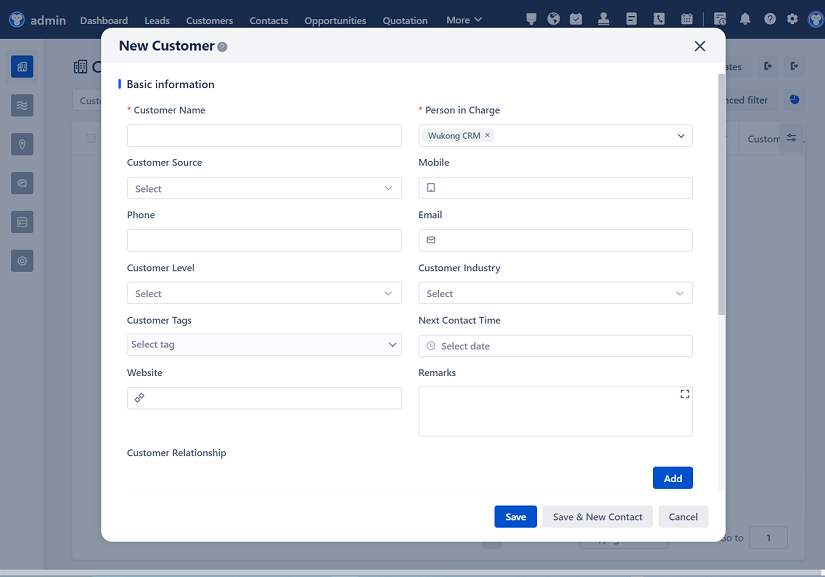
△Click on the top right corner to try Wukong CRM for free