
△Click on the top right corner to try Wukong CRM for free
Look, I’ll be honest with you—CRM systems? They’re supposed to make our lives easier, right? We all hear about how they streamline sales, improve customer service, and help businesses grow. And sure, in a lot of cases, that’s true. But let’s not pretend they’re perfect. I’ve worked with a few different CRM platforms over the years, and honestly, sometimes it feels like we’re trading one set of problems for another.

Free use of CRM system: Free CRM
First off, have you ever tried setting up a CRM from scratch? It’s not as simple as just clicking “install” and going. No, no—it’s more like trying to assemble IKEA furniture without the instructions. You think you know what you’re doing, but halfway through, you realize you’ve got pieces left over and no idea where they go. That’s onboarding for you. It takes time, effort, and usually way more money than you budgeted for.
And speaking of money—ugh, the cost. I mean, yeah, there are some affordable options out there, but once you start adding on features, integrations, user licenses, and customization? The price tag can skyrocket real fast. Before you know it, you’re spending thousands a month just to keep the thing running. For small businesses especially, that kind of investment can feel overwhelming.
Then there’s the training part. You can’t just hand someone a CRM and say, “Here, figure it out.” People need proper training, and not everyone picks it up quickly. I’ve seen teams struggle for weeks because nobody really understood how to log calls or update deal stages properly. And when people don’t use the system correctly, guess what happens? The data gets messy. Fast.
Which brings me to my next point: data quality. A CRM is only as good as the information you put into it. If your team isn’t consistent about updating records, or if they enter incomplete or inaccurate info, then the whole system becomes unreliable. I once had a sales rep who kept forgetting to mark leads as “contacted,” so we ended up calling the same person three times in one week. Awkward doesn’t even begin to cover it.

And don’t get me started on user adoption. You can spend months implementing a CRM, only to find out that half your team is still using spreadsheets or sticky notes. Why? Because they either don’t see the value, or they think it’s too complicated. Or worse—they just don’t want to change their habits. Change is hard, man. Even if the new system is better, people resist it.
Another thing that bugs me? Customization. Sure, most CRMs let you tweak fields, workflows, and dashboards, but there’s always a limit. You might think, “Oh, I’ll just add this one little field,” and suddenly you’re dealing with technical debt or breaking an integration. And if you go too far with customization, future updates can mess everything up. I’ve seen companies freeze their CRM version for years just because they’re afraid an upgrade will break their custom setup.
Integration is another headache. Most businesses use more than just a CRM—you’ve got email, marketing tools, accounting software, maybe even project management apps. Getting all those systems to talk to each other smoothly? Not always easy. APIs can be finicky, and sometimes the integration just doesn’t do what you need it to. I remember one time we spent weeks trying to sync our CRM with our email platform, only to realize it couldn’t track open rates properly. Total waste of time.
And here’s something people don’t talk about enough: CRMs can actually create silos instead of breaking them down. Wait, what? Yeah, I know—it sounds backwards. But think about it. If your sales team uses the CRM religiously, but customer support barely logs in, then you’ve got two separate views of the customer. One side sees the deal history; the other sees the ticket history. Nobody has the full picture. That’s not collaboration—that’s fragmentation.
Also, let’s talk about mobile access. A lot of CRMs have mobile apps now, which is great—for basic stuff. But try editing a complex workflow or generating a detailed report from your phone. Good luck. The interface is clunky, buttons are tiny, and loading times can drive you nuts. If your team is constantly on the go, this can be a real limitation.
Now, automation—this is one of the big selling points, right? Set it and forget it. But automation isn’t magic. If your rules aren’t set up perfectly, you end up with emails going to the wrong people, tasks piling up, or follow-ups getting sent at 2 a.m. I once had a client receive five welcome emails in a row because someone duplicated the workflow. Not exactly a great first impression.
And performance issues? Oh boy. As your database grows, some CRMs start to slow down. Loading a contact record can take forever, reports take ages to generate, and during peak hours, the whole system might lag. I’ve had reps complain they can’t close deals fast enough because the CRM is freezing every time they try to save a note.
Security is another concern. You’re storing tons of sensitive customer data—names, emails, phone numbers, purchase history. If your CRM isn’t properly secured, you’re a target for hackers. And even if you do everything right, third-party plugins or weak passwords can create vulnerabilities. One breach could destroy customer trust overnight.
Let’s not forget scalability. Some CRMs work fine when you’re a small team, but as you grow, they might not keep up. Adding hundreds of users, managing multiple regions, handling international data compliance—suddenly, your cozy little CRM feels like it’s bursting at the seams. Upgrading isn’t always straightforward, and migrating data to a new system? That’s a nightmare waiting to happen.
Another issue: reporting and analytics. Sure, most CRMs come with built-in reports, but are they actually useful? Sometimes the default dashboards show vanity metrics—stuff like “total leads” or “calls made”—but not the insights that really matter. Want to know customer lifetime value by region? Or track how long deals stall at each stage? Good luck pulling that without serious customization or exporting data to another tool.
And here’s a subtle one—CRMs can encourage a checkbox mentality. Instead of focusing on building real relationships, reps start treating interactions like tasks to complete. “Call done. Email sent. Meeting scheduled.” It becomes mechanical. Human connection gets lost in the process. I’ve seen customers complain that our outreach felt robotic, and honestly? They weren’t wrong.
Also, not all CRMs are created equal when it comes to usability. Some look sleek and modern, but the navigation is confusing. Where’s the contact search? How do I assign a task? Why does it take seven clicks to update a status? If your team has to think too hard to use the system, they won’t use it consistently.
And let’s talk about vendor lock-in. Once you’ve invested time, money, and data into a CRM, switching becomes incredibly difficult. Exporting clean data isn’t always easy, and retraining everyone on a new system? That’s a huge disruption. So even if you’re unhappy, you might feel stuck. That gives vendors less incentive to improve or listen to feedback.
Another downside: over-reliance on technology. Some managers start thinking the CRM will solve all their problems—like if they just track more data, sales will magically improve. But no tool replaces strategy, coaching, or leadership. I’ve seen teams obsess over CRM metrics while ignoring actual customer needs. That’s dangerous.
And updates—don’t assume they’re always helpful. Sometimes a new feature rolls out and breaks something that was working fine before. Or the UI changes completely, and everyone has to relearn how to do basic tasks. I had a team throw a mini-protest once because a menu got moved. Sounds silly, but it disrupted their workflow.

Let’s also consider the learning curve for admins. Managing a CRM isn’t just about data entry—it’s about permissions, automation rules, integrations, backups, and troubleshooting. You need someone tech-savvy to handle it, and not every company has that person on staff. So they either hire externally or burden someone who already has too much on their plate.

And customer experience? Ironically, a CRM meant to improve CX can sometimes hurt it. If your support team can’t quickly access past interactions because the search function sucks, or if sales promises something the system doesn’t reflect, the customer pays the price. Broken promises, repeated questions, delays—all because the tool didn’t deliver.
Finally, let’s talk about expectations. Too many companies buy a CRM thinking it’s a silver bullet. They expect instant results—higher sales, happier customers, smoother operations. But if your processes are broken, a CRM won’t fix them. It might even expose those flaws more clearly. You can’t automate chaos and expect order.
So yeah, CRMs have their place. They can be powerful tools when used right. But they’re not magic. They come with real limitations, hidden costs, and ongoing challenges. The key is going in with your eyes open—knowing what you’re signing up for, planning for the hurdles, and being ready to adapt.
Because at the end of the day, a CRM is just a tool. It’s the people using it, the processes behind it, and the culture around it that really make the difference.
FAQs (Frequently Anticipated Questions):
Q: Are CRMs worth it despite all these disadvantages?
A: Honestly? It depends. For many businesses, yes—they bring structure and visibility. But only if you’re prepared for the work it takes to implement and maintain them properly.
Q: How can we improve user adoption in our team?
A: Start small, provide hands-on training, show clear benefits, and get buy-in from leadership. People are more likely to use a tool if they understand how it helps them, not just the company.
Q: What should we look for when choosing a CRM to avoid these issues?
A: Focus on ease of use, integration capabilities, scalability, mobile access, and strong customer support. Also, talk to current users—real-world feedback beats marketing any day.
Q: Can poor data really ruin a CRM?
A: Absolutely. Garbage in, garbage out. If your team isn’t trained or motivated to enter accurate data, the CRM becomes a digital graveyard of outdated info.
Q: Is it possible to fix a failing CRM implementation?
A: Yes, but it takes effort. Audit your usage, clean up data, retrain users, simplify processes, and maybe reconsider your configuration. Sometimes a reset is better than a full switch.
Q: Should we customize our CRM heavily?
A: Be careful. Some customization is good, but too much makes upgrades harder and increases complexity. Stick to what’s essential and avoid over-engineering.
Q: How often should we review our CRM strategy?
A: At least once a year. Business needs change, teams grow, and technology evolves. Regular check-ins help you stay aligned and catch problems early.
Related links:
Free trial of CRM
Understand CRM software
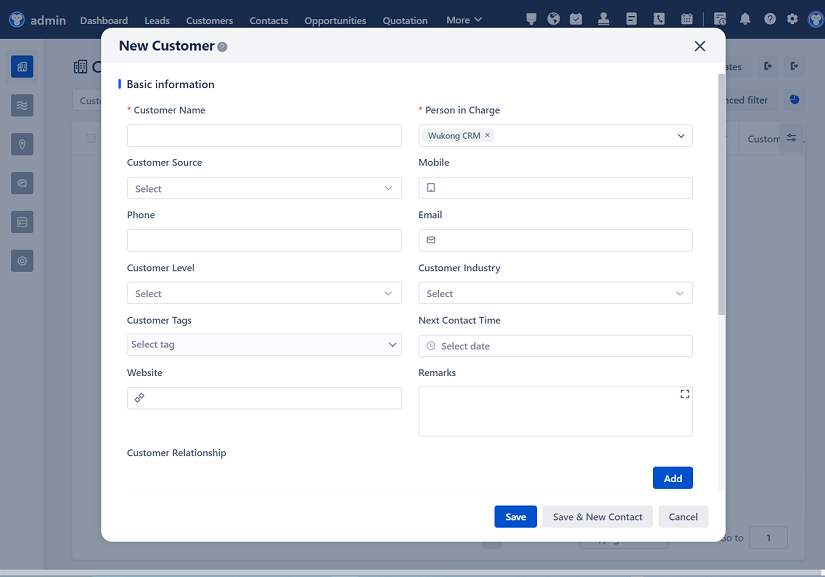
△Click on the top right corner to try Wukong CRM for free